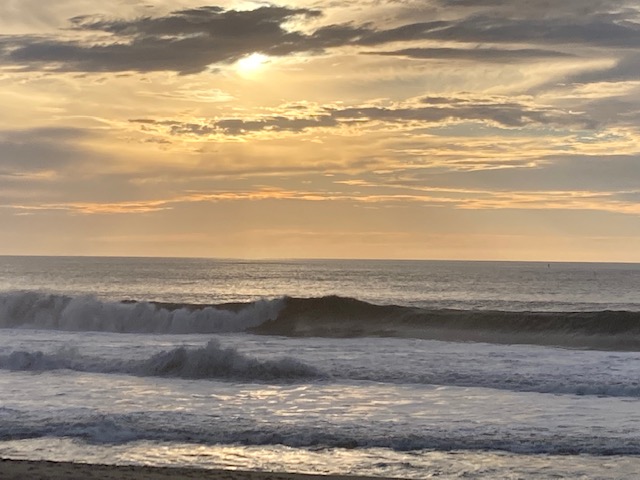
The California Current is one of the world’s most productive eastern boundary currents, and upwelling is the primary physical factor driving the highly productive marine ecosystem associated with the current. Upwelling occurs when persistent longshore winds create an offshore flow at the surface, which in turn upwells deeper nutrient rich ocean waters along the coast. This process propagates the growth of nearshore marine plants, the marine life that depend on them, and the resulting diverse food web.

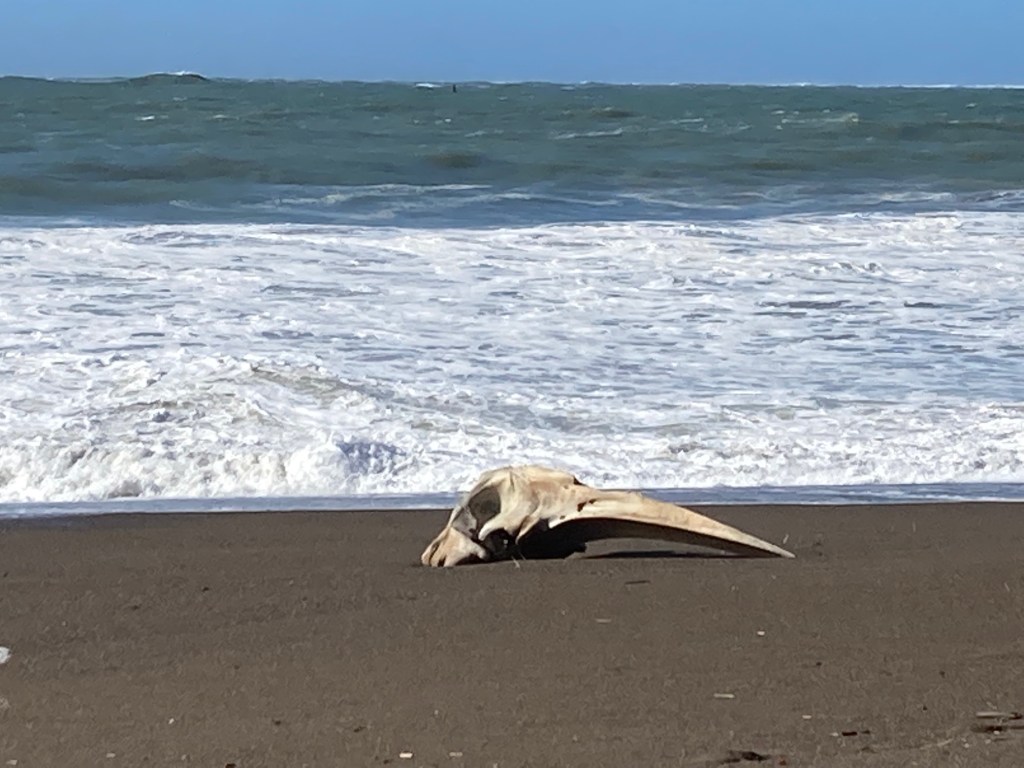
Atmospheric patterns above the north Pacific fuel the California Current and its upwelling system when pressure gradients develop at the intersections of dominant pressure centers and generate the persistent cyclic northwest spring winds.
The waxing, waning and interplay of the Aleutian Low (over the Gulf of Alaska), and the North Pacific High (over the North Pacific Subtropical Gyre) determines the duration and strength of the spring winds, which determines the duration and strength of upwelling. This variability leads to fluctuations in the physical, chemical, and biological conditions of the upwelled water. And this results in variations in plant growth, nutrient availability, and productivity in the California Current upwelling ecosystem (CCS).
Periodic large scale oceanic and atmospheric oscillations such as El Nino, La Nina, the Pacific Decadal Oscillation, and the North Pacific Gyre Oscillation also influence the CCS. El Nino events contribute to slowing, warming and low productivity in the CCS, and La Nina events can deliver cooler ocean temperatures, increasing northwest winds and increased productivity of the CCS.
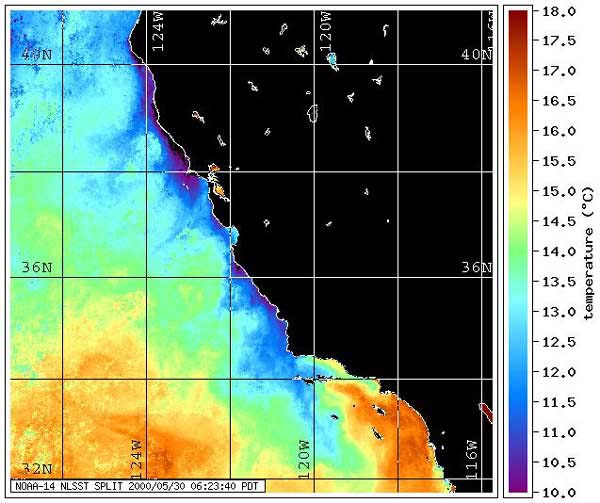
Decadal cycles within the north Pacific region create variability in atmospheric forcing and oceanic response. The Pacific Decadal Oscillation (PDO) influences variability in sea surface temperatures in the north Pacific. Warmer sea surface temperatures, or positive PDO values, are associated with a stronger Aleutian Low, weaker coastal upwelling, and lower productivity. Cooler sea surface temperatures/negative PDO values, are associated with a stronger North Pacific High, stronger upwelling, and increased productivity. Rapid transitions can occur between the positive and negative PDO cycles, with dramatic effects on California’s weather patterns and coastal environments.
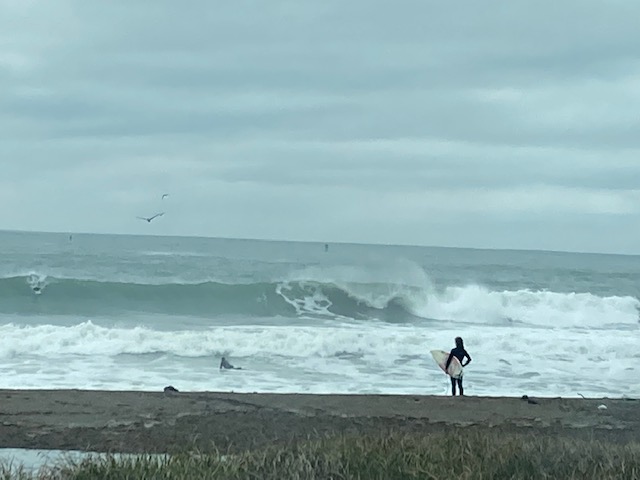
The North Pacific Gyre Oscillation represents variability in sea surface height in the North Pacific over decades and the relative strength of the Gyre, which feeds the California Current. Positive values show higher sea surface heights, a stronger North Pacific Current, and higher nutrient availability. Negative values represent the opposite scenario. Concern over the effects human caused climate change will have on the CCS has prompted scientific studies analyzing an increase in ocean acidification, as well as the effects of persistent pattern shifts in prevailing winds.
References and further reading:
Oceanography of the California Current System
Annual California Current Ecosystem Status Report
National Marine Ecosystem Status – California Current Region
Chenillat, F, P. Rivière, X. Capet, E. Di Lorenzo, and B. Blanke 2012. “North Pacific Gyre Oscillation modulates seasonal timing and ecosystem functioning in the California Current upwelling system.” Geophysical Research Letters 39: doi:10.1029/2011GL049966, 2012
Chhak, K and E. Di Lorenzo. 2007. “Decadal variations in the California Current upwelling cells.” Geophysical Research Letters 34: doi:10.1029/2007GL030203, 2007
Huyer, Adriana. 1983. “Coastal Upwelling in the California Current System.” Progress in Oceanography 12. no. 3: 259-284. https://doi.org/10.1016/0079-6611(83)90010-1.
Mooney, Harold and Erika Zavaleta. 2016. Ecosystems of California. Oakland: University of California Press.
Quilfen, Y, J. Shutler, J.-F. Piolle, and E. Autret 2021. “Recent trends in the wind-driven California current upwelling system.” Remote Sensing of Environment 261.
Discover more from Cal Geographic
Subscribe to get the latest posts sent to your email.
