
An Overview of California’s Mediterranean Climate System
California is one of only five Mediterranean climate regions found in a narrow band around the world between 30° to 40° north and south latitude, on the coastal west sides of continents. Characterized by long dry summers and short wet winters these bioregions are flanked by cold oceanic eastern boundary currents and semi-permanent high pressure atmospheric cells offshore. The California Current, one of Earth’s most productive eastern boundary currents, transports cold nutrient rich waters from the North Pacific southward down the California coast. In concert with the California Current, the offshore presence of the massive North Pacific High pressure cell shapes our weather, climate, and bioregion.
The interplay of the California Current and the seasonal shifts of the North Pacific High deliver our dry and wet seasonal cycles. On “normal” years the North Pacific High creates dry conditions for most of the year by blocking storm tracks associated with oceanic low pressure systems, and in the winter retreats equatorward, allowing maritime airmasses and cyclonic storms developing in the north Pacific to make their way into the our Mediterranean biome region, bringing much needed precipitation.
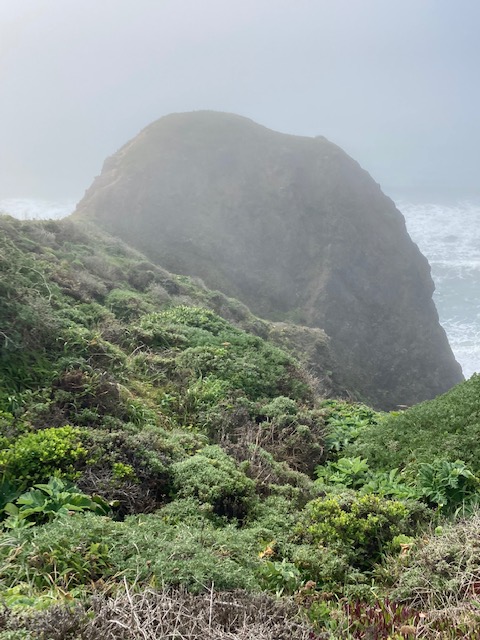

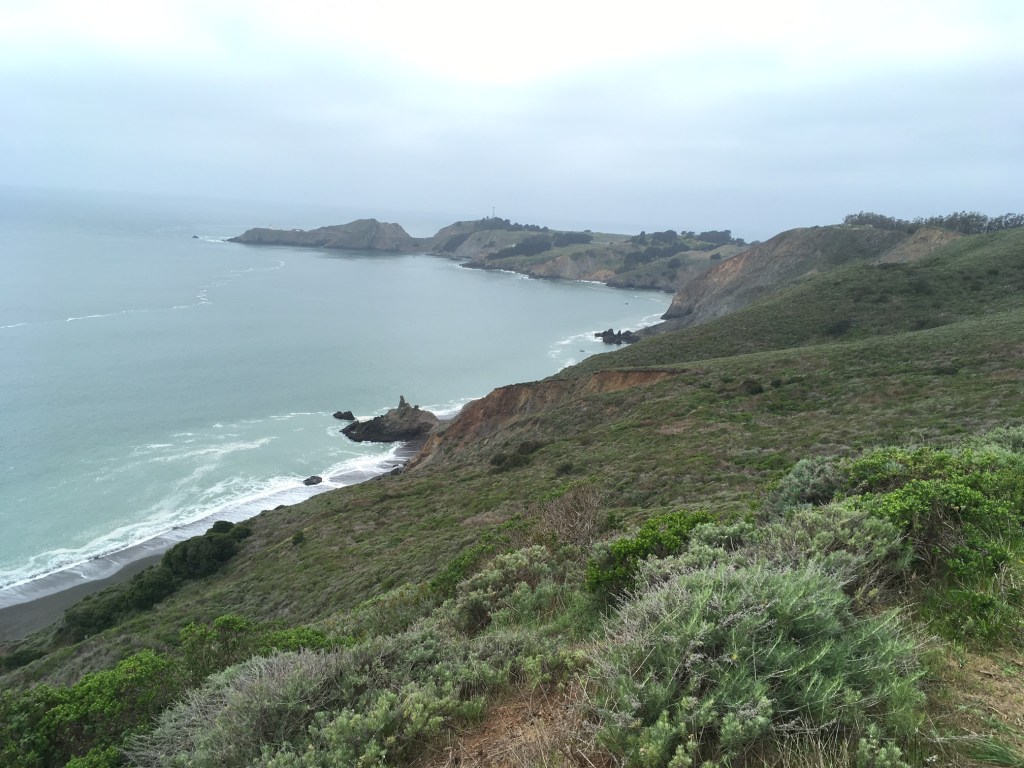
The influence of oceanic and atmospheric oscillations such as El Nino, La Nina, the Pacific Decadal Oscillation, and the North Pacific Gyre Oscillation greatly affect the strength and shifting of the North Pacific High pressure cell from year to year and from decade to decade, resulting in highly variable and unpredictable annual precipitation. Human caused climate change and a warming arctic have also exacerbated the unpredictability of our seasonal cycles, by causing atmospheric pressure cells to become “stuck” in place, thus strengthening the North Pacific High which deflects precipitation for longer periods, creating extreme and prolonged drought conditions throughout California and the west.

-R. Forest
Vegetation communities have evolved several physical adaptations to tolerate drought and heat, conserve water, and flourish in the mostly dry and unpredictable Mediterranean climate. This includes summer deciduousness, fire tolerance, and sclerophyllous adaptations such as heavy peeling bark, shoots that can emerge from the baseroots, and small, thick leathery leaves. In contrast, the coastal dune, prairie, and soft scrub species are adapted to tolerate and benefit from salt spray from the ocean, the continuous brunt of oceanic winds, and the humidity of advection fog off the ocean. Coastal vegetation is usually prostrate in stature to endure winds, feature waxy or hairy leaves to tolerate the influx of salt spray, and rely on fog drip for soil hydration and foliar uptake in the summer months, which reduces the need for summer deciduousness.


The evolution of Earth’s climates is unendingly complex and ever-fluctuating over geologic time. The Mediterranean climate is no exception. However, it can be said that the present Mediterranean climate we experience in California is about 5-15 million years old, and has been in place since the middle to late Miocene epoch. Regional climates develop and change with the shifting of tectonic plates and the astronomical cycles of global glacial and interglacial periods. When oceanic passages between landmasses are opened or closed, or land masses shift toward the equator or become emplaced over the poles, or mountain ranges and plateaus rise or fall, global oceanic and atmospheric streams slow, stop, shift, or increase – drastically changing circulation patterns, water and air temperatures, precipitation and drought, and thus climate.
Due to these factors, by the late Miocene there were increasingly cooler deep sea temperatures and an increase in cold oceanic upwelling along western coasts of the world, which led to the stabilization of the air masses over the eastern Pacific, and the onset of the summer drought/winter precipitation climatic pattern. In conjunction with astronomical cycles and the current tectonic setting, the earth is currently in a warming phase within the larger glacial cycle. There have been many warming and cooling phases within this glacial period since the last glacial maximum which was in the Pleistocene epoch, only about 20,000 years ago. However, humans have shifted the tides of our current glacial cycle by creating an artificial and accelerated global warming regime.
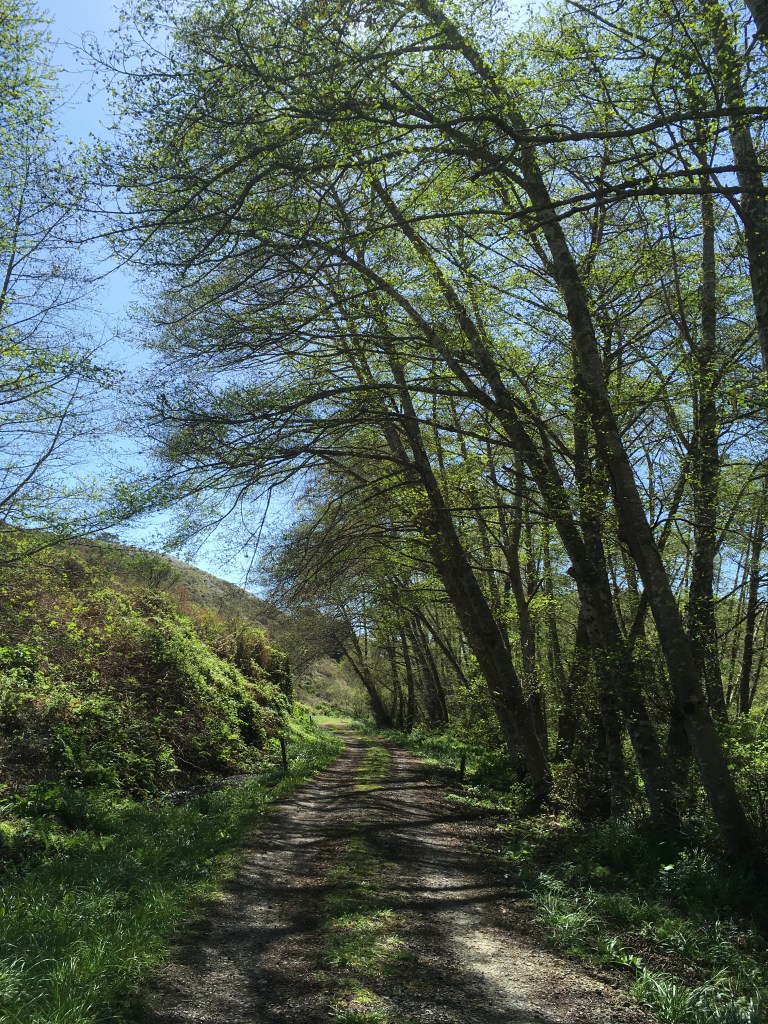
California’s massive latitudinal extent and monumental topography contribute to wide-ranging precipitation rates and microclimates across the state. This in turn contributes to California’s unique mosaic of habitats, ecosystems, and living landscapes within our Mediterranean climate bioregion. Prevailing weather systems bring rain generally from a northwest to a southeasterly direction across the state in the winter, and fall across northwest to southeastern trending mountain ranges.


From a longitudinal view, one can draw a line across the state from the Monterey Bay in the west to Death Valley in the east, and see the dramatic effects these mountains and valleys have on precipitation rates. When such systems encounter the western windward slopes of the coastal ranges and experience orographic lift plentiful precipitation is released before continuing over and down the leeward side of the ranges, which provide a rain shadow effect over the eastern landscape and valleys. Next releasing even more rain or snow over the windward slopes of the Sierra-Nevada, a system will then pass over the rain shadow of Death Valley, with a mean annual precipitation rate of six centimeters (2.4 inches). A steeply inclining (or declining, depending on the season) air temperature gradient can also be observed along the same longitude line, due to the same blocking effects of north-south trending mountain ranges as one travels further away from the climatic influence of the ocean.

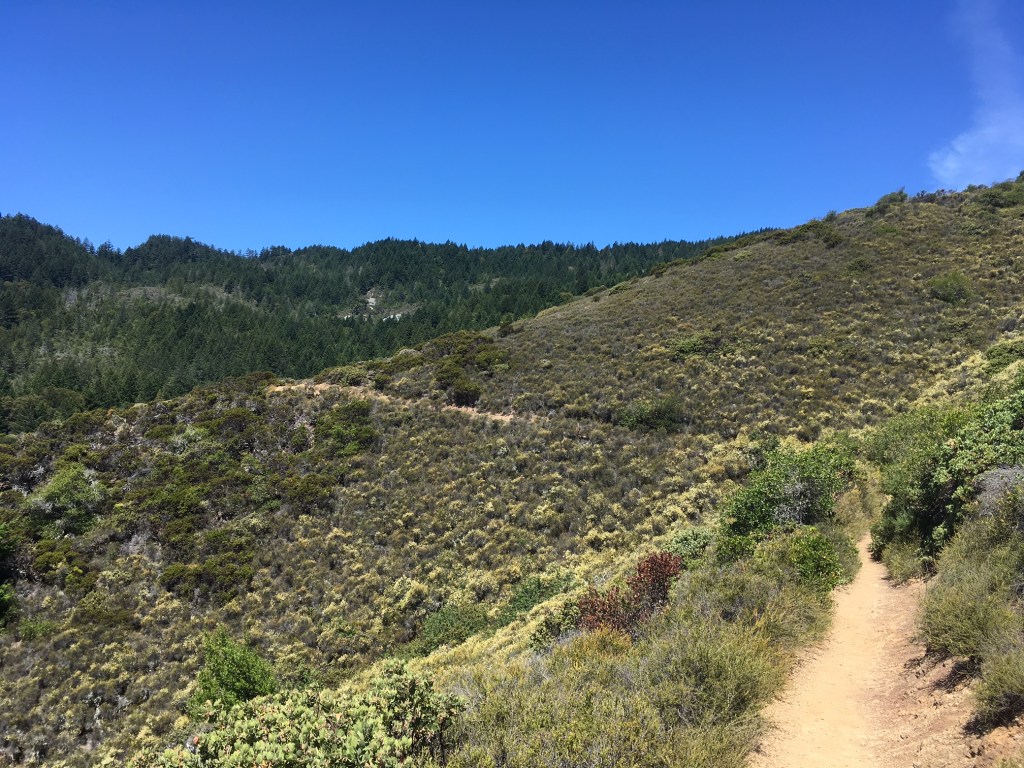

From a latitudinal view, the southeasterly flowing weather systems sweep rain across a state that will experience an approximate 30 inch difference in annual rainfall from wet Eureka in the far northwest to dry San Diego at the southern border. When analyzing one habitat on a latitudinal scale, like Coastal Scrub/Soft Chaparral, a gradual but dramatic successive cline in the species mosaic can be observed from north to south. Coastal scrub is found in a narrow strip along the California coast, and transitions from northern coastal scrub into northern bluff scrub into southern coastal scrub and into coastal sage scrub, with individual species and habitat types overlapping. Maritime chaparral and coastal prairie intersect with all of these coastal scrub types, and several sub-types of coastal scrub are found throughout the range as well. In the northern extent, the mostly evergreen dominant species of Northern Coastal Scrub can be found in rich, moist soils, and at the southern extent the woody dominants of Coastal Sage Scrub are drought deciduous.
References and Recommended Reading:
Barbour, Michael, T. Keeler-Wolf, and A Schoenherr. 2007. Terrestrial Vegetation of California. Berkeley: University of California Press.
Ingram, B Lynn, and Frances Malamud-Roam. 2013. The West Without Water. Berkeley: University of California Press.
Kelly, Anne, and Michael L. Goulden. 2008. “Rapid shifts in plant distribution with recent climate change.” Proceedings of the National Academy of Sciences 105(33):11823-6. doi: 10.1073/pnas.0802891105.
Mooney, Harold and Erika Zavaleta. 2016. Ecosystems of California. Oakland: University of California Press.
Rundel, Philip, et al. 2016. “Mediterranean Biomes: Evolution of their vegetation, floras, and climate.” Annual Review of Ecology and Evolution 47: 383-407. doi:10.1146/annurev-ecolsys-121415-032330
Wrubel, E, and V. T. Parker. 2018. “Local patterns of diversity in California northern coastal scrub.” Annual Review of Ecology and Evolution 8: 7250–7260. https://doi.org/10.1002/ece3.4104
Discover more from Cal Geographic
Subscribe to get the latest posts sent to your email.
