The Coastal Scrub Mosaic in California (Don’t Call It Soft Chaparral)
Coastal Scrub Mosaic
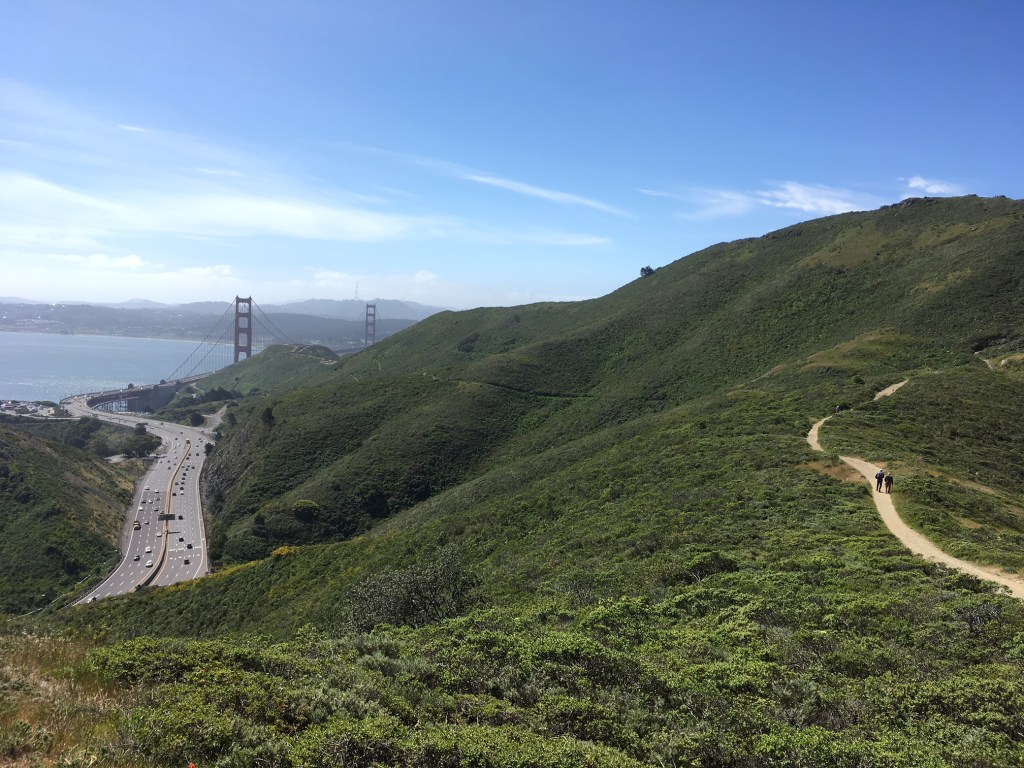
A mosaic of Coastal Scrub vegetation assemblages and habitat types once inhabited most of the coastal regions of the California floristic provinces, from northern Baja to southern Oregon. Often mistakenly identified as “soft chaparral” communities, this scrub mosaic flows in a narrow band of shifting and overlapping species composition throughout the maritime coastal ranges, over lowlands and valleys, across marine terraces, and cascading off the edges of coastal bluffs. Characteristic dense, scrubby, species-rich stands are dominated by woody and fragrant shrub types, emblematic of a Mediterranean Climate zone. Although dominated physically by larger woody shrubs, coastal scrublands feature a vibrant understory of herbaceous species (including many rare and endemic California native plants), which serve as the engines of scrub ecosystem productivity. From the arid south coast to the damp and wind-whipped north coast, California’s coastal scrubland ecosystems provide extremely rare refuges of species diversity and richness, under constant threat from human disturbance and coastal development.


General plant traits, adaptations, phenology
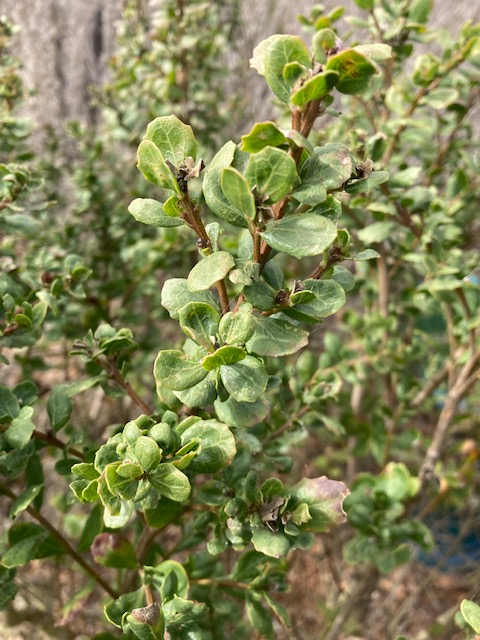
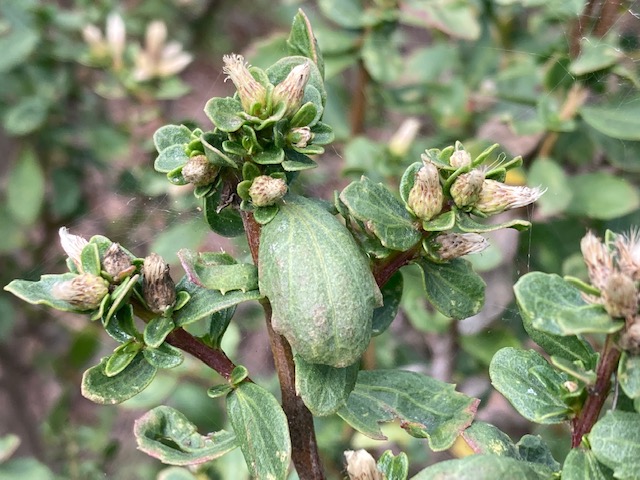
The traits and adaptations of coastal scrub species transforms from south to north based on increasing annual precipitation rates and decreasing temperatures. In general, plant species of all coastal scrub types share phenologic adaptations such as drought deciduousness or tolerance, evergreen and sclerophyllous vegetative characteristics, adaptations to tolerate and benefit from salt spray and summer fog hydration, as well as adaptations to tolerate wind and fire.
Mosaic range – scrubland types south to north
When observing the geographic ranges of coastal scrub community types along a narrow latitudinal band, but extending hundreds of miles north and south along an extensive longitudinal cline, the effects of transitioning microclimates, temperatures, precipitation rates, soil composition, topography, and disturbance rates becomes evident. In order to encapsulate the shifting morphologies of scrublands, names and classifications have been assigned to these distinct communities.


Much scientific research and monitoring effort has been focused on the diverse, rare, and endangered Coastal Sage Scrublands of Southern California (communities dominated by Artemisia californica – California sagebrush); whereas, the Northern Coastal Scrub community (usually dominated by Baccharis pilularis – Coyote brush) has been widely overlooked as a study-subject and, more alarmingly, overlooked as a conservation concern. In fact, Northern Coastal Scrub has often been lumped as the distant trailing edge of the Diablan Coastal Sage Scrub community (vastly different!), with some northern evergreen species thrown in. A core and consistent focus of Cal Geographic will be highlighting the study and conservation of the vital and vanishing ecosystems of Northern Coastal Scrublands.
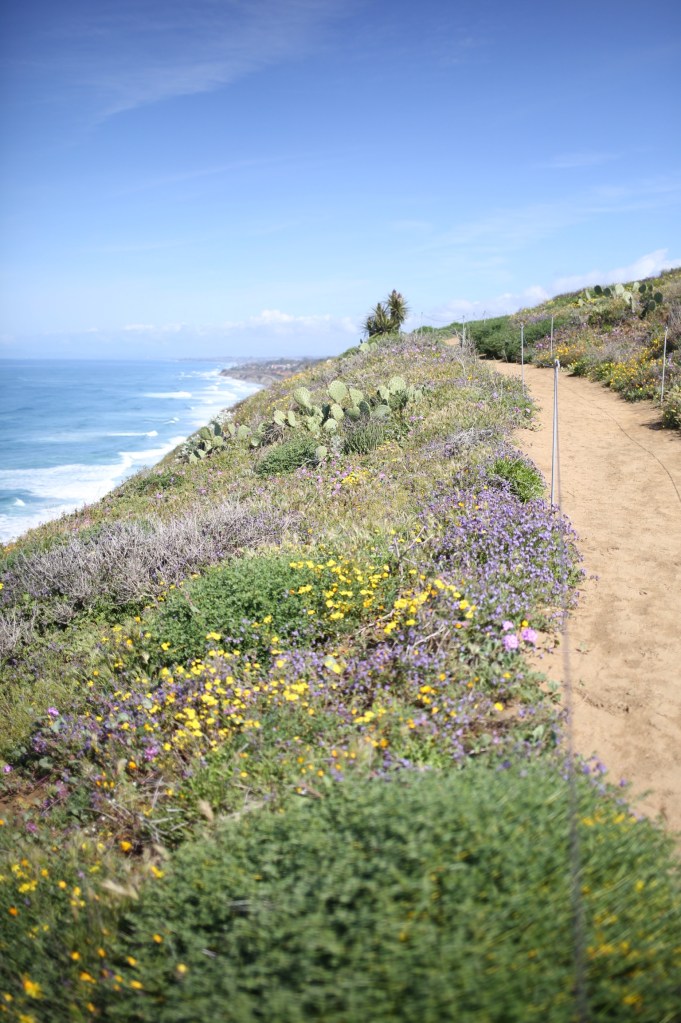
Traveling from south to north we first find the xeric Maritime Succulent Scrubland strands at the northern extent of a range which dominates coastal Baja, Mexico. Maritime Succulent Scrub communities are accompanied by Southern/Diegan Coastal Sage Scrub, also extending up into southern California from Mexico. These scrubland types flow into the Central/Venturan Coastal Sage Scrub, which is bordered by the inland Interior/Riversidian Coastal Sage Scrublands occupying western interior slopes and valleys of Southern California. Coastal sage-dominated scrublands extend through the northern landscapes of central coastal California and scattered through the interior Coast Ranges as the Northern/Diablan Sage Scrub.
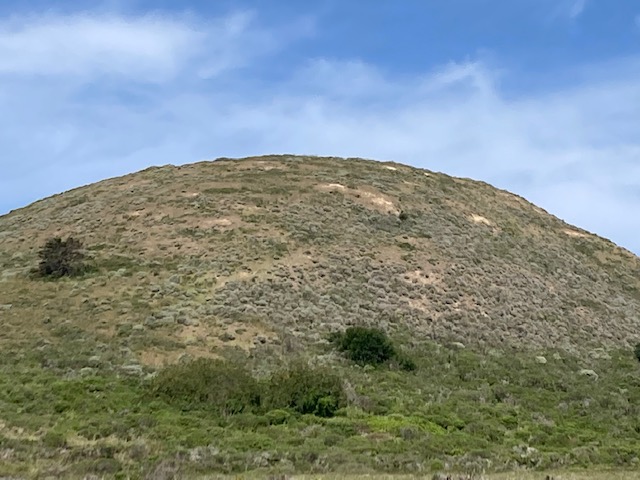


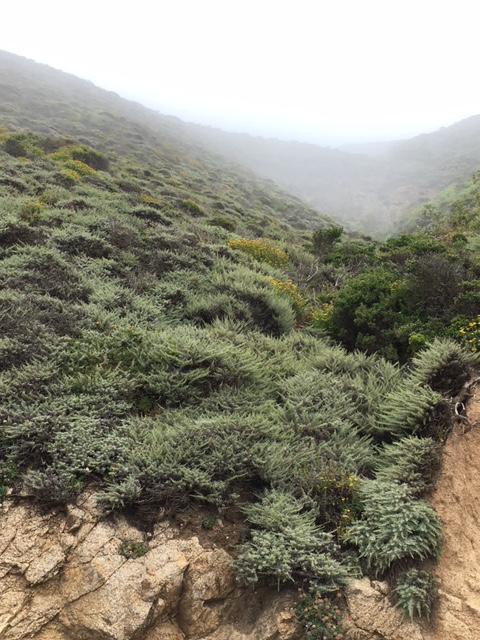

North of the Golden Gate sage scrublands diminish, but are sporadically found peppering dry south-facing slopes of the coastal hills of Marin and Sonoma counties. Diablan Coastal Sage Scrub outcrops still dominate the steep south facing slopes of the Bolinas Ridge on Mount Tamalpais, and intermingle with the robust evergreen shrub species of Northern Coastal Scrub.
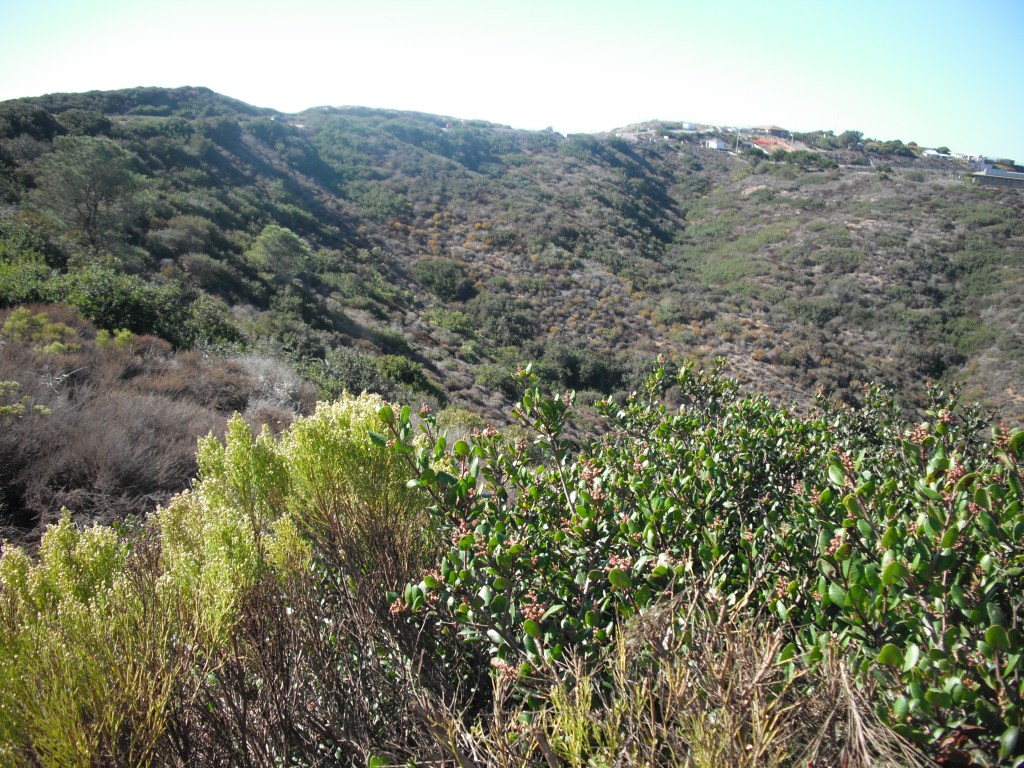
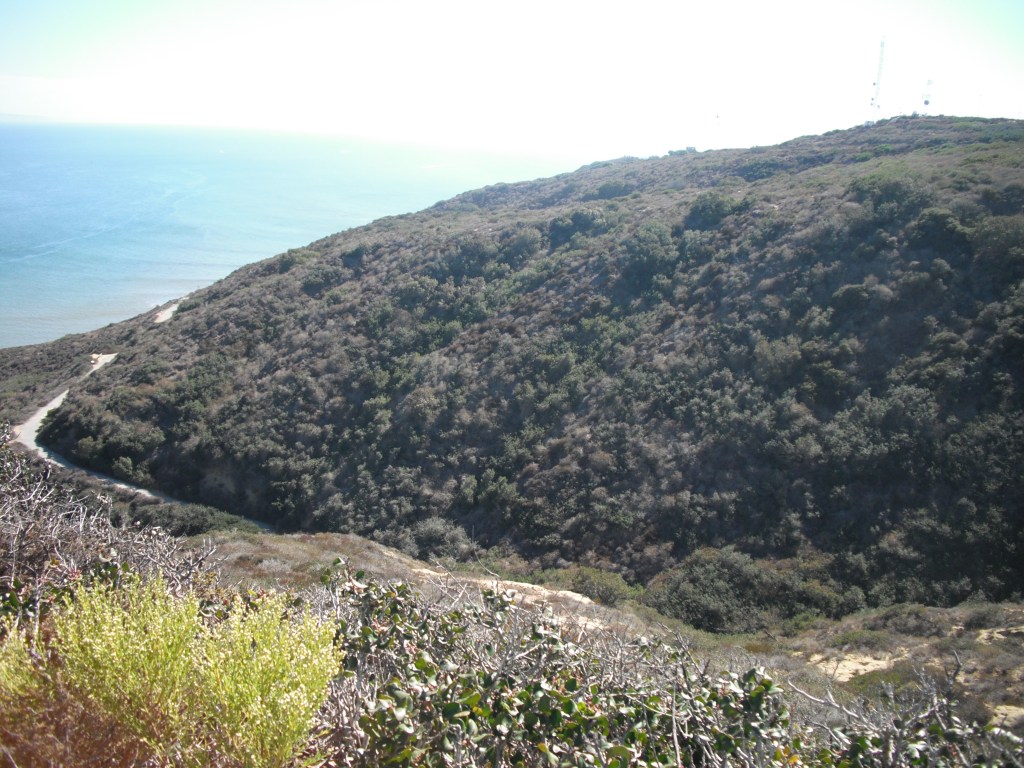
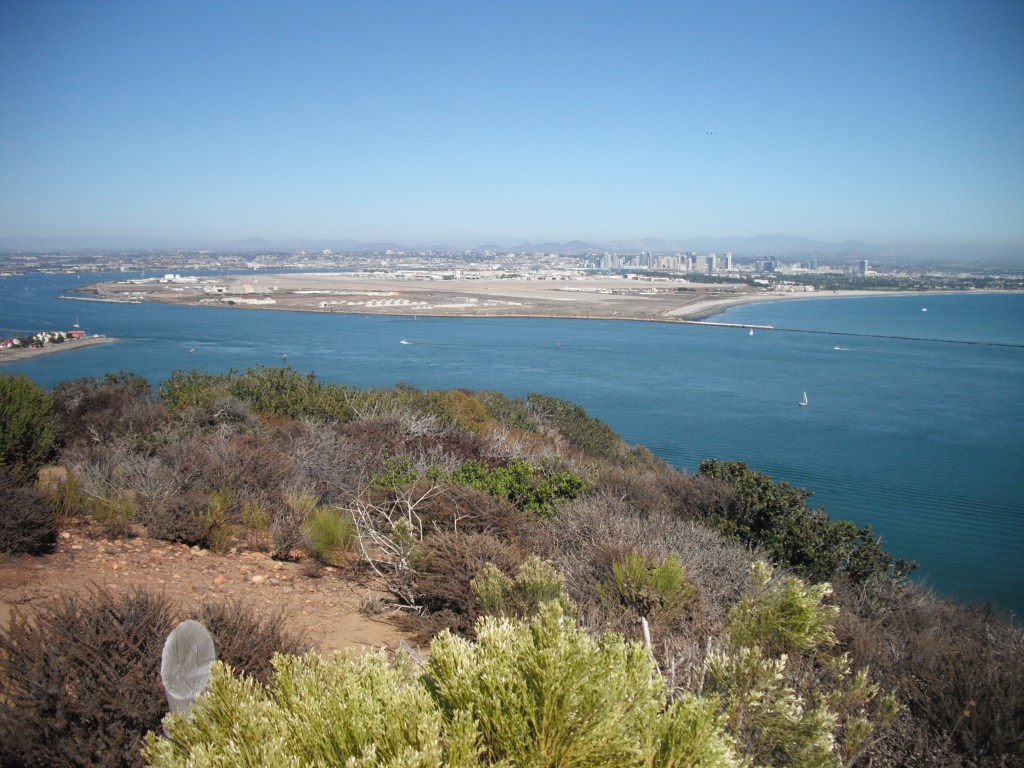
Southern Coastal Bluff Scrub traces the oceanfront edge of all southern coastal scrubland ranges along the Southern California Bight. Occupying steeply sloped and eroding bluff tops and cliff faces, Southern Coastal Bluff Scrub community composition mirrors the species composition found in adjoining Coastal Sage Scrub alliances, but is more prostrate in stature and displays succulent foliage in order to tolerate wind, salt spray, and salt infused soils.

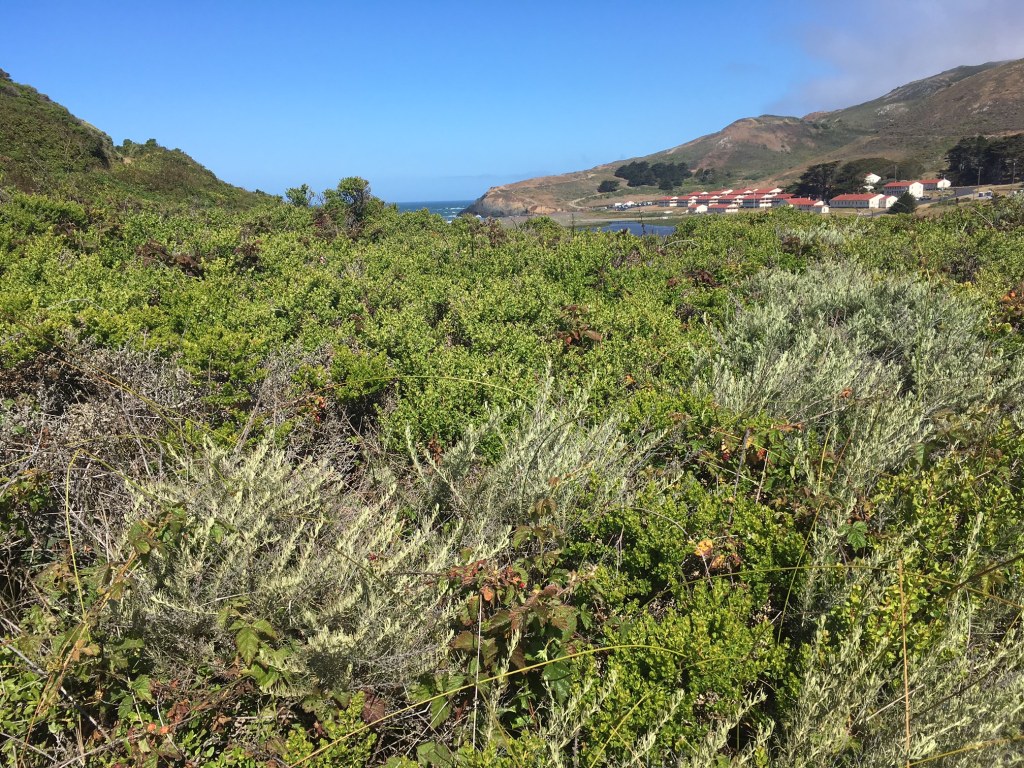
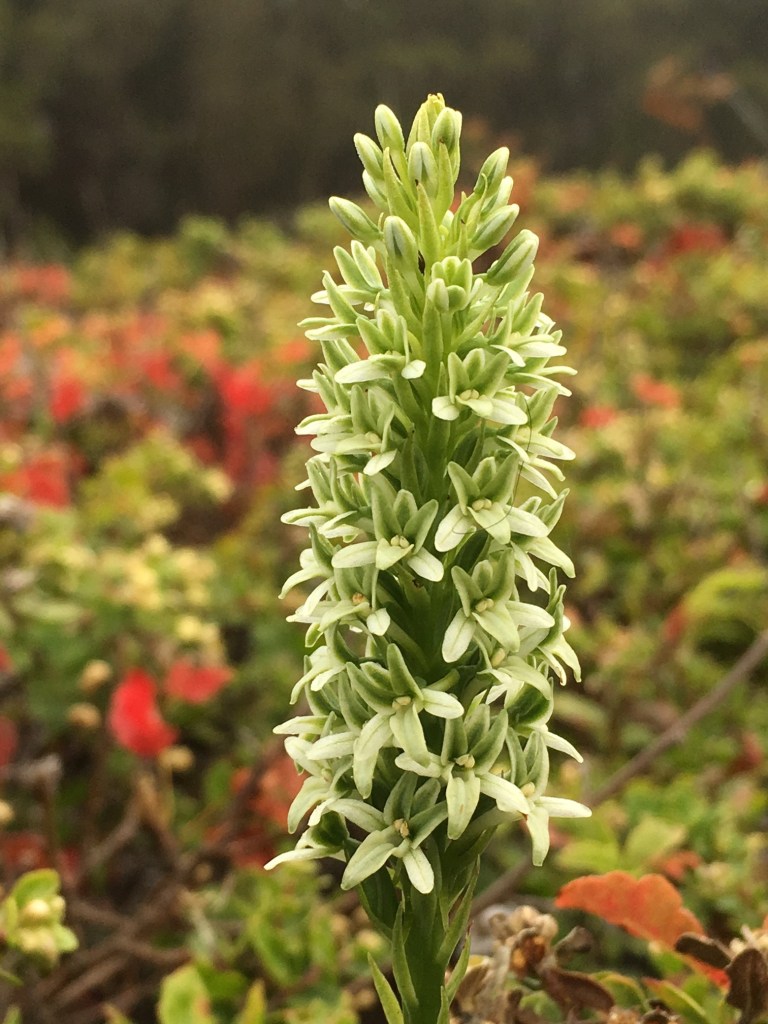

Northern Coastal Scrub is generally found in more moist maritime climates with thicker soils, at lower elevations, and closer to the coast than the southern scrub types. Northern Coastal Scrub extends in a discontinuous band along the coast from the Transverse Range in south-central California to southern Oregon, and is often found on the marine terraces and western slopes and valleys of the Coast Ranges. Within Northern Coastal Scrub communities there is a rich diversity of associated habitats and dominant plant species. Less diverse strands of Northern Coastal Scrub can be found hugging lowlands within reach of maritime-influenced weather streaming inland through the Golden Gate, and the gap provided by the San Francisco Estuary and Delta. Following this marine influence, scattered pockets of scrub can be found along the rolling landscapes bordering the California Delta, and all the way to the low foothills of the central Sierra Nevada in line with this gap.
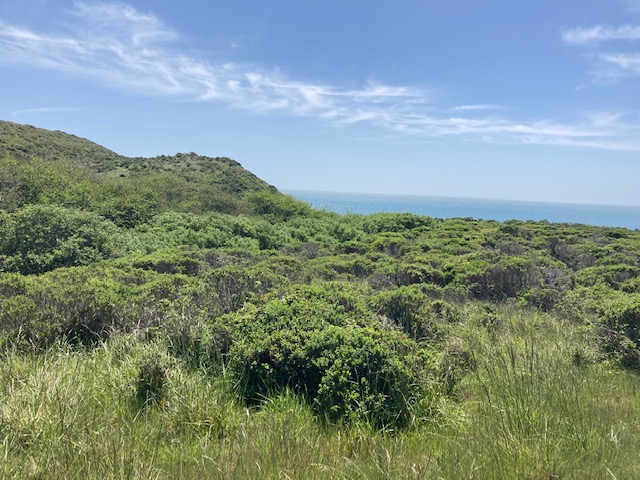
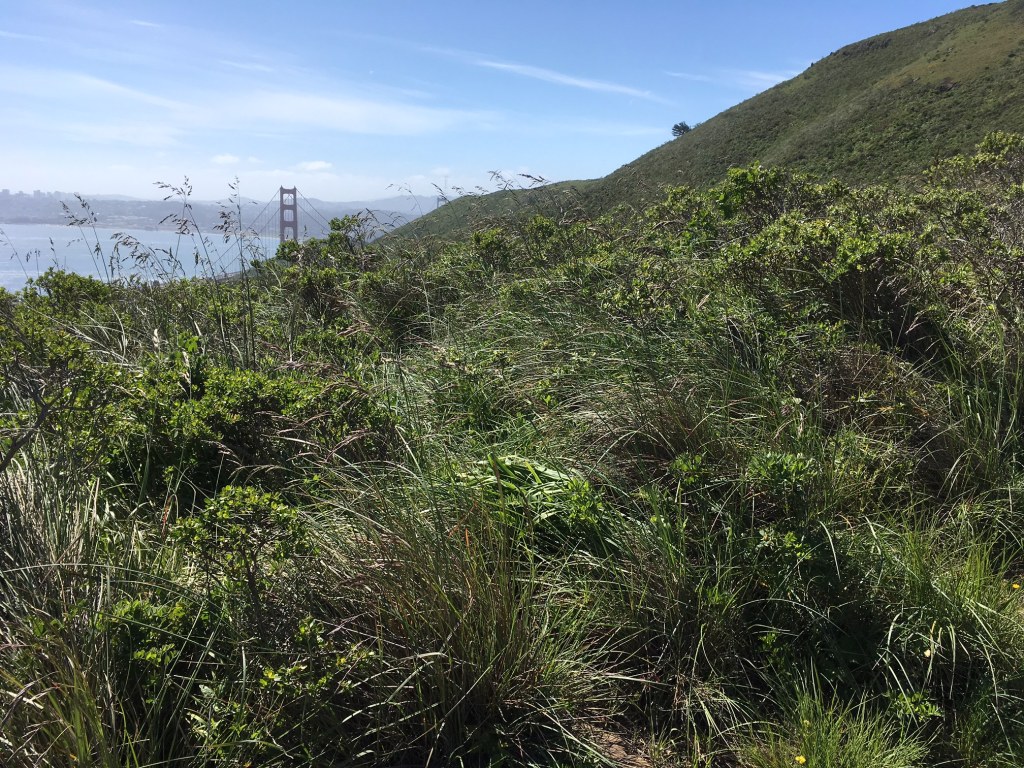


Northern Coastal Scrub has been classified into several distinct series, or alliances, based on dominance of woody species. California Dept of Fish and Wildlife (Cal Fish and Game) identifies at least nine alliances of Northern Coastal Scrub, encompassing at least 30 distinct botanical associations. Prevalent alliances of Northern Coastal Scrub from Marin County northward include Coyote Brush Scrub, Ceonothus Scrub, Coffeeberry Scrub, Huckleberry/Salal Scrub, Rubus spp Scrub, and Hazelnut Scrub.
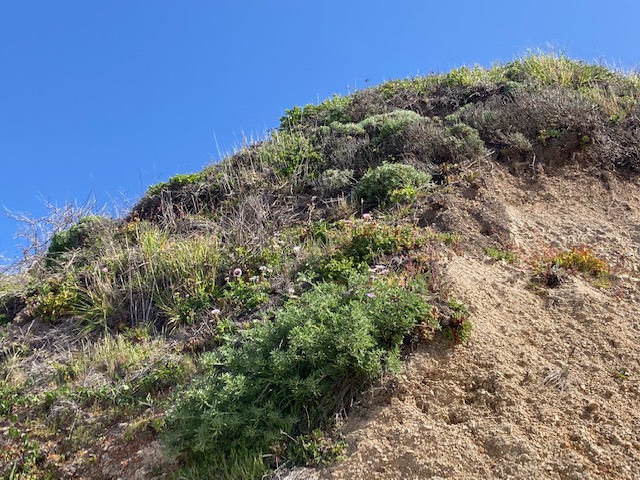
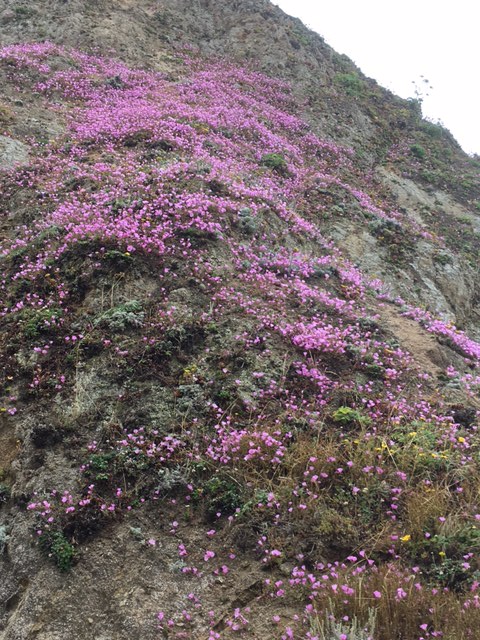


Special mention is given to Northern Coastal Bluff Scrub, which traces an even narrower latitudinal band directly adjacent to the coast and marine climate influence, often occupying steeply sloped cliff faces and coastal bluffs up and down the central and north coast. Northern Coastal Bluff Scrub composition includes species found in the Northern Coastal Scrub alliances, but as a community is more prostrate in stature and has more succulent foliage to tolerate salt spray and salt infused soils. Northern Coastal Bluff Scrub is a highly endangered ecosystem due to the fragility of the natural geographic limitations and topographic conditions of its range, and due to human disturbance, development, and grazing. Northern Coastal Bluff Scrub can also be found widespread along the cliffs and bluffs of the Channel Islands.
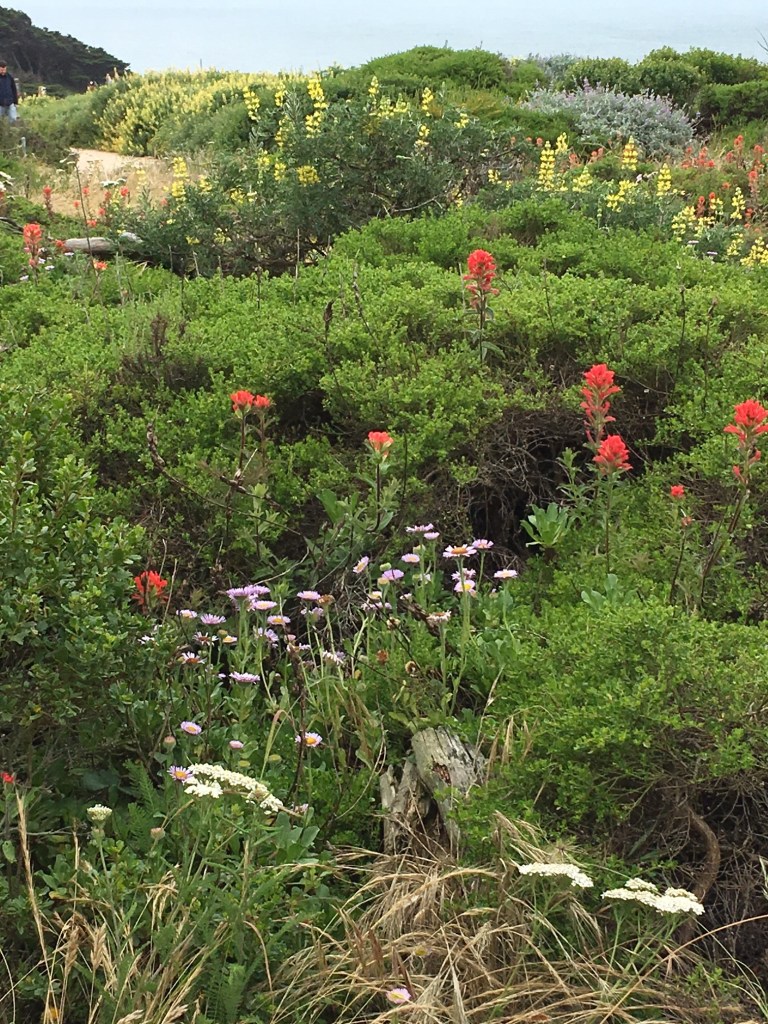

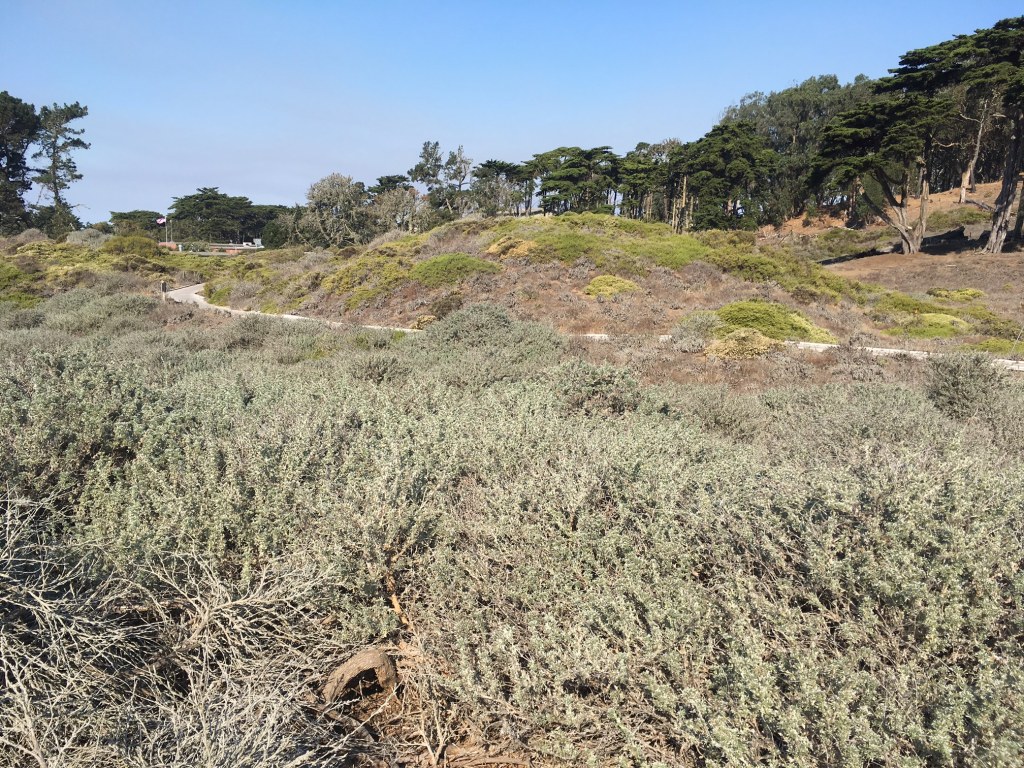

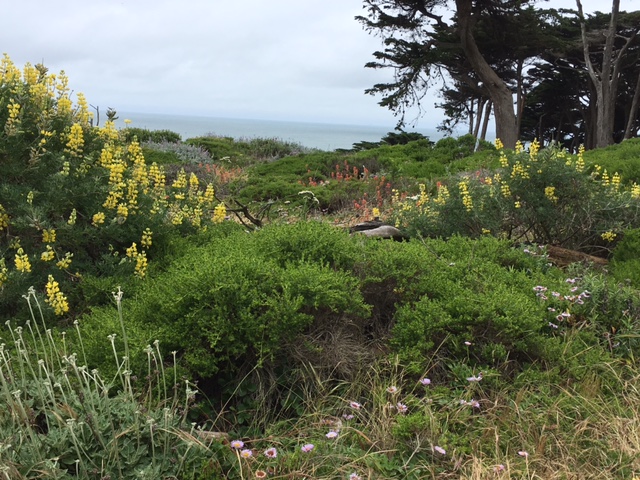
Dune Scrub, or Backdune Scrub, is the westerly partner of all of California’s Coastal Scrub communities. Present in rare and precious pockets of stabilized backdunes and Pleistocene dune field remnants, Backdune Scrub is found scattered along the entire latitudinal extent of far western California’s coastal front, in dune systems from the Mexican border to the Oregon border. Backdune Scrub can be reviewed in both the dune/beach strand ecosystem category, and the Coastal Scrub category.
As with the other Coastal Scrub types, Backdune Scrub is dominated by woody shrubs, providing structure and vital habitat, with a rich understory of herbaceous species, and occasionally scattered (often dwarfed) tree species. From south to north, the Backdune scrub communities host a shifting species mosaic, but feature unifying characteristic dominant shrub species, such as Ericameria ericoides, and Lupinus chamissonis.

Rare and endemic plant species from scrub types
California has the highest diversity of native plants of all US states. With 6500 native taxa, over 2400 plant species in California are rare, and over 1300 species are endemic to California alone. The coastal scrublands of California are ecosystem hotspots and highly endangered botanical communities, providing refuge for an array of rare plants and animals.
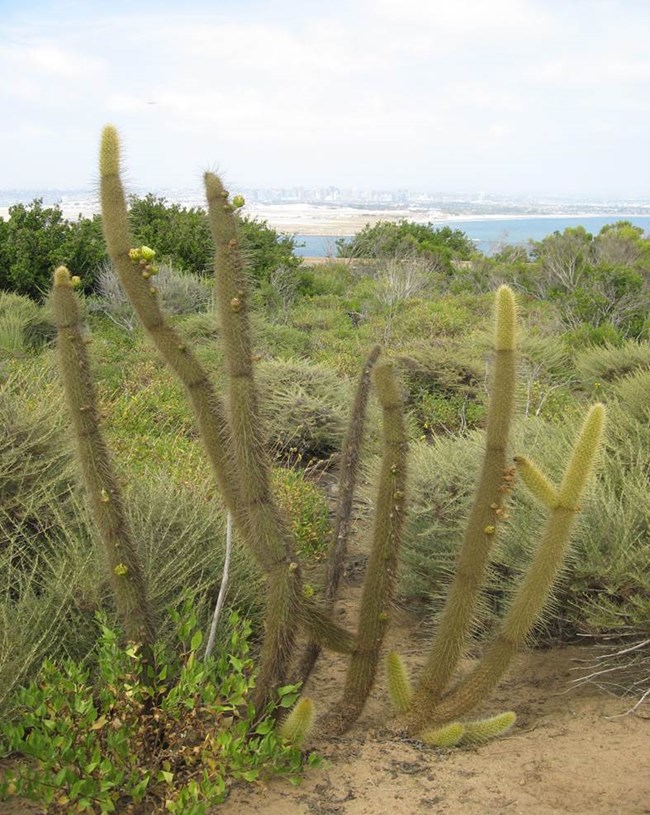
Within the arid Maritime Succulent Scrub community a variety of lush and demure succulents, herbs, and shrubs support this fragile habitat. An intriguing palette of diverse cacti, agaves, dudleyas, fire resistant succulents, and shrub species overlapping from southern sage scrublands, comprises this most species rich community within the sage scrub types. There is high species endemism within Maritime Succulent Scrub associations, and one interesting aspect of the community is the occurrence of deciduous scrubby tree species, that have evolved away from their eastern winter deciduous adaptations to become drought deciduousness (Fraxinus dipetala , etc). Rare succulents of the Maritime Succulent Scrub of far-southern coastal California include, Bergerocactus emoryi and Ferocactus viridescens. And rare shrubs include Ribes viburnifolium, Lycium californicum, and Viguiera laciniata.
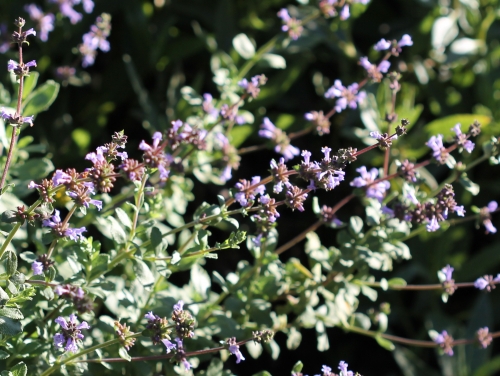
As the emblematic community of the biologically rich and unique Mediterranean climate zone, Coastal Sage Scrub hosts the highest concentration of rare species of all California ecosystems, and is one of the most endangered habitats in the US. The Calflora database lists a whopping 205 species of the Coastal Sage Scrub, as considered rare. Two of these species, unique to the Coastal Sage Scrub mosaic and representing the iconic sage and scrub oak groups, are Salvia munzii – Munz’s sage, and Quercus dumosa – Coastal sage scrub oak.
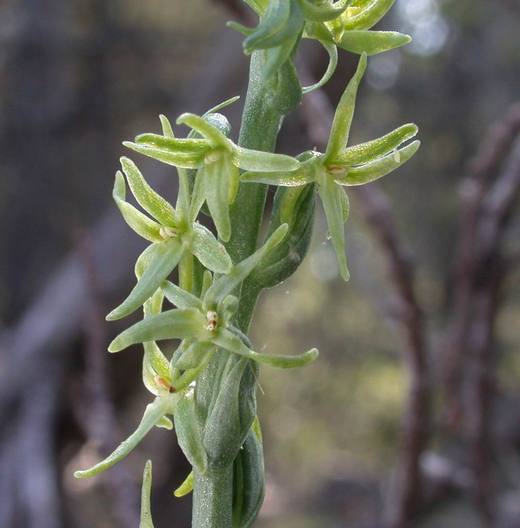
Northern Coastal Scrub, which urgently requires concerted monitoring and conservation efforts, is also an emblematic and endangered ecosystem of the Mediterranean climate biodiversity hotspot, and may closely match Coastal Sage Scrub in species diversity and rarity. Calflora lists 110 plant species as rare within the Northern Coastal Scrub.
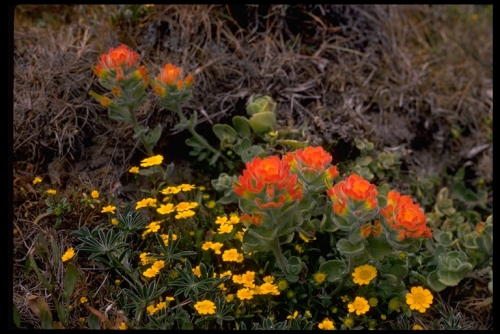
Northern Coastal Bluff Scrub closely matches the species composition of Northern Coastal Scrub. In San Francisco’s Presidio/Golden Gate National Park, Northern Coastal Bluff Scrub has been given special conservation attention, and the rare species and habitats it overlaps with, such as Serpentine bluffs and seeps. Two endangered Northern Coastal Bluff Scrub species found in the Presidio are the Arabis blepharophylla – Coast rock cress, and Erysimum franciscanum – San Francisco wallflower. Two other notable rarities of the Northern Coastal Bluff Scrub include the Castilleja mendocinensis – Mendocino Coast Indian-paintbrush, and Hesperevax sparsiflora var. brevifolia – Seaside, or Short leaved Evax. All of the above species overlap into Northern Coastal Scrub.

As with all Coastal Scrub community types, the composition of the Backdune Scrublands transitions from xeric in the south, to more moist in the north, with signature plant species of the other Coastal Scrub communities thrown in: succulents and cacti in the southern Backdune Scrub types, Artemisia californica in the central Backdune Scrub communities, and Baccharis pilularis found in the northern Backdune scrublands. And, sharing one more parallel fate with all Coastal Scrub systems, Backdune Scrub is an extremely endangered ecosystem in California, severely impacted and widely extirpated by human disturbance and development.
Notable preserved and restored remnant Backdune Scrub systems are found, from south to north, at Vandenburg Air Force Base near Point Conception; Guadalupe-Nipomo dunes; fringing Moro Bay; at Asilomar and Fort Ord in the Monterey Bay Area; cultivated at The Presidio of San Francisco (Golden Gate National Park); and anchoring dune systems along the western Point Reyes Peninsula. Rare plants found in these systems include: Horkelia cuneata var. sericea – Kellogg’s horkelia, Gilia capitata ssp. Chamissonis -Dune gilia, and Chorizanthe cuspidata var. cuspidata – San francisco bay spineflower.
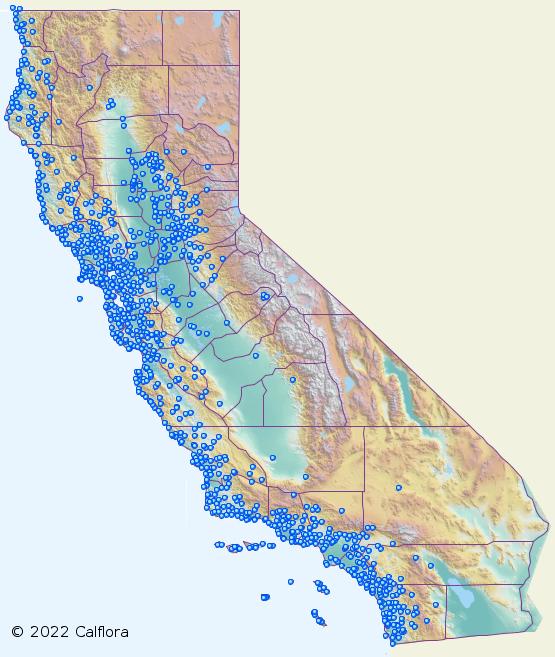


Associated habitats and ecosystems/the bigger mosaic
The Coastal Scrub mosaic of California borders and comingles with the greater mosaic of California’s western natural communities, habitats, and ecosystems. Some of Coastal Scrub’s more prominent community partners include: coastal prairie; maritime chaparral and other chaparral types; wetlands, including vernal seeps, wet meadows, and riparian zones; oak woodlands; dune scrub and strand; and Serpentine habitats.
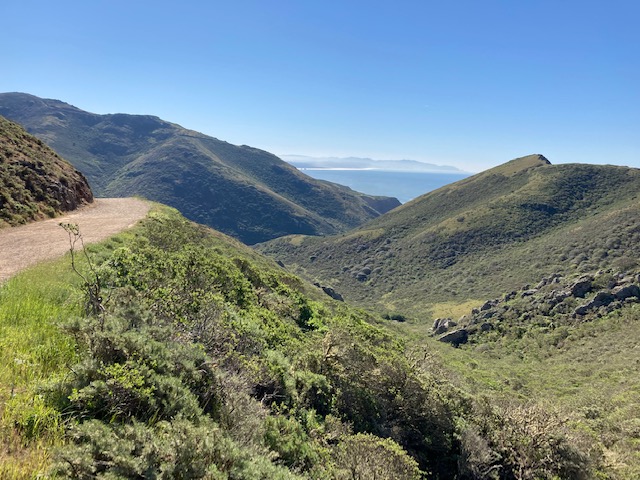
References and links:
Barbour, Michael, T. Keeler-Wolf, and A Schoenherr. 2007. Terrestrial Vegetation of California. Berkeley: University of California Press.
Baxter, James W., and V Thomas Parker. 1999. “Canopy gaps, zonation, and topography structure: a northern coastal scrub community on California coastal bluffs.” Modrono 46 (2): 69-79.
Davis, Frank W., David Stoms, and Peter Stine. 1994. “Distribution and conservation status of coastal sage scrub in Southwestern California.” Journal of Vegetation Science 5: 743-756. DOI: 10.2307/3235887.
Kelly, Anne, and Michael L. Goulden. 2008. “Rapid shifts in plant distribution with recent climate change.” Proceedings of the National Academy of Sciences 105(33):11823-6. doi: 10.1073/pnas.0802891105.
Mooney, Harold and Erika Zavaleta. 2016. Ecosystems of California. Oakland: University of California Press.
Riordan, Erin C., and Philip W. Rundel. 2009. “Modelling the distribution of a threatened habitat: the California sage scrub.” Journal of Biogeography 36: 2176-2188. doi:10.1111/j.1365-2699.2009.02151.
Wrubel, E, and V. T. Parker. 2018. “Local patterns of diversity in California northern coastal scrub.” Annual Review of Ecology and Evolution 8: 7250–7260. https://doi.org/10.1002/ece3.4104
Maritime Succulent Scrub species – Cabrillo National Monument plant list -Calflora
Maritime Succulent Scrub species – Torrey Pines State Park plant list – Calflora
Coastal Sage Scrub rare plant list (205 species) – Calflora
Coastal Sage Scrub native and rare plant list – San Diego County – Calflora
Coastal Sage Scrub Plant Community – Las Palitas Nursery
Northern Coastal Scrub rare plant list (110 species) – Calflora
Northern Coastal Scrub Plant Community – Las Palitas Nursery
Northern Coastal Bluff Scrub rare plants – San Francisco Presidio NPS
Discover more from Cal Geographic
Subscribe to get the latest posts sent to your email.
