
Blizzards are rare in California, and when they do occur it is usually in the higher alpine zones of the Sierra-Nevada and southern Cascade Range, where they can be hard to detect or predict. Technically, a blizzard is a severe storm characterized by high winds and reduced visibilities due to falling or blowing snow. The National Weather Service defines a blizzard as having sustained wind or frequent gusts of 16 m per second (30 kt or 35 mi per hour) or greater, accompanied by falling and/or blowing snow, reducing visibility to less than 400 m (0.25 mi) for 3 hours or longer.
Official blizzard warnings for California by the National Weather Service are uncommon, and blizzard warnings after January are very rare indeed. However, blizzards do occur in California, sporadically punctuating the historic record of whiplashing weather swings, and an undulating climate influenced by the fluid dynamics of oceanic oscillations and human caused climate change.
In this continuum of input and time, we now find ourselves on the receiving end of a late and wet winter with above average precipitation and a healthy snowpack, for the second year in a row. (And thankfully so, following many years of severe drought and wildfires.) But will this late and hazardous California snowfall season repeat history, and prove to be too much of a good thing?

The Most Infamous California Blizzard that Probably Wasn’t: 1846-1847
The California Gold Rush was yet to be imagined, but a preliminary mid-19th century rush of mostly white immigrants from the Midwest and the eastern US was already unleashed. Following the Oregon Trail on the grueling and naïve westward migration of manifest destiny, they chased a mirage of opportunity toward the land of the setting sun.
This persistent mass exodus set the stage for the Donner Party’s reckless journey into, over, and through California’s treacherous topography. The desperate, cruel, and gruesome circumstances of their failed story did provide an early revelatory broadcast of the harsh realities of California’s unforgiving landscape and climate.
The storms in the Sierra-Nevada that “winter” season started in October of 1846 and did not end until April of 1847. By some accounting there was a series of at least ten storm periods during that harsh winter in California. According to multiple historic first person accounts, the cold and snow was prolonged and relentless, even down to the central coast at San Francisco and Monterey. The Sierra Nevada was an impenetrable and impassable nightmare for months. But were these winter storms actually California blizzards? Was it an El Nino or La Nina year? Or was it some climate anomaly in between?
Patrick Breen, a member of the Donner Party, kept detailed journal accounts of the relentless weather during this period at the high altitude lake (the future, Donner Lake), where a portion of the party remained trapped for months. The journal and the following details survived the encampment and the escape out the following spring:
November 13, the snow was about ten feet deep above 7,000 feet
Five more feet of snow were deposited during a massive storm at the end of November
More snow in December increased the depth at the lake to seven feet with double that amount on the summit
After a series of storms in January and February the snow at the lake was over ten feet deep
On March 3rd a severe blizzard commenced that lasted for two days
More snow fell in March, with the final, major storm period lasting from March 28 to April 3
But were these alpine winter storms technically blizzards? Official and consistent precipitation data did not start being collected in California until either the 1870’s or 1895, depending on the source. And snow surveys did not commence in the Sierra-Nevada until 1929. Reconstructional climate studies utilizing tree ring data and historic lake levels contradict each other as to whether the “winter” of 1846-1847 manifested blizzard conditions in the Sierra-Nevada, or even constituted an above average precipitation/snowfall year.
A possible explanation for this conflict may be found in the water content of the snow itself: If the snow was “dry” (low in moisture content) that winter, the compounding quantities and impenetrable, life threatening snow drifts could have accumulated without measuring a high water content in tree ring data later.
1938
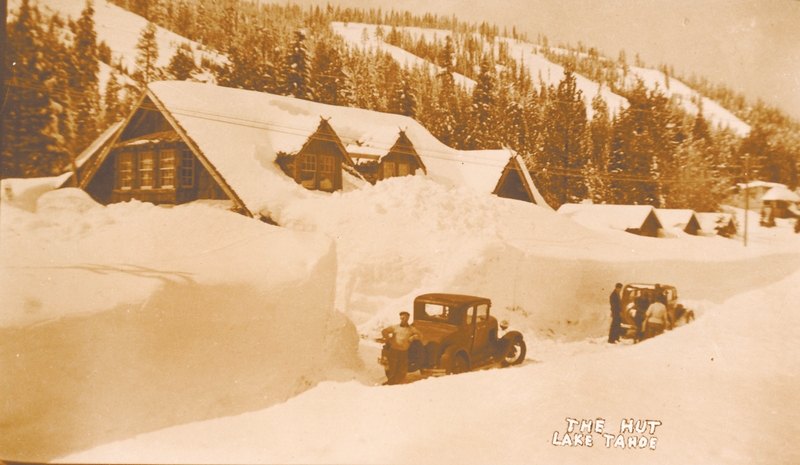
California’s snowiest winter on record was the winter of 1937-1938, with 819 inches/68.25 feet(!) of snow accumulation measured at Donner Pass, by May of 1938. Similar to this year (2023-2024 season), it was a slow and late start for precipitation and snow, but powerful storms commenced by February and March of 1938, delivering the record breaking totals.
At the end of 1937 the storms were mild in temperature, so snowfall was limited and restricted to high elevations. Then at the end of January of 1938 a reversal of weather regimes occurred, temperatures plummeted, and a series of strong arctic storms battered California and the Sierra Nevada for 21 days straight. Blizzards commenced in early February, and by Valentine’s Day, 1938, the snow was 20 feet deep at Donner Summit.
Throughout the winter of 1938 massive flooding and widespread hard freezes occurred across much of lowland California, including the Central Valley and the Los Angeles Basin.
1952
At the start of 1952 the snow in the Sierra Nevada was already 10 feet high at Donner Pass, and record breaking cold temperatures descended on California. The temperature in Truckee dropped to negative -18° F, and other areas of the Central Sierra recorded temperatures as low as negative -42° F that January.
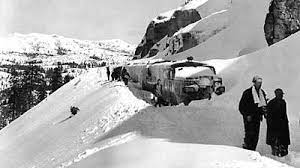
News of the powerful California snow storms of 1952 broadcasted widely, and stuck in the popular imagination, when a streamliner train filled with over 200 passengers and crew collided with an avalanche on the tracks east of Donner Summit, and remained stranded for several days in a blizzard. All were eventually rescued and survived the winter calamity.
Blizzard conditions in the early winter of 1952 also buried and closed Interstate 40 (the forerunner of I-80, and early major highway bisecting the Sierra Nevada) for over a month. The snowfall totals at Donner Summit that winter narrowly matched the records of 1938, at 67.7 feet of snow accumulation.

1976?
I was five years old when the coastal California snowfall of February, 1976 delivered a delightfully shocking, miraculous, magical, fantastical, winter wonderland for exuberant local kids of all ages to delight in. It felt like heaven’s playland had befallen us, and every winter thereafter throughout my childhood I eagerly checked the local ridgeline from my bedroom window each morning, hoping against hope for the return of the gleaming white Oz-like apparition of true winter beckoning from the frosty distance.
But was it a blizzard? I think not, and guesses are all I have, because I can’t find any information or records detailing if the winter of 1976 was exceptionally stormy or snowy, or if blizzards were recorded in the mountains or elsewhere in California. What I have found, however, are countless photos of ill prepared and under-dressed 1970’s Californians throwing snowballs at each other and at passing cars.
1995
In 1995 El Nino cycled back up through the northeastern Pacific and hit California with a vengeance. Along with above average rainfall, courtesy of the warm-ocean and enhanced sub-tropical jet stream, conditions combined to deliver above average, moisture-laden snowfall to the Sierra Nevada and the southern Cascades as well.
The precipitation and snow season of 1995 was protracted, not a late starter, with the arrival of cold storms and blizzard conditions in November from the Gulf of Alaska. November 1995 broke records for cold temperatures in Sacramento. In December, barometric low pressure readings at sea level in California broke records, and oceanic storms delivered extremely high speed and destructive winds along the Pacific Northwest and California coast.
Warm, moisture laden storm series continued through January of 1995, causing precipitation totals to skyrocket across the state and in the Sierra-Nevada. After a lull in February, record snowfall and precipitation continued to pummel the state throughout March and April.
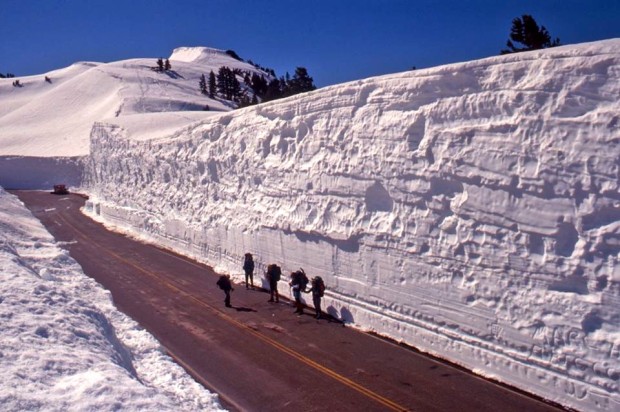
In 1995, the Central Sierra Snow Lab recorded nine feet of water in the snow pack Soda Springs, and 10.5 feet of snow water content was measured at Palisades Tahoe (Squaw Valley). Portions of the massive Sierra snow pack of 1995 never completely melted that year, and by May, 662 inches (55 feet) of snowfall had been measured at Alpine Meadows, and 598 inches at the Central Sierra Snow Lab.
Interestingly, as quickly and forcefully as El Nino conditions arrived along the California coast in early 1995, the oscillation just as swiftly retreated, seceding to cold ocean conditions by June of that year, and a total turnover to a strong La Nina regime by the fall.

March 2-4, 2024
The 2023-2024 winter storm season in California has gotten a late start, with scattered storm events so far delivering average precipitation, and with a moderate to strong El Nino regime at our doorstep restrained by the Madden Julian Oscillation, and other complex interplays of teleconnections and the factors of fluid dynamics.
However, it may now be unleashed, as March is coming in like a lion, as they say. The National Weather Service has promptly delivered a rare preemptive blizzard warning for severe, sustained, life threatening weather conditions forecasted across all mountainous regions of central and northern California.
These warnings have been extended for several days, with blizzard conditions in the central Sierra Nevada persisting. Storm winds in the coastal range have been measured at speeds over 100 mph, and wind gusts reached 190 mph at Palisades Tahoe. Snow accumulations are predicted to rank among the top historical recorded blizzard events in California.
White-out conditions and heavy snow accumulations have caused a multi-day closure of Interstate 80 through the Sierras, and most ski resorts, as well as Yosemite National Park, required visitor evacuations, and remain closed through the duration of the blizzard conditions of March 2024.

Discover more from Cal Geographic
Subscribe to get the latest posts sent to your email.
