
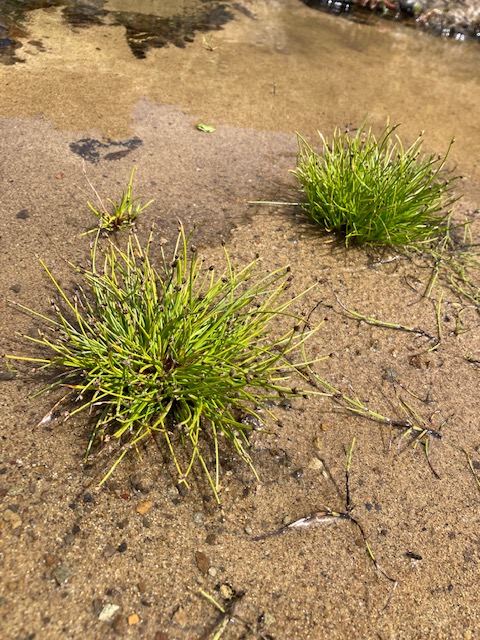
California’s coastal seasonal freshwater wetlands usually appear in the late winter through spring, during the wet season of our Mediterranean Climate; yet it’s the heart of the dry season in California, and on the north coast late-season freshwater seep wetlands can be found along the rocky shoreline of the marine terraces within feet of the intertidal zone!
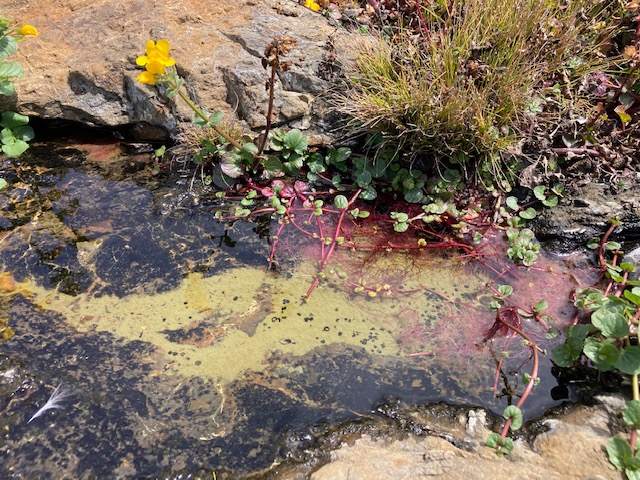


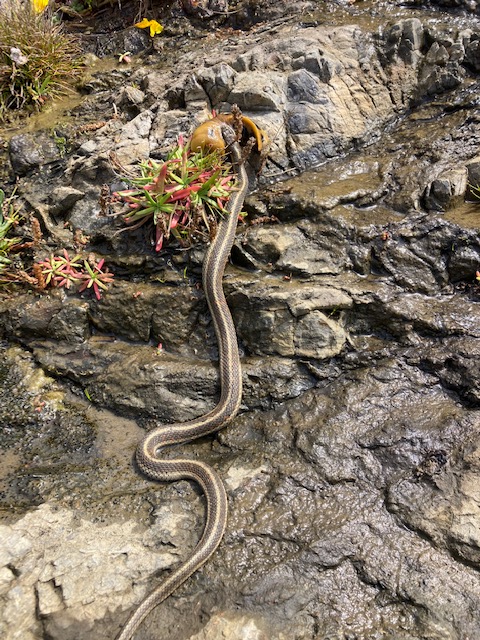
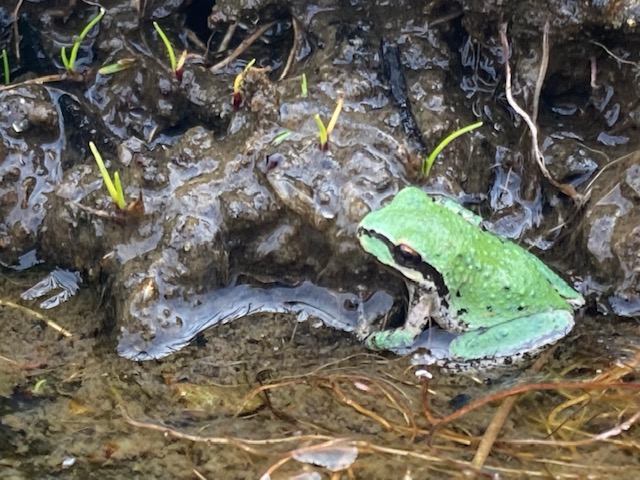
These surprising and hidden oases harbor Pacific Chorus Frogs/Sierran Treefrog (Pseudacris sierra) and their tadpoles, Osctracods, water beetles, larval flying insects, and verdant freshwater wetland plant species even in August-September. Terrestrial wetland predators and gleaners also supported by this ecosystem were observed, such as Coast Garter Snake (Thamnophis elegans terrestris), and several land bird species.
The geologic building blocks of the immediate coastal margin and marine terraces in northwestern Mendocino are of North American plate geology – and mostly underlain by Graywacke bedrock from the Cretaceous. The low-sloping and exceedingly craggy rocky shoreline here resembles a moonscape, or that of a cooled and barren lava bed.

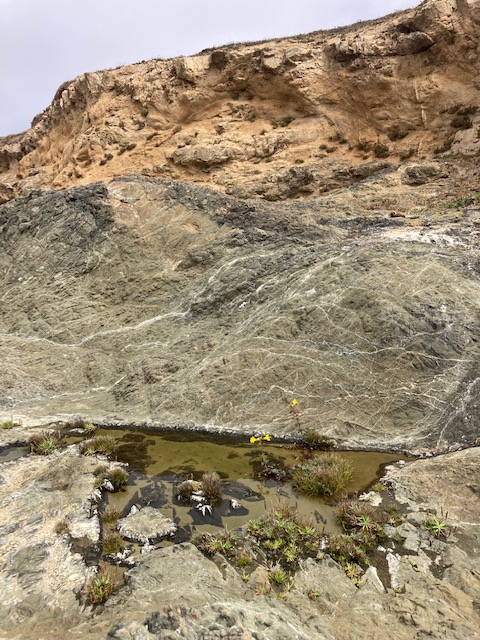
Freshwater trickles down from subterranean springs and seasonal streams on the marine terrace above, seeping on to the rocky slope, and filling myriad pockets in the bedrock with puddles of freshwater; ranging in size from cup-sized to several meters across.
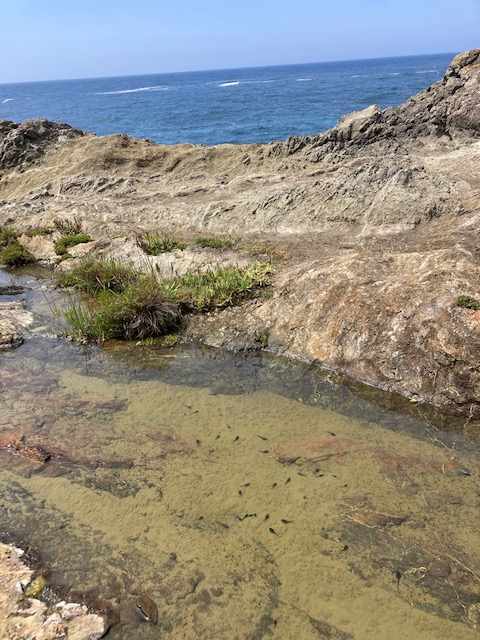
In the winter months this upper rocky shoreline zone is beaten by wind and waves, as well as much harder flows of freshwater and mud from the terrace above. We guess that these wetland oases are uninhabitable until the weather and water flow settles down in the late spring to summer, depending on if it was a mild or harsh wet season.

And perhaps these shoreline freshwater wetlands are a fragile remnant refuge of the formerly extensive terrestrial seasonal freshwater wetlands once common on the marine terrace-tops above, which have been gravely impacted and decimated along the entirety of the California coast due to human impacts.

At the site photographed here along the northern Mendocino coast, the adjacent marine terrace-top supports approximately 70%-90% coverage of invasive annual grasses, such as Holcus lanatus. The spread of these annual non-native grasslands has suffocated California’s native coastal terrace prairies and perennial grasslands, which once supported extensive seasonal freshwater wetlands on marine terraces along the entire coast.

Also see, Geomorphology of California’s Seasonal Freshwater Wetlands and Biogeography of California’s Seasonal Freshwater Wetlands for a deeper dive into the structure and history of California’s native wetlands
Discover more from Cal Geographic
Subscribe to get the latest posts sent to your email.
