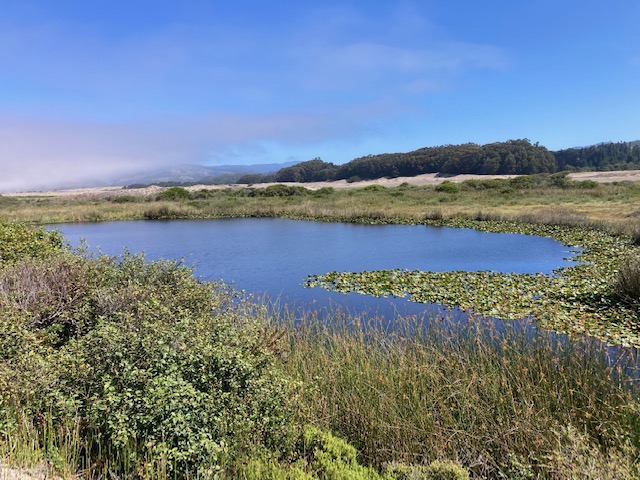
One of California’s most unique and rare wetland systems is found nested between vast, migrating dune lobes on the Mendocino Coast. The Inglenook Fen-Tenmile Dunes ecological reserve forms the northern portion of MacKerricher State Park, a few miles north of Fort Bragg, CA.

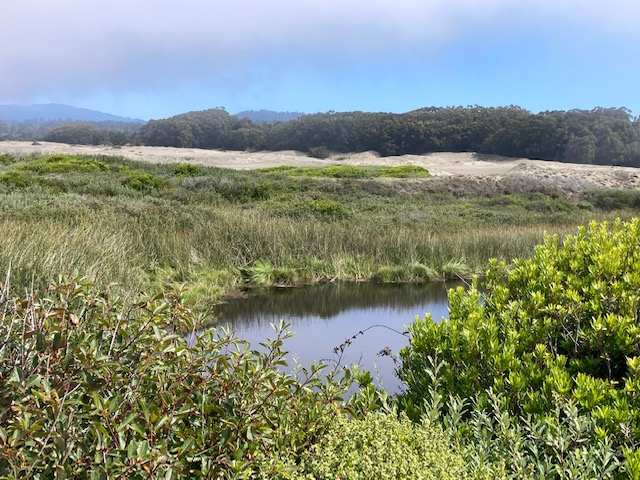
Most fens in California are found in the Sierra Nevada, Klamath Mountains, and other alpine locations. These are subarctic and cool-temperate climate wetlands, considered Pleistocene relicts for their hydrology, water chemistry, and the specific plant communities they support. For these reasons coastal fens in California are rare indeed, and serve as vanishing refuges of alpine and Pleistocene wetland species.
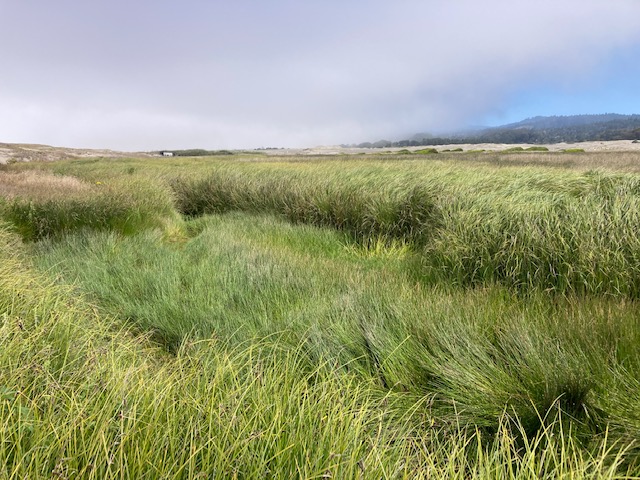


Inglenook Fen may be one of the southernmost coastal fens on the West Coast. And although rare, it is not the only remaining coastal fen in California, which is often mistakenly stated.

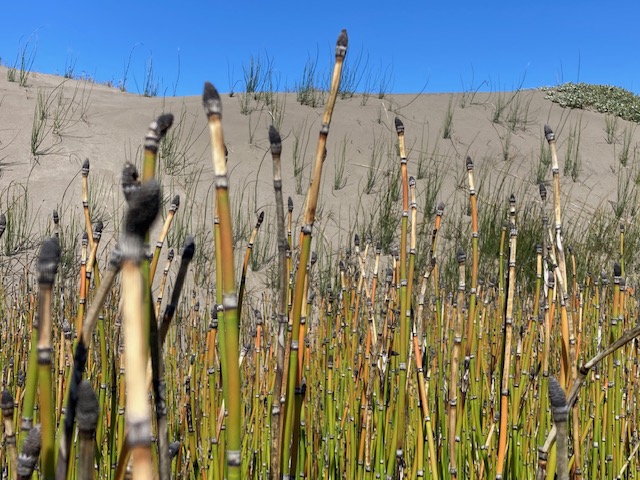
Inglenook fen is believed to be between 4000-6000 years old, and formed as coastal dune migration closed the outflow of Fen Creek to the ocean. At the close of the Pleistocene and as the Holocene progressed sea levels rose, the shoreline moved eastward, and vast dune fields increased along the west coast.


Remnants of these dune systems remain in pockets along the California coast, including (from north to south) Lanphere, Tenmile, Dillon Beach, Morro Bay/Montano de Oro, Guadalupe-Nipomo, and the Vandenburg to Point Conception region.As with most dune and wetland ecosystems across the state, invasive plant species, development, and recreational activities are the biggest threats to Tenmile Dunes and Inglenook Fen.

“Fens in the Fort Bragg area are subjected to a litany of serious threats, including, ditching to drain these wetlands, off-road vehicles, trampling, dumping, vandalism, rare plant poaching, intentional introduction of exotic carnivorous plants, degraded water quality, erosion, and extensive large scale development. State and local agencies, CNPS, and others are working to address these threats, but we clearly have our work cut out for us.” Leppig, et al. 2018, Fremontia


Plant lists for Inglenook Fen and Tenmile Dunes, including rare and endangered species
Plant lists for Inglenook Fen and Tenmile Dunes, including rare and endangered species 2
Inglenook and other coastal fens in California
Geomorphology and carbon sequestration capacity of California’s coastal fens
US Forest Service overview of fen geography, ecology, and monitoring

Further References:
Baker, H.G., 1972. “A Fen on the Northern California Coast.” Madroño 21(6): 405-416
California Coastal Commission Addendum to Commission Meeting for Wednesday, November 13, 2013; North Coast District Item W14a, Appeal No. A-1-MEN-13-0241 (CA State Parks) Tenmile Dunes and Inglenook Fen restoration plan
Saler, J. L. , et al., 2021. “Woody vegetation encroachment: A driver of herbaceous species diversity loss in a coastal fen.” Department of Biological Sciences, Humboldt State University
Wolf, E.C. , et al., 2015. “Fens of the Sierra Nevada, California, USA: patterns of distribution and vegetation.”Mires and Peat 15: 1–22.
