R Forest
Located on the central coast of San Diego County, Torrey Pines State Natural Reserve cradles a fragile 1500 acre remnant of rare prehistoric botanical communities and sedimentary landscapes within a sea of urban and suburban development. As a State Reserve, Torrey Pines SNR is one of only 14 public lands in California (out of 279 parks) designated as protected for conservation of threatened species, habitats, and geological formations.

Torrey Pines State Natural Reserve harbors approximately 300 species of endangered and protected plant species, and supports at least four of California’s increasingly rare coastal ecosystems: Coastal Salt Marsh, Coastal Sage Scrub (and its very rare alliance, Maritime Succulent Scrub), Maritime Chaparral, and the scant Torrey Pine Woodland, featuring America’s most rare species of pine.
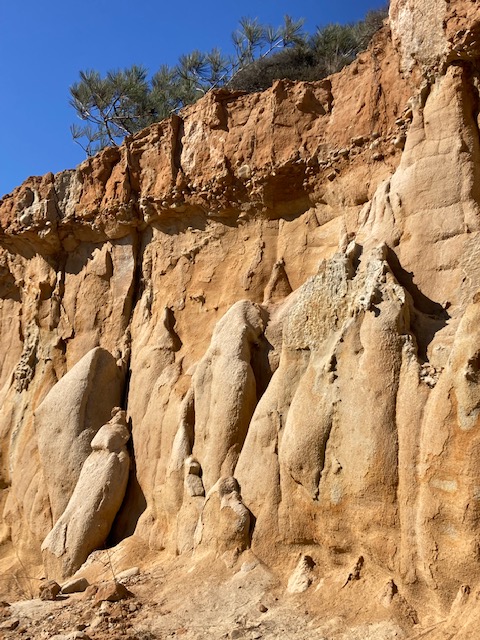
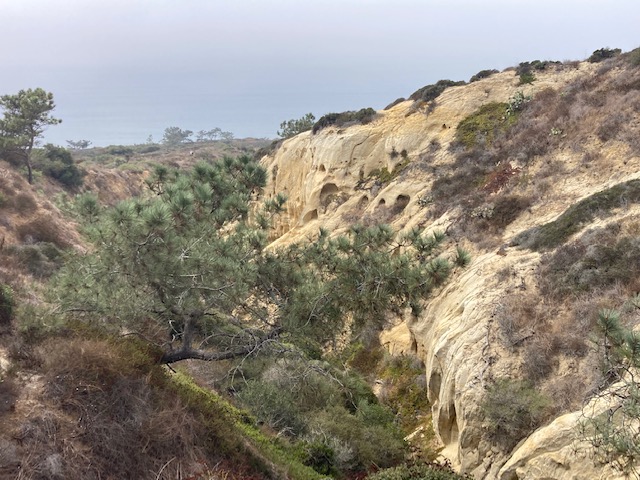
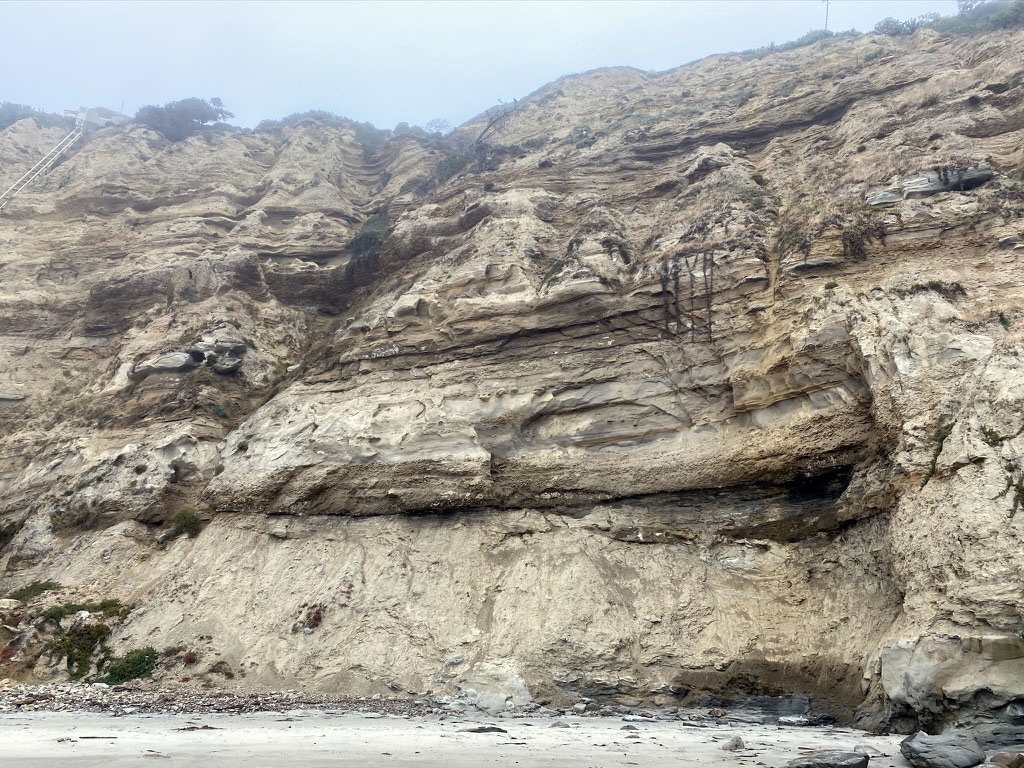
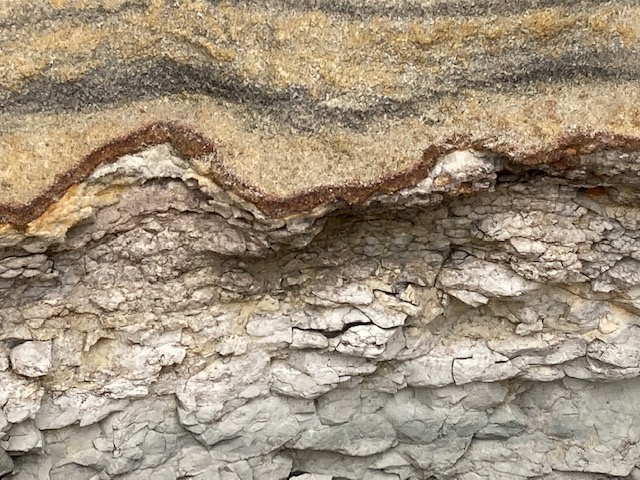
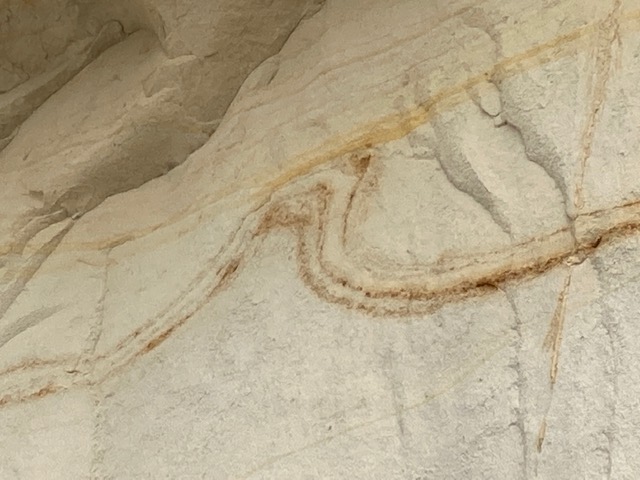
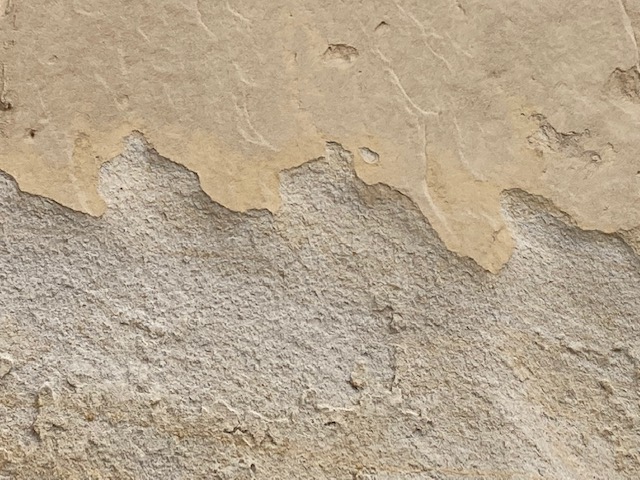
Torrey Pines SNR is also famous for its towering and plunging color-blocked exposures of blush toned sandstone and mudstone sedimentary facies. Built on a tectonic foundation of uplifted marine terraces, signature landforms of the Reserve include badlands, rill networks, ravines, sea cliffs, concretions, tafoni, faults, fossil beds, and mesas (see topic A15 on link).
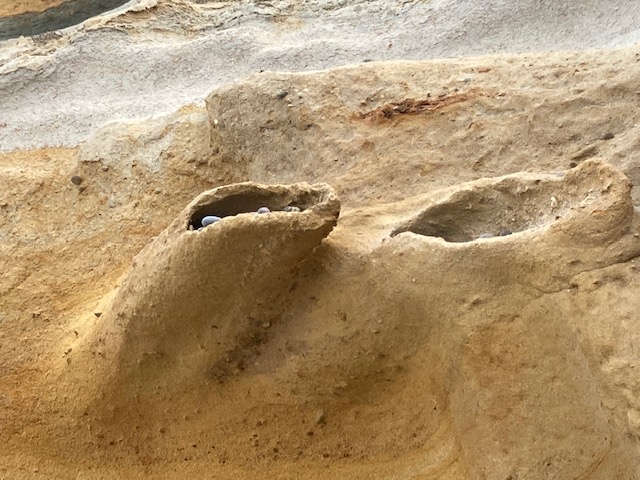
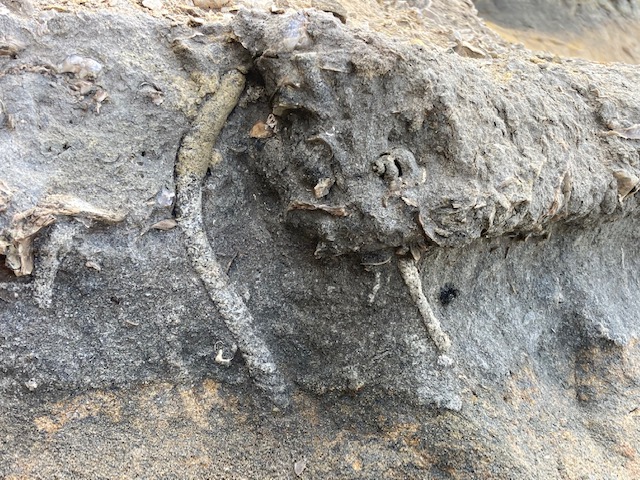
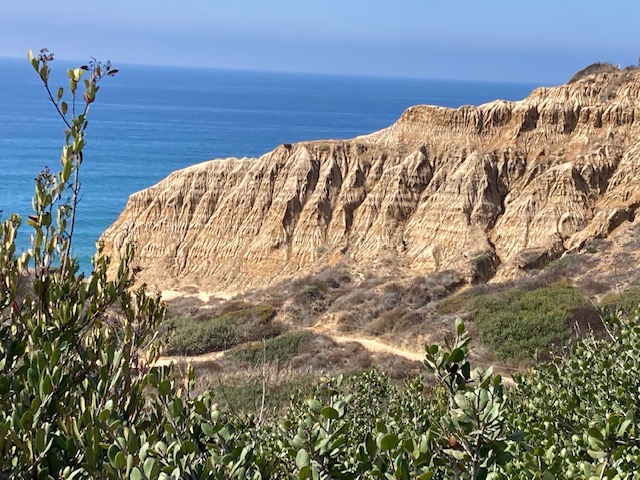
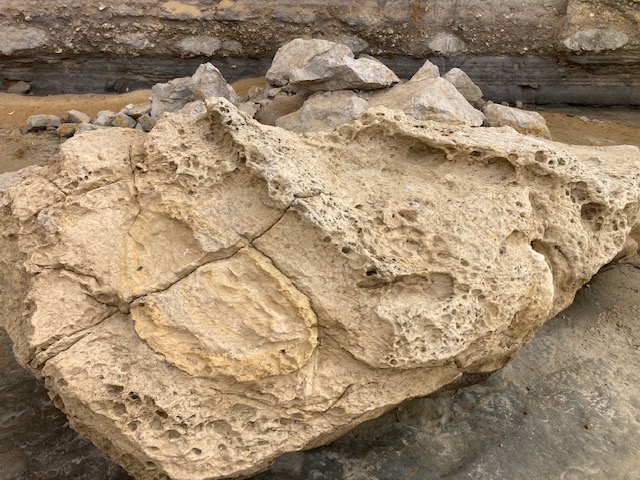
The major sedimentary units present and viewable at Torrey Pines State Natural Reserve represent depositional environments as old as the Eocene (~45-49,000,000 years old); and as young as the Pleistocene (as recent as 120,000 years old). Exposed Eocene-aged sedimentary geologic units are rare in California, especially along the coast, and provide a valuable and fascinating record at Torrey Pines SNR.
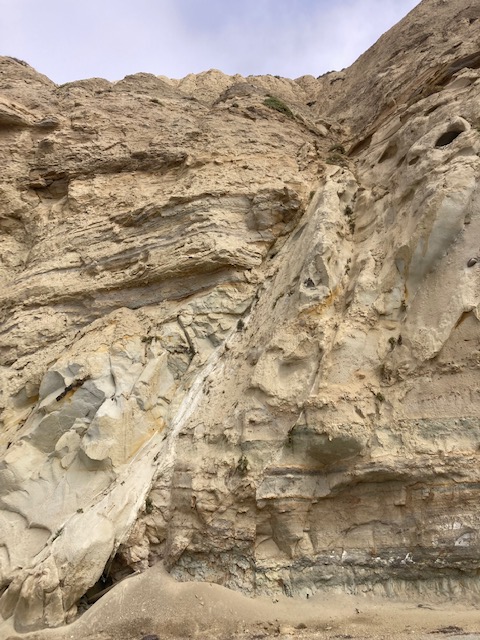
From oldest to youngest, the major geologic units at Torrey Pines include:
The Del Mar Formation: Middle Eocene ~45,000,000-49,000,000 years old; Hard, yellow-Grey to green; Fossiliferous; Shale, siltstone, sandstones from depositional environment of estuary mud and silt
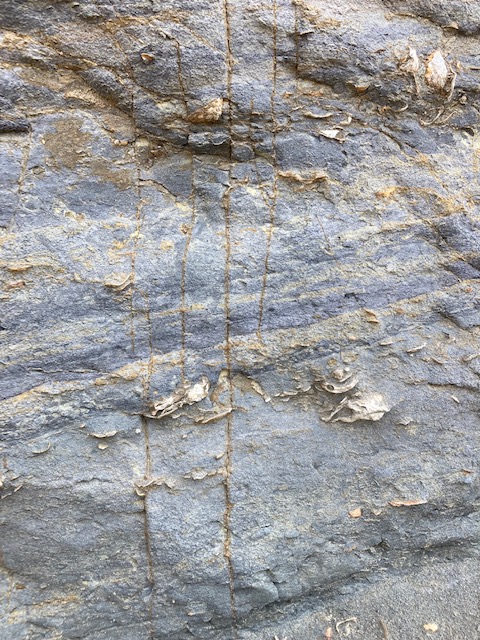
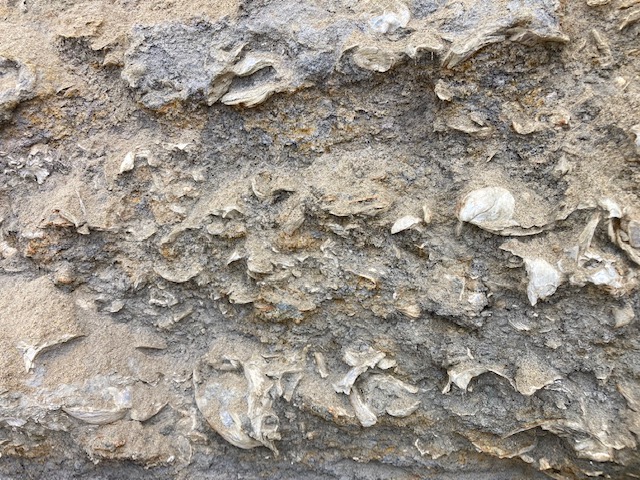
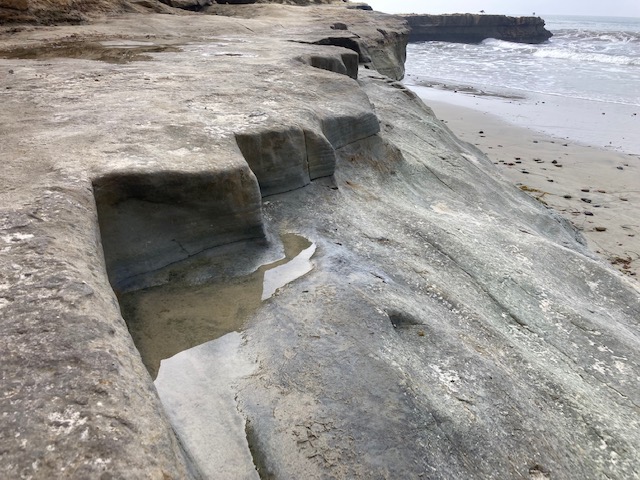
Torrey Sandstone: Middle Eocene ~45,000,000-49,000,000 years old; Soft, white/beige to yellow; Sandstones of beach and offshore sandbar sands
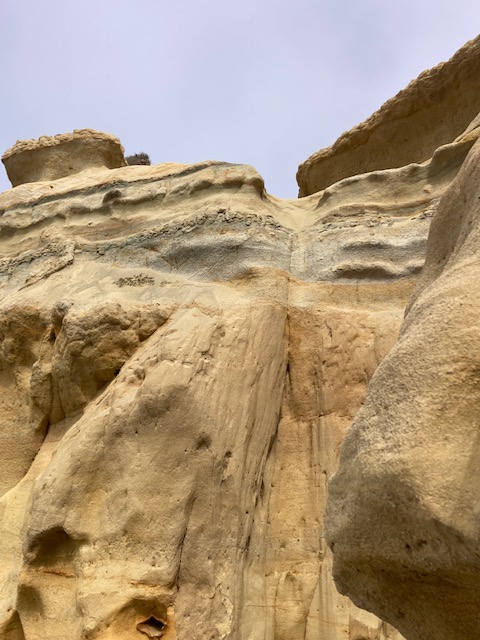
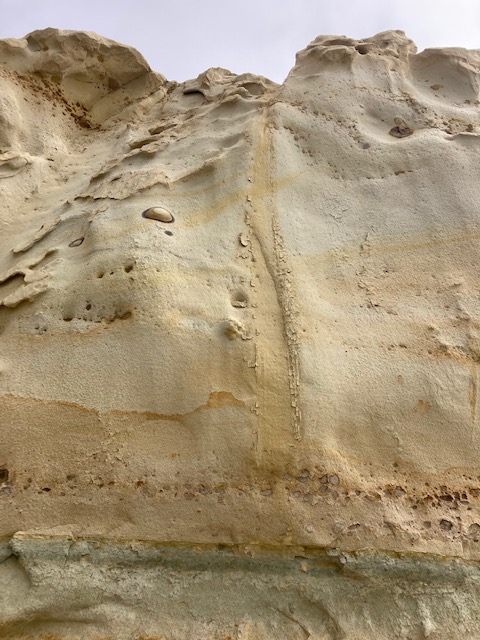
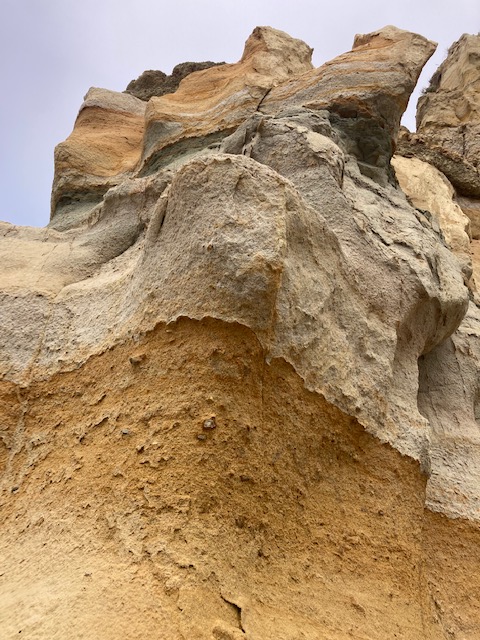
Ardath Shale: Middle Eocene
Scripps Formation: Middle Eocene
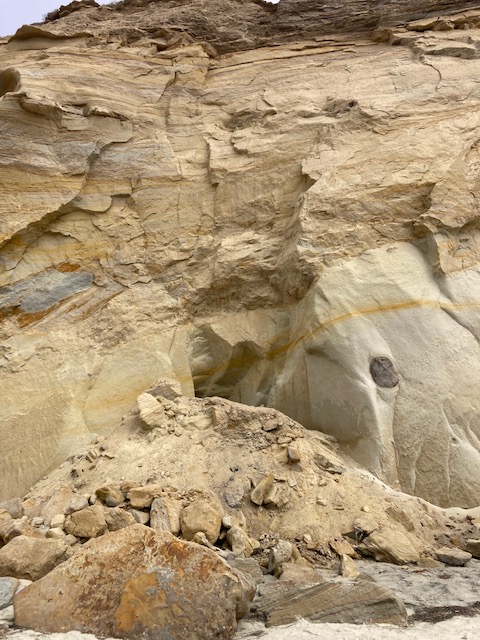
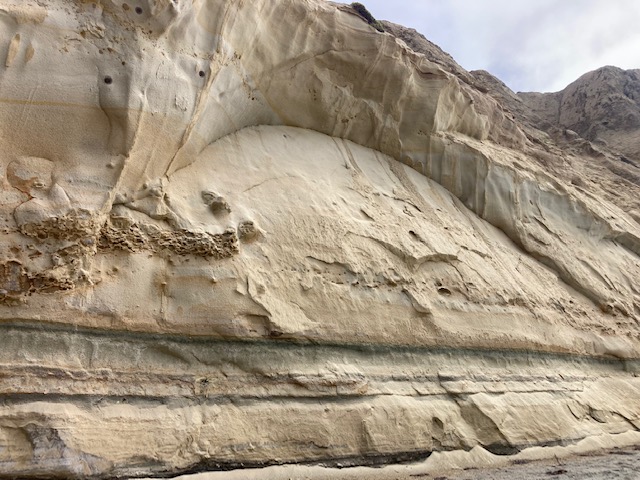
landslide geomorphology in Torrey Sandstone, Del Mar Formation, and possible Ardath Shale
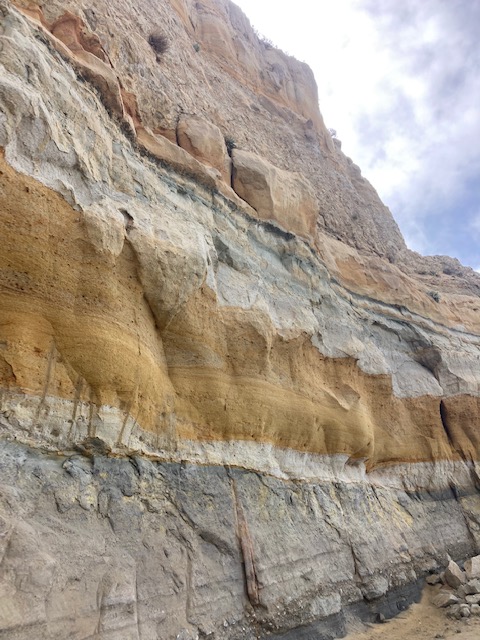
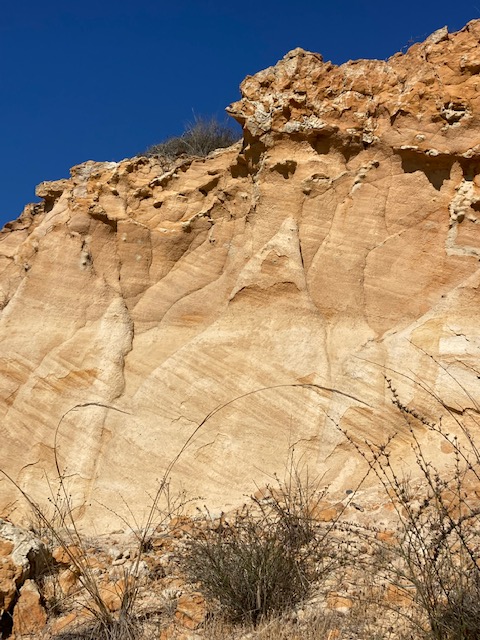
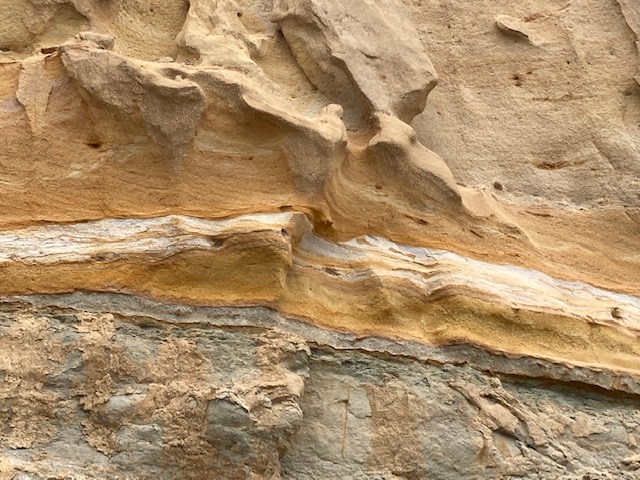
Lindavista Formation: Middle Pleistocene ~700,000-1,000,000 years old; Hard, red; Sandstones from mineral rich estuary sediments
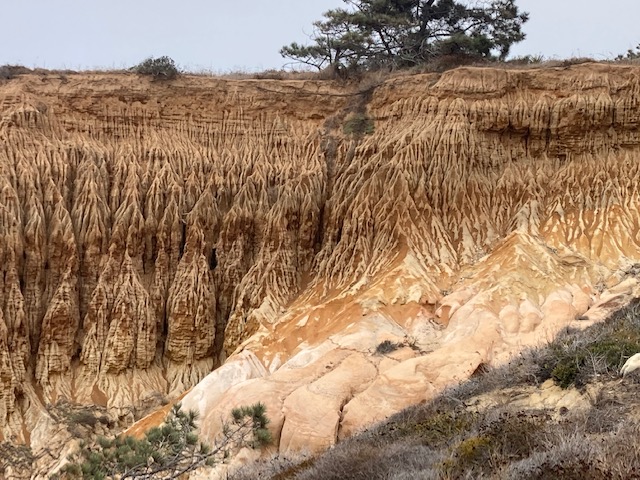
Bay Point Formation: Upper Pleistocene ~120,000-700,000 years old; Loose, soft, brown-ish; Sandstones from river sediments
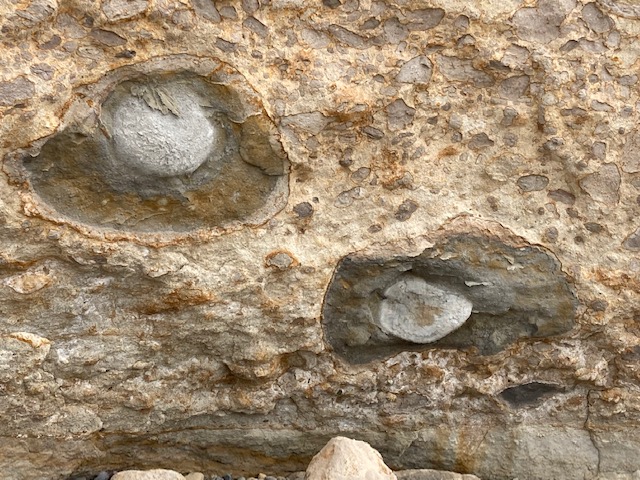
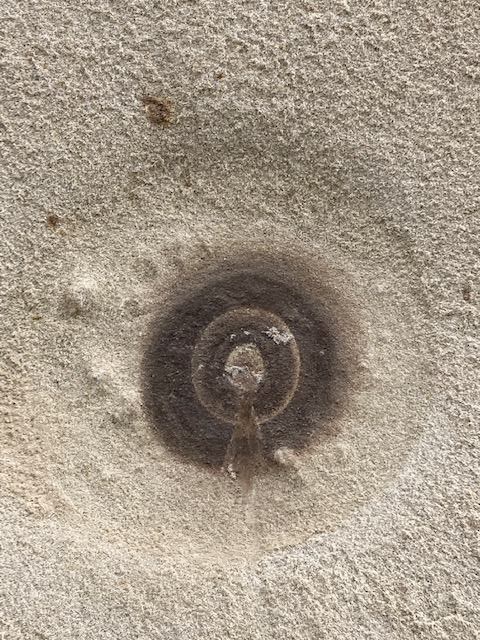
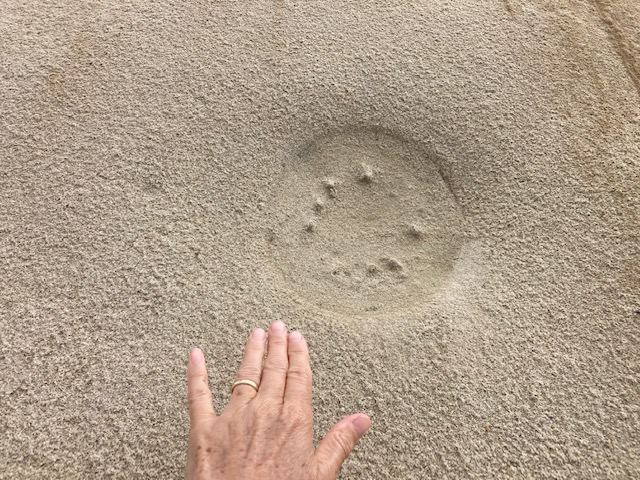
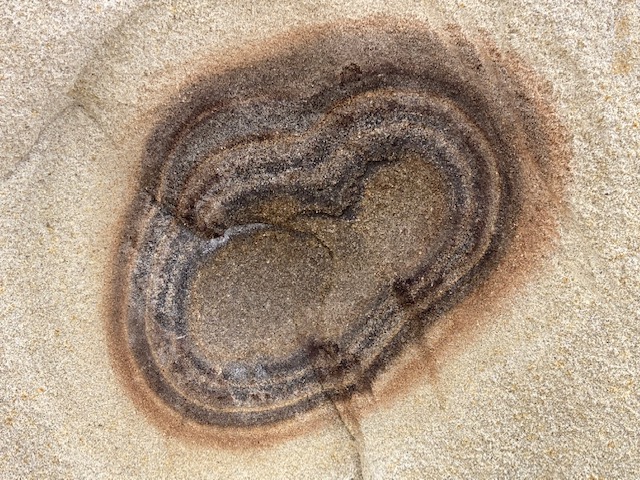
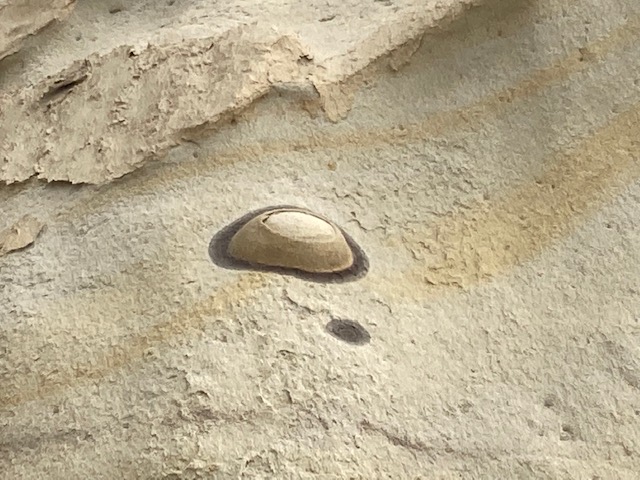
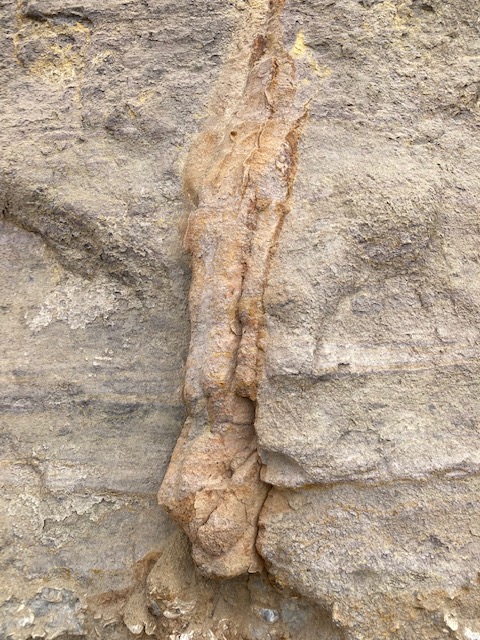
Concretions!
Rare Botanical Communities and Habitats
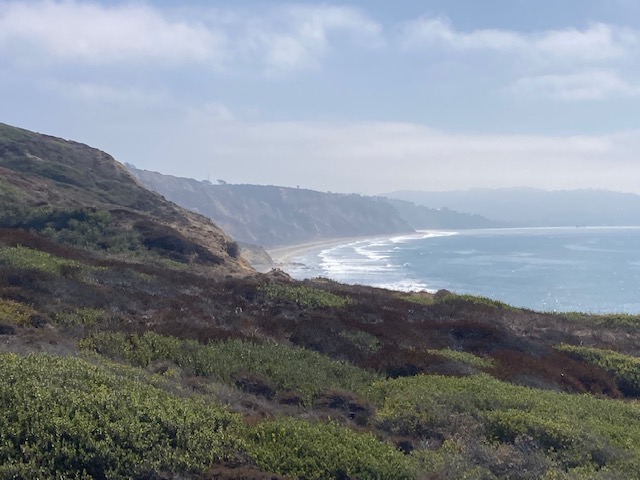
Maritime Chaparral
The chaparral community mosaic covers the most area of any botanical assemblage or habitat type in California. It dominates the inland foothills and mid-level mountain slopes of the Peninsular, Transverse, and Coast Ranges – especially in Southern California – as well as the foothills of the Sierra Nevada, the Klamaths, and the Cascade Mountains. Structurally, chaparral is characterized by dense, almost impenetrable stands of large evergreen and sclerophyllous woody shrubs, usually occurring on xeric and hilly landscapes.
One of the most unique and endangered chaparral community-types is Maritime Chaparral. It is found along the California coast in verdant patches at distinct locations, including among the crumbling ruddy sandstone terraces of Torrey Pines State Natural Reserve.
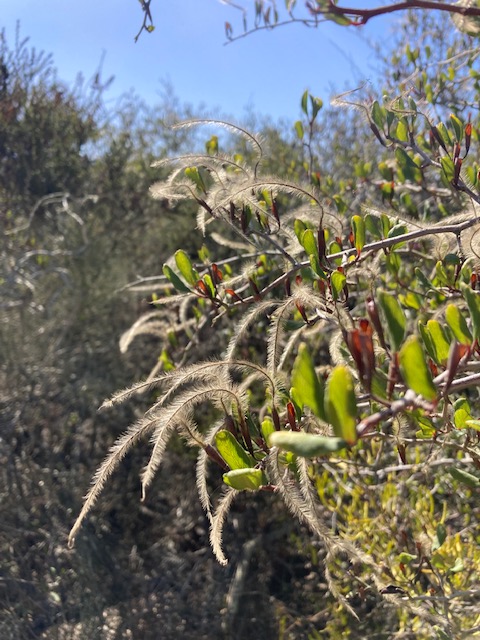
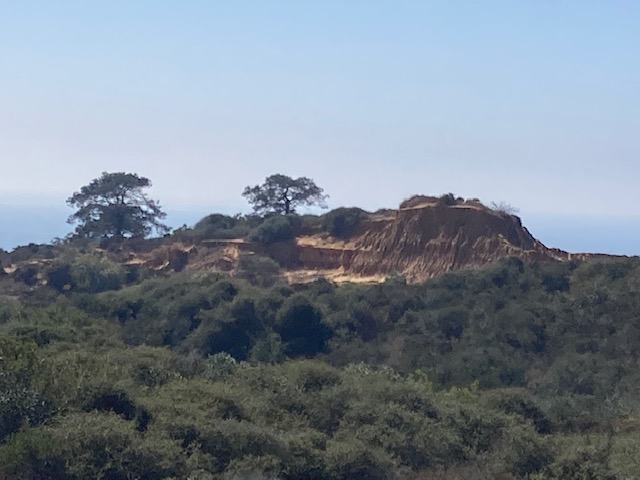
Several important environmental factors come together to create this fragile ecosystem. Like other chaparral communities, Maritime chaparral occurs in coarse grained/gravely and thin soils (in this case featuring heterogenous azonal soils), but that is where the similarities end.
Foremost, Maritime chaparral is exposed to higher summer moisture availability than other chaparral types, as it lies within the influence of the summer marine fog belt. The major evolutionary driver of greater water availability has encouraged very long wildfire intervals in the Maritime chaparral, and in turn has selected for obligate seeder species.
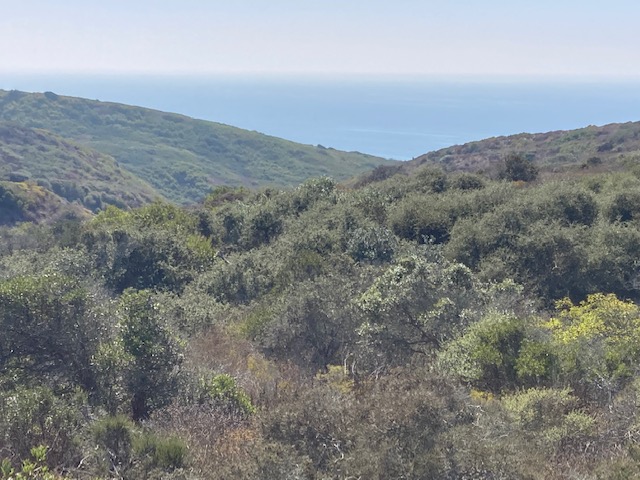
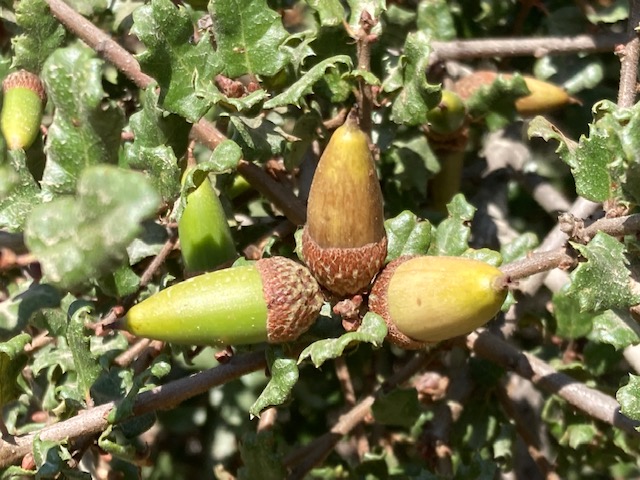
Dominant and signature woody shrub types of the Maritime Chapparal at Torrey Pines, includes Nuttal’s scrub oak (rare – Quercus dumosa), White coast ceanothus (rare – Ceanothus verrucosus), Chamise (Adenostoma fasciculatum); Manzanita (Arctostaphylos spp.); Toyon (Heteromeles arbutifolia); and Smooth mountain mahogany (Cercocarpus minutifolus).
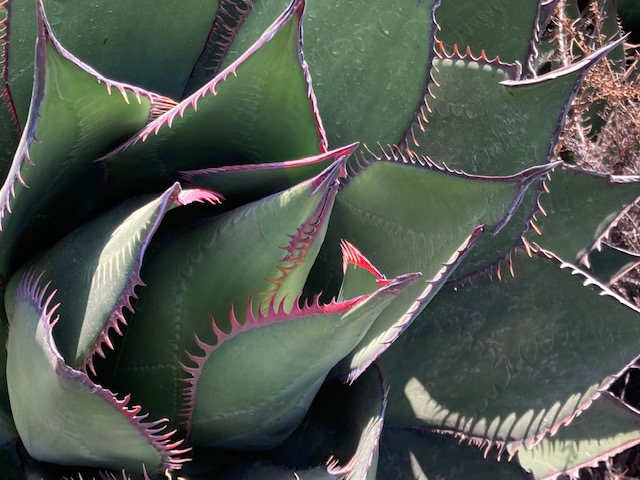
Maritime Succulent Scrub
Restricted to coastal San Diego County, Maritime Succulent Scrub is one of three associations comprising the Sage Scrub mosaic of southern and central California. California’s rare Maritime Succulent Scrub community and ecosystem in coastal San Diego represents the extreme northern tip of the range, which extends south throughout the arid coastal Baja Peninsula.
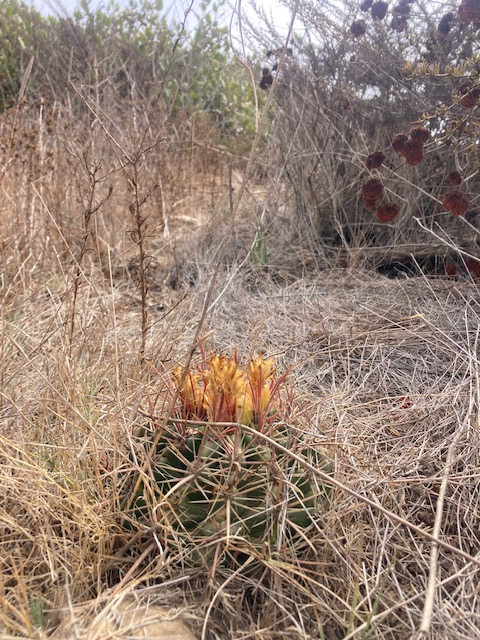
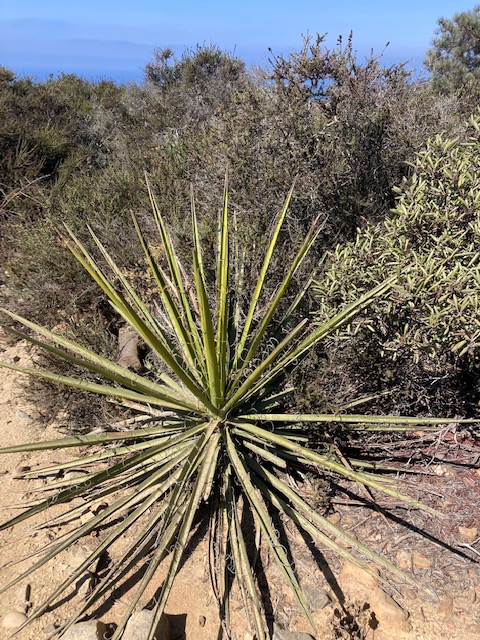
The species composition of Maritime Succulent Scrub includes shrubs typical of southern Coastal Sage Scrublands, such as Coastal sage (Artemisia californica); Lemonadeberry (Rhus integrifolia); Deerweed (Lotus scoparius); California buckwheat (Eriogonum fasciculatum); and salvias. This unique botanical assemblage also features succulent species. These include, Ferocactus viridescens; Cylindropuntia californica and C. prolifera; Hesperoyucca whiplei; Yucca schidigera; Opuntia littoralis; Agave shawii; Bergerocactus emoryi; as well as numerous dudleya species.
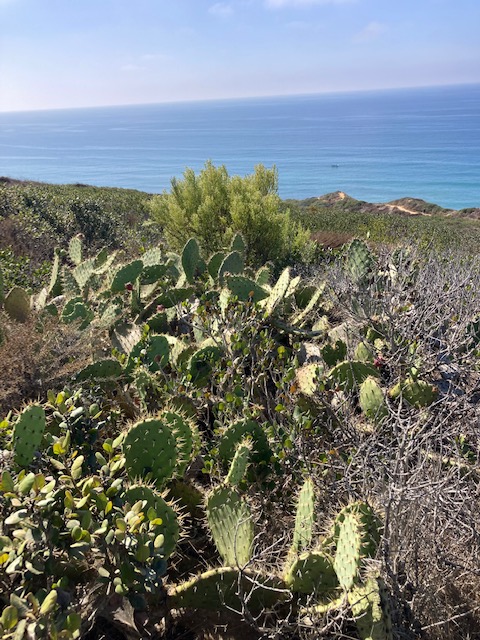
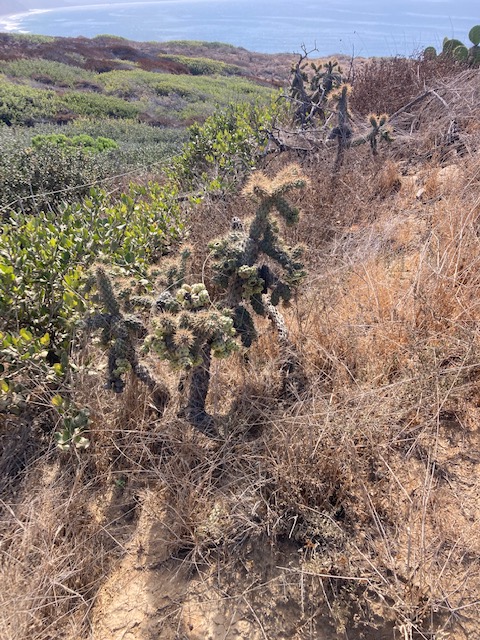
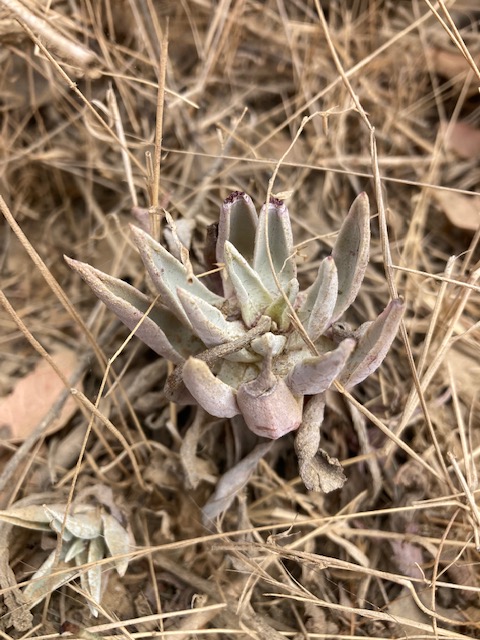
At Torrey Pines Natural Reserve the Coastal Sage Scrub and Maritime Succulent Scrub communities intermingle with the rare Maritime Chaparral and the rarer Torrey Pines Woodland communities, composing a unique and restricted coastal scrubland mosaic.
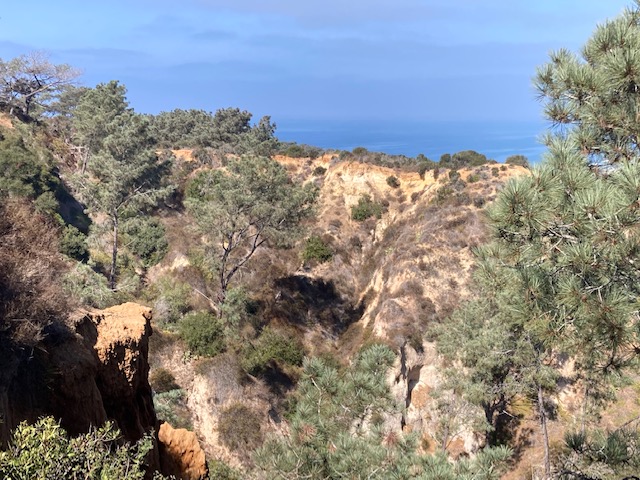
The Natural Reserve’s emblematic species, Pinus torreyana, is North America’s rarest pine. With the most isolated range of any pine species in North America, Torrey pine only occurs naturally in the immediate coastal region surrounding Torrey Pines State Natural Reserve in San Diego County, and in two groves on Santa Rosa Island. This sparse and restricted distribution is believed to be a relict population of a more widespread coastal coniferous forest from the dryer paleoclimate of the Pleistocene.

Pinus torreyana is slow growing, has large, dense, and heavy cones, and is adapted to the dry, humus-poor, highly sandy soils of the region. With tap roots reaching down to 30 feet into the sandstone, and extensive lateral roots spreading out hundreds of feet from the tree, they manufacture a secure footing in the loose soils and sedimentary bedrock.
As with woody species of the Maritime Chaparral community, the Torrey Pine is similarly adapted to the unusual arid maritime climate of coastal Southern California, with very low annual rainfall, but with higher summer moisture availability and climate modification from coastal fog.
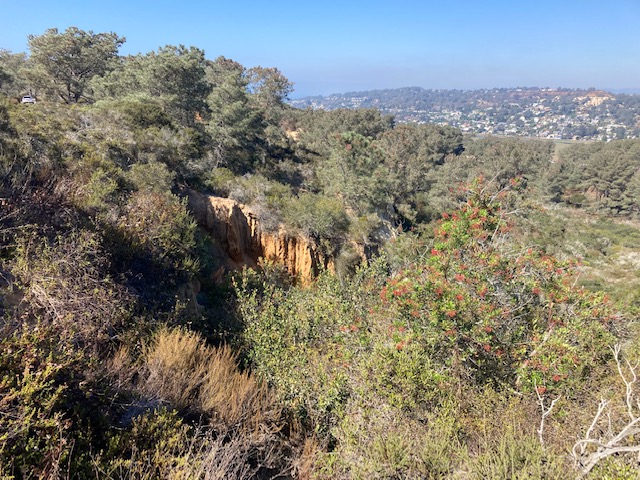
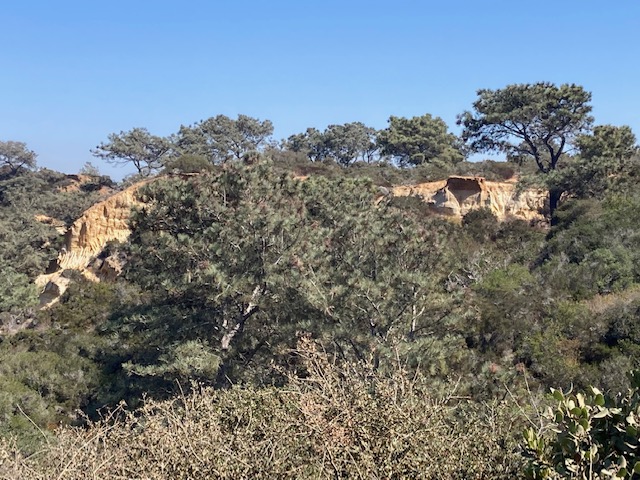
Closely associated with Maritime Chaparral and Coastal Sage Scrub communities, the Torrey Pine Woodlands disperse as open forest stands within the dominant, often dense understory mosaic of scrub and chaparral.
Torrey Pines produce thick understory mats of needle litter/mulch, providing a cool, moist nursery for seedlings from their heavy and slow-dispersing semi-serotinous cones. And although it is slow growing, the Torrey Pine is relatively short lived, with the oldest trees reaching approximately 150 years old.
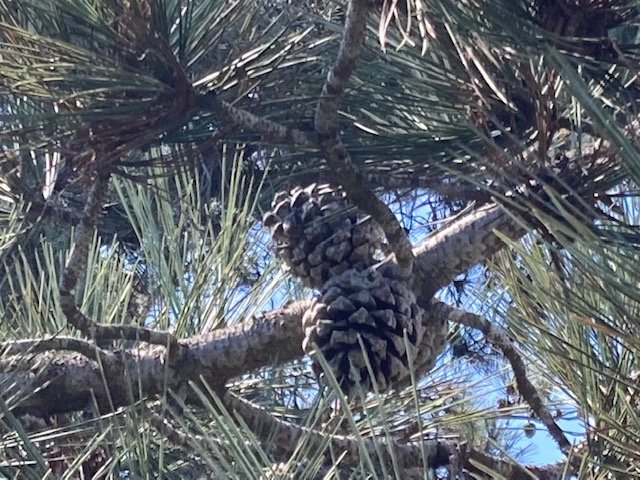
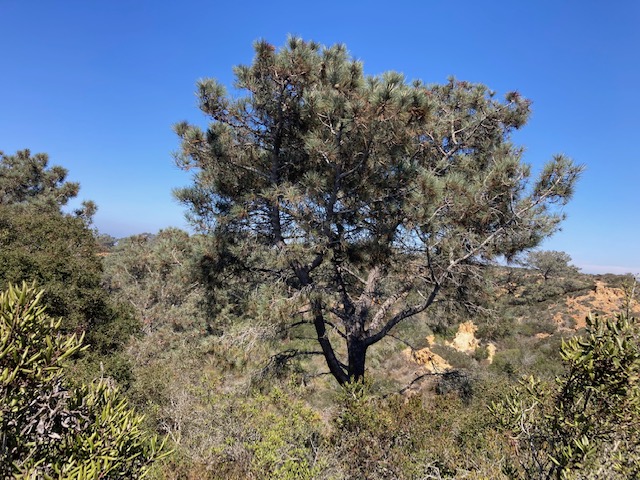
Low genetic diversity is the unavoidable result of a tiny isolated and relict population. This constrains the ability of Pinus torreyana to survive or adapt to change by recharge from outside populations or by natural selection; thus leaving the entire population vulnerable to catastrophic loss.
All images, Rowena Forest
References:
Barbour, Michael, T. Keeler-Wolf, and A Schoenherr. 2007. Terrestrial Vegetation of California. Berkeley: University of California Press
California Chaparral Institute
Hall, T, et al. 2015. “Population Dynamics of the Island Torrey Pine (Pinus torreyana ssp. insularis) on Santa Rosa Island, CA, An Environmental Science and Resource Management Capstone Project.” California State University Chanel Islands
Kern, J. P, et al. 1992. “Chronology and Deformation of Quaternary Marine Shorelines, San Diego County California: In, Quaternary Coasts of the United States: Marine and Lacustrine Systems.” Society for Sedimentary Geology Special Publication 48: 377-382
Mira Costa College, 2021.Geology Field Guide to the Torrey Pines Park Area. Miracosta.edu
Mooney, Harold and Erika Zavaleta. 2016. Ecosystems of California. Oakland: University of California Press.
Torrey Pines Nature Center page
US Forest Service Fire Effects Database Index of Species Information, Pinus torreyana
Vierra, E.J., et al.2017.“Depositional Processes and Facies of the Delmar and Torrey Sandstone Formations, Solana Beach, San Diego.” Department of Geological Sciences San Diego State University
Discover more from Cal Geographic
Subscribe to get the latest posts sent to your email.