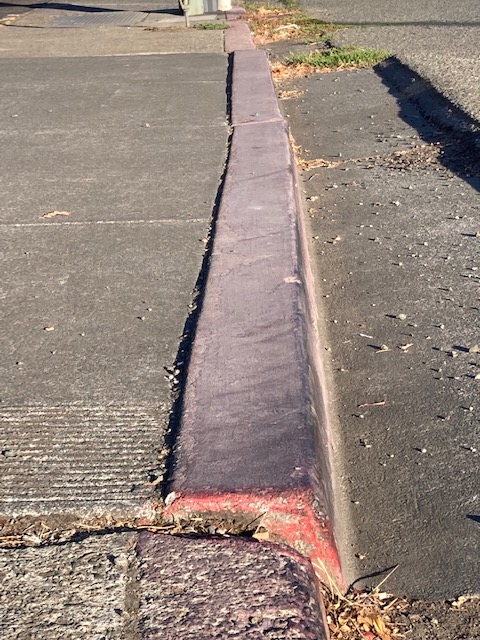
The Maacama fault forms linear northwest trending transtensional basins in central Sonoma and Mendocino Counties, which contain many of the major towns in these counties, including Hopland, Ukiah, and Willits. Tell-tale evidence of fault creep can be traced throughout the town of Willits along the northwest trending slice of the Maacama fault where it cuts through parking lots, sidewalks, backyards, and historic neighborhoods.
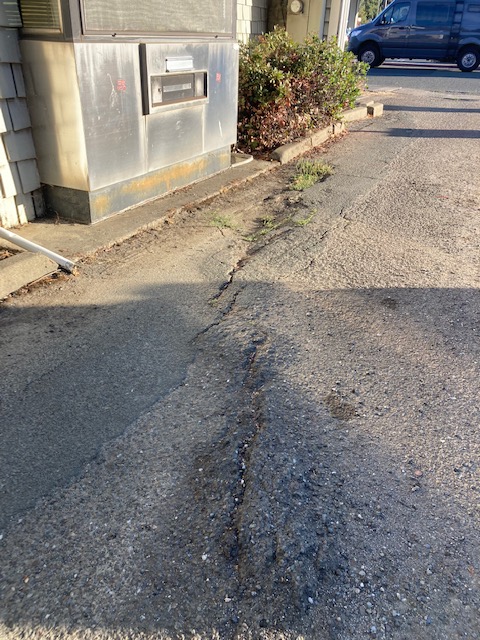
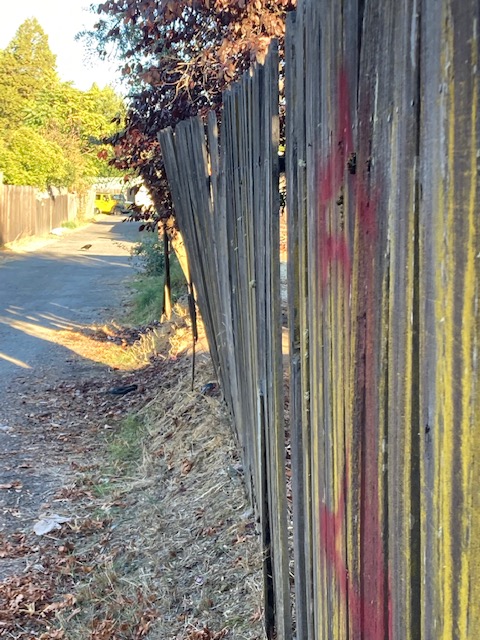
Fault creep is described as aseismic movement along a fault zone that can occur in spurts or as steady motion over the course of hours or over many days. And unlike the seismic slippage of an earthquake, aseismic creep is generally undetectable to the public as events occur. Much of the displacement along the Maacama fault is caused by creep, and has been measured to range between 2mm-6mm of displacement per year.
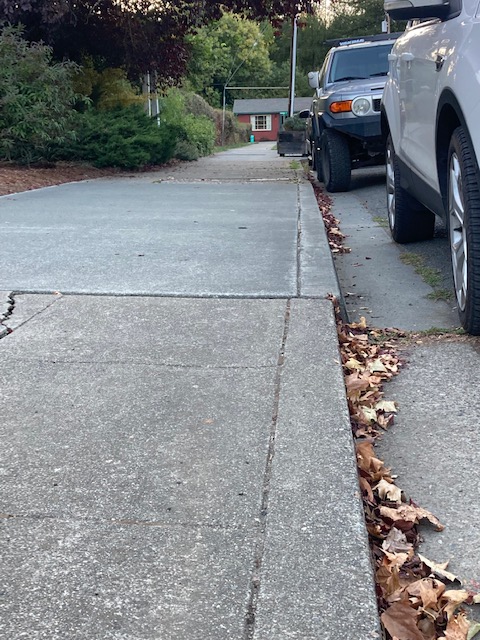
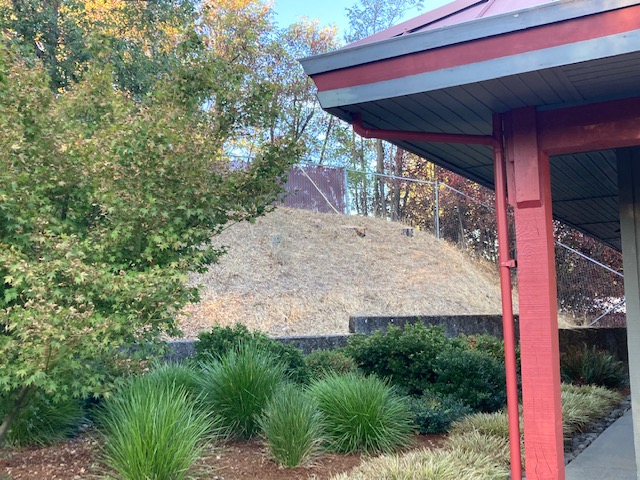
The Maacama fault, located in central Sonoma and Mendocino Counties, is a major player in the northern San Andreas fault system. Formed approximately six to ten million years ago in response to the northwestern expansion of the broad fracture zone at the transform boundary of the North American and Pacific plates, the Maacama is the northernmost segment of the Hayward Fault system, which branches off the San Andreas in central California.
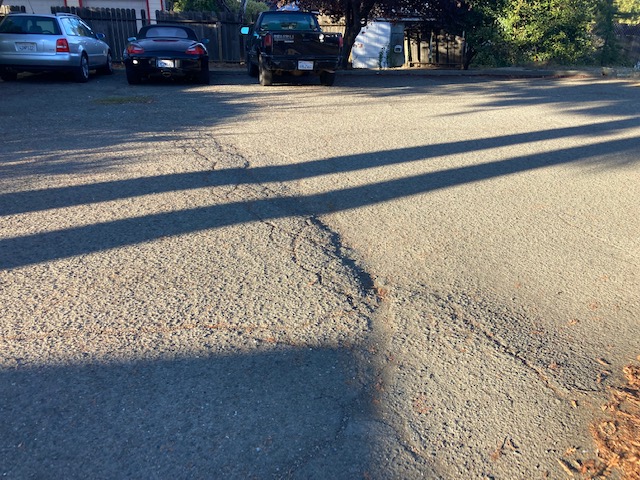
The Maacama system, which forms a zone of numerous parallel and discontinuous fault strands, developed as a series of right-steps and splays off of the Rodgers Creek fault, in concert with the tectonic evolution of transtensional basins, volcanism, and compressional uplifted landforms. .
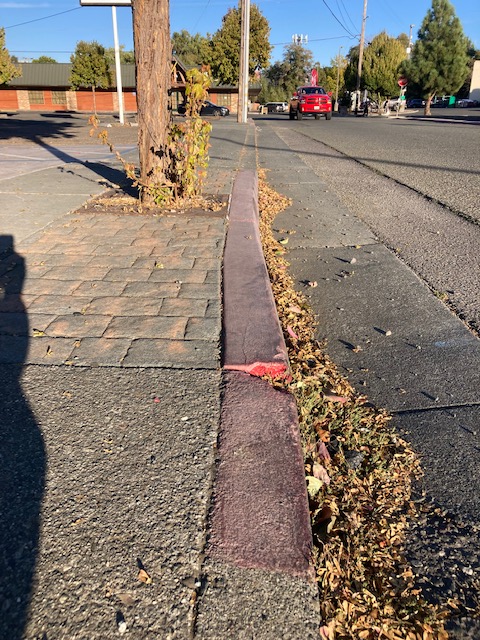
The Maacama is one of three parallel transform faults that frame the boundaries of a horizontal crustal deformation field in California’s northern Coast Range, comprised of three crustal blocks bounded by the San Andreas, the Maacama, and the Bartlett Springs faults. This tectonic field and the Maacama fault are in relation to/conjoin with the Pioneer Fragment and the migrating slab window, all associated with the evolution of the Mendocino Triple Junction and the Mendocino Crustal Conveyor.

References
Brady, R.J. 2003. “Active Transtensional basin formation along the Maacama fault zone, Northern California Coast Range.” Physics and Geology
Furlong, K.P. et al. 2024.“Formation and Evolution of the Pacific-North American (San Andreas) Plate Boundary: Constraints From the Crustal Architecture of Northern California.”43(6)
McLaughlin, R.J., 2012. “Evolution of the Rodgers Creek–Maacama right-lateral fault system and associated basins east of the northward-migrating Mendocino Triple Junction, northern California.” Geosphere 8(2):342–373
Shakibay, S.N. et al. 2019. “Widespread fault creep in the northern San Francisco Bay Area revealed by multistation cluster detection of repeating earthquakes.” Geophysical Research Letters 46:6425–6434
Swiatlowski, J. L., et al. 2016. “Fault creep observed on the Maacama and Rodgers Creek faults, northern California using PS-InSAR.” Poster Presentation at 2016 SCEC Annual Meeting.
Upp, R.R. 1989. “Hologene activity and tectonic setting of the Maacama fault zone, Mendocino County, California.” Engineering Geology 27(1):375-412
Wesson, R.L. 1988.“Dynamics of fault creep.”Journal of Geophysical Research: Solid Earth 93 (8):8929-8951
Discover more from Cal Geographic
Subscribe to get the latest posts sent to your email.

