
Within the oldest, tallest, and most isolated individuals among California’s totemic and scarce stands of old growth Coast redwood forest (Sequoia sempervirens), a shrouded and complex island ecosystem is supported high up in the monumental architecture of the inner canopy.
Arboreal platform ecosystems structured and bioengineered by epiphytic plants, and buoyed by immense branching and splitting woody tree growth, build their own soil, retain massive amounts of water, and perpetuate and sustain their own old-growth communities.
Known as canopy mats or fern mats, these epiphytic communities are found inother tall tree species of northwest California, including Sitka spruce (Picea sitchensis), Black oak (Quercus kelloggii), Oregon oak (Quercus garryana), Red alder (Alnus rubra), and Big leaf maple (Acer macrophyllum).

Pioneering field studies conducted by researchers at Humboldt State University (Cal Poly Humboldt), involved rappelling some of California’s tallest and most massive trees (Picea sitchensis and Sequoia sempervirens) to acquire measurements and samples within the canopy and of the fern canopy mats. From these non-destructive arboreal studies researchers were actually able to quantify biomass of the canopy mats and species richness within these ecosystems, revealing that the older and larger trees with more complex structure supported the highest canopy mat mass and species richness by far, with little to no fern mat existing on younger trees with less complex structure.
The canopy fern mats of old growth Sequoia sempervirens stands are only found within 10 km of the coast. Classified as rainforest, this narrow band of redwood forest along the immediate coast of northern California contains the largest old growth individuals with the most complex structure of all Sequoia sempervirens populations.

The structural complexity of the mammoth canopy and crown systems of the Coast redwoods cannot be overstated. As noted, “.. large redwoods have individualized crowns with multiple, reiterated trunks arising from other trunks and branches. Reiterated trunks in redwood are orthotropic stems with their own systems of plagiotropic branches. They are indistinguishable from free-standing trees except for their origins within the crown of a larger tree. Fusions among reiterated trunks and their branches are common.” (Sillett, et al 2003).
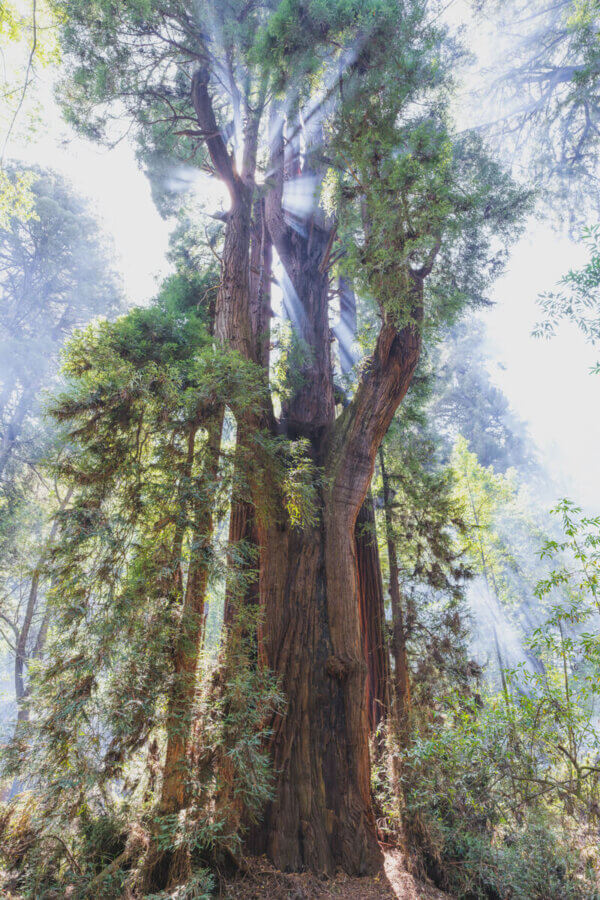
Upon the massive supporting structures of the branches and reiterated trunks, canopy fern mats produce and accumulate their own arboreal soils, replicating a forest floor environment within the crown. These soils are composed solely of organic matter (plant debris), are highly acidic, and slow to decompose, resulting in deep mat accumulations.
Canopy soil mats are found to retain huge amounts of water, with mats of all sizes holding enough soil moisture year round to support thriving epiphytic ecosystems. Studies show that the high water content within these soil mats regulates and moderates seasonal temperature and humidity fluctuations within the canopy, further contributing to robust biodiversity.
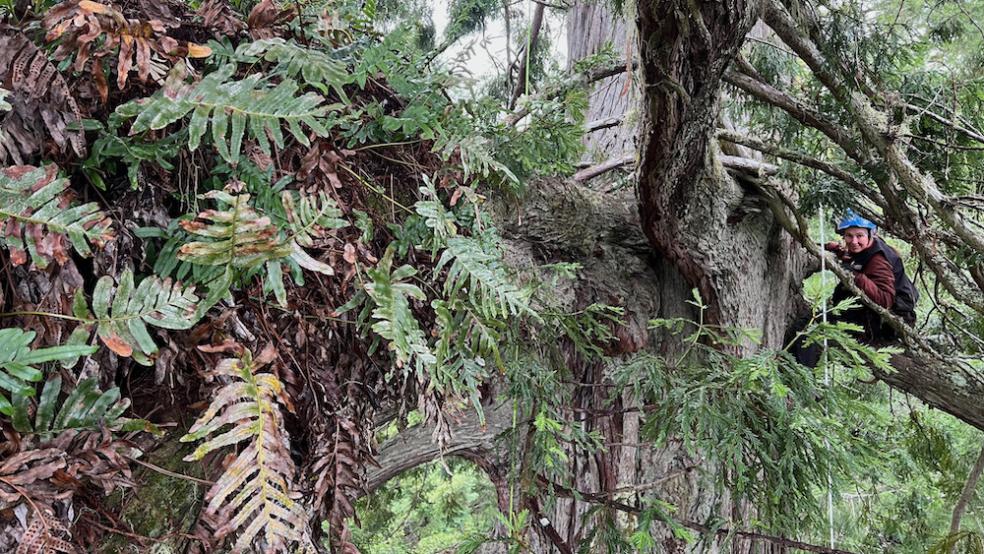
Epiphytic communities within the canopies of old growth redwoods and tall trees of northwestern California include lichens (the most diverse outer canopy community), bryophytes (liverworts, mosses, ferns), and vascular plants. The keystone species and primary constructor of the redwood canopy mat ecosystem is Leather fern (Polypodium scouleri). California huckleberry (Vaccinium ovatum) is also a major component of old growth canopy mats, often comprising the majority of epiphytic biomass.
In addition to redwood old growth, one study highlights the ecological importance of very tall old growth Sitka spruce trees (Picea sitchensi), with a biological field survey of Picea sitchensi inventorying 68 epiphyte species occurring in one 280 foot tall 318 year old Sitka spruce.
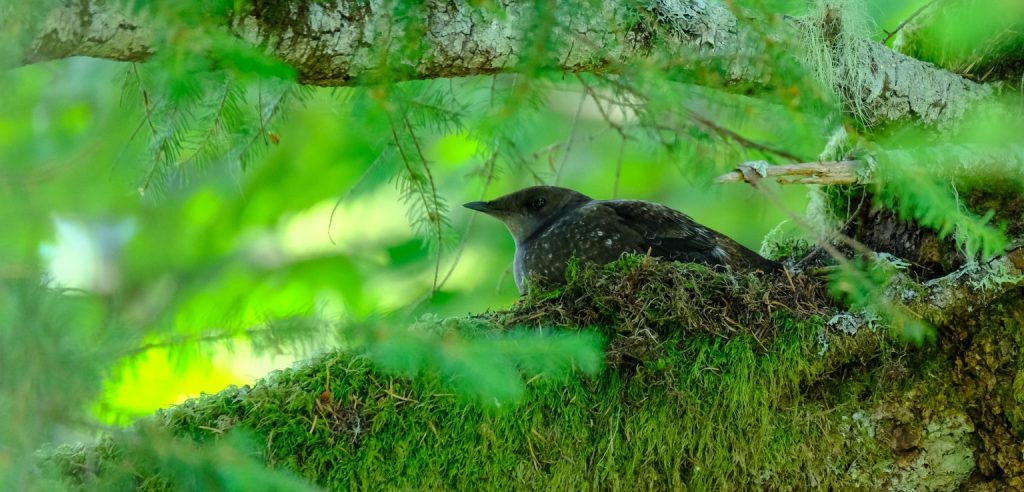
The complex architecture and ecological systems of old growth redwood canopies host nesting habitat for furtive and imperiled species of animals such as the Northern Spotted Owl (Strix occidentalis caurina), and the Marbled Murrelet (Brachyramphus marmoratus). The clandestine canopy mat nesting grounds of the Marbeled Murrelet averted detection by baffled naturalists for over a century, until confirmed during a high elevation tree trimming operation in old growth redwoods in the Santa Cruz Mountains in 1974.
The Marbeled Murrelet is a small seabird that occurs off the West Coast of North America from Southern California to Alaska. The population from California through Washington is determined to be genetically distinct, and is listed as federally threatened as well as endangered in California and Oregon under these states’ Endangered Species Acts. The threats to this fragile species are directly related to loss of old growth redwood and Douglas fir nesting habitat due to logging. Additional pressure on the canopy mat nesting grounds of the murrelet comes from predation by corvids.
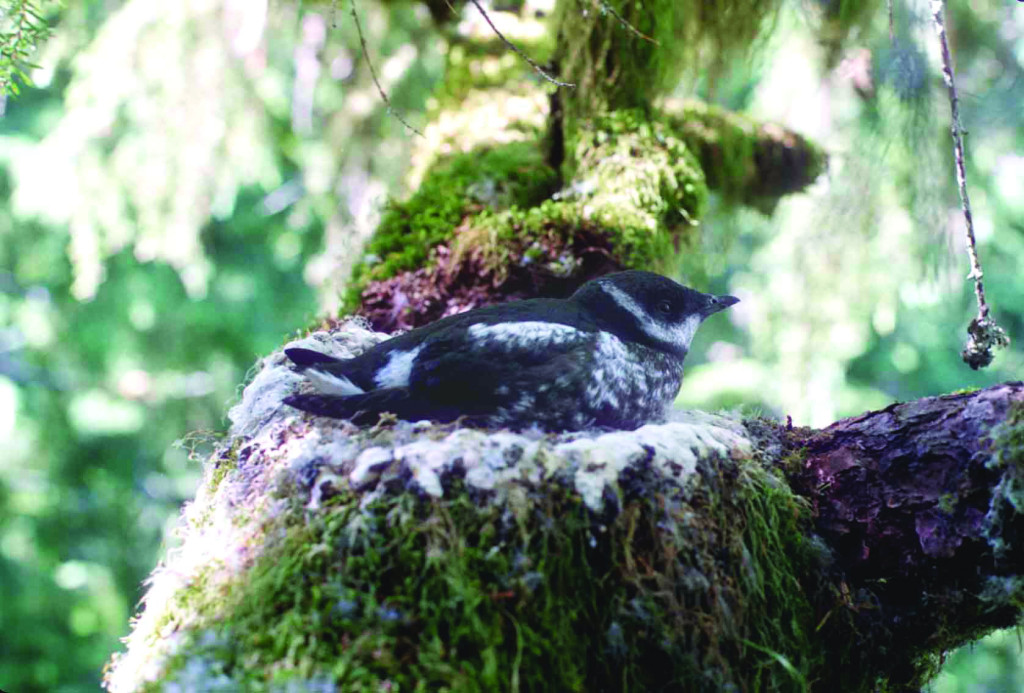
While at sea, adult Marbled Murrelets are in basic winter plumage from October to February, with blackish feathers above and white feathers below, for pelagic camouflage like many other seabirds. In March through April they molt into alternate summer plumage, which is olive-brown with white speckling and mottling, resulting in an arboreal camouflage plumage for protection on their canopy mat nest sites.
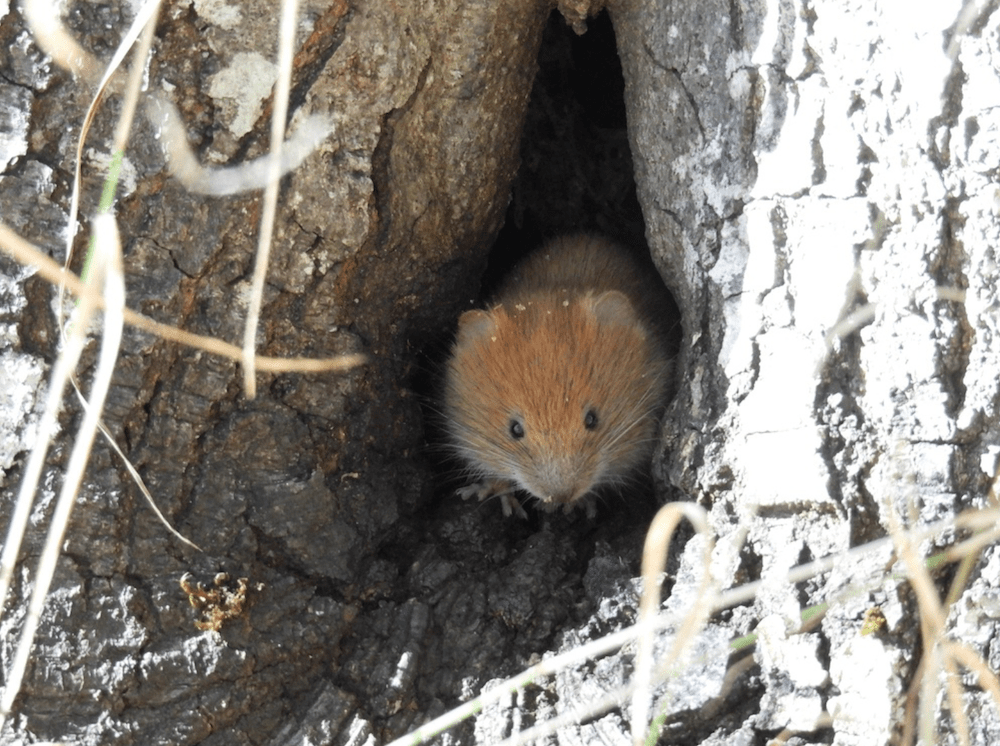
The Sonoma tree vole (Arborimus pomo), a near-threatened species of special concern and of limited range in California, carries out its arboreal life in the canopies of old growth Sitka spruce and Douglas fir (Pseudotsuga menziesii) trees, maintaining multi-generational nests and subsisting exclusively on a diet of conifer needles.
Data and studies concerning the Sonoma tree vole are extremely limited, mostly due to the challenges posed at locating and reaching the habitats of this nocturnal rodent; but it is known that the fragile Arborimus pomo population has declined precipitously due to old growth habitat loss and fragmentation, exacerbated by their low fecundity rate and limited range dispersal.
Loss of old growth Douglas firs and increasing isolation of the diminished stands due to logging has been the primary driver of this vulnerable species’ decline.
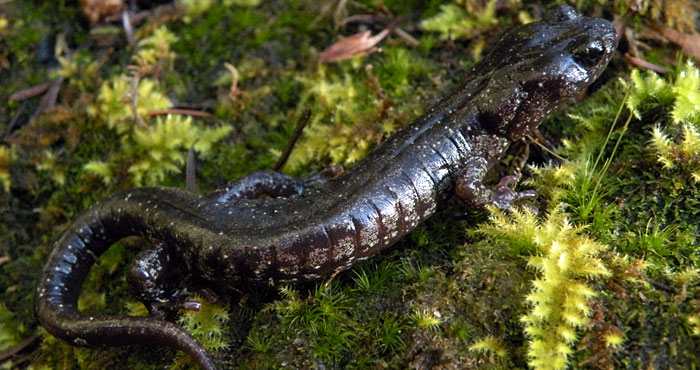
Found sharing these large and elaborate multi-chambered nests with the Sonoma tree voles are at least four amphibian species: Clouded salamanders (Aneides ferreus), Arboreal salamanders (Aneides lugubris), Pacific tree frog (Pseudacris regilla), and a California giant salamander (Dicamptodon ensatus) – benefiting from the shelter and moisture of the Tree vole nests, as well as invertebrate communities within the canopy and nests to feed on.
Attracted by the high moisture content of the fern canopy mats, the oft studied arboreal Wandering salamander (Aneides vagrans) resides and feeds on invertebrates within the redwood canopy fern mats, as confirmed by mark recapture/tagging studies as well as remote camera monitoring of the Aneides vagrans within the canopy.
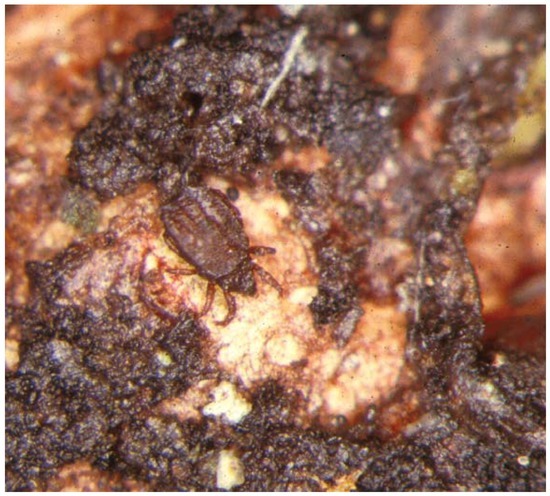
The arboreal invertebrate population is dominated by arthropods, and these communities in old growth forests have much higher diversity than populations in younger forest stands, due to the structural complexity of old growth trees, the richness of resources, moisture availability, and the moderate microclimates within old growth stands. Arboreal arthropod communities include herbivores, fungivores, parasitoids, and predatory species – all contributing to nutrient cycling, decomposition, and botanical diversity within the forest and the old growth canopy.

References
Ambrose, A.R. 2004. “Water-holding capacity of canopy soil mats and effects on microclimates in an old-growth redwood forest.” Report to Save-the-Redwoods League. M.S. Thesis, Humboldt State University.
Baker, L., et al. 2006. “Nesting Habitat Characteristics of the Marbled Murrelet in Central California Redwood Forests,” Journal of Wildlife Management 70(4): 939-946.
Camann, M.A., et al. 2000. “Old-growth redwood forest canopy arthropod prey base for arboreal wandering salamanders.” Report to Save-the-Redwoods League.
Campbell-Spickler, J., et al. 2016. “Remote camera monitoring and a mark-recapture study of the Wandering salamander in a redwood forest canopy.” General Technical Report PSW-GTR-258 Coast Redwood Science Symposium 324.
Chinnici, S.J., et al. 2011. “Sonoma Tree Vole Habitat on Managed Redwood and Douglas-fir Forestlands in North Coastal California.” Redwood Science Symposium, General Technical Report PSW-GTR-238. 389-387.
Enloe, H.A., et al. 2006. “Arboreal Histosols in Old-Growth Redwood Forest Canopies, Northern California.” Soil Science Society of America Journal 70(2).
Enloe, H.A., et al. 2010. “Soil Organic Matter Processes in Old-Growth Redwood Forest Canopies.” Soil Science Society of America Journal 74(1): 161-171.
Forsman, E., et al. 2007. “Use of arboreal nests of tree voles by amphibians.” Herpetological Conservation and Biology 2(2):113-118.
Kerhoulas, L.P., et al. 2019. “Epiphyte diversity, abundance, and distribution in an old Sitka spruce crown.” Evansia 36(1):12-22
Pyle, P., et al. 2008. Identification Guide to North American Birds Part II. Point Reyes Station: Slate Creek Press.
Schowalter, T. 2017. “Arthropod diversity and functional importance in old-growth forests of North America.” Entomology Department, Louisiana State University Agricultural Center.
Sillet, S.C., et al. 2007. “Epiphyte communities on redwood (Sequoia sempervirens) in northwestern California.” The Bryologist 110(3):420-452.
Sillett, S.C., et al. 2003. “Effects of tree crown structure on biomass of the epiphytic fern Polypodium scouleri (Polypodiaceae) in redwood forests.” American Journal of Botany 90(2): 255–261
Sillett, S.C., et al. 2007. “Trunk reiteration promotes epiphytes and water storage in an old-growth redwood forest canopy.” Ecological Monographs 77(3):335-359.
Spickler, J.C., 2004. “A mark-recapture study of the Wandering salamander, Aneides vagrans, in a redwood rain forest canopy.” Thesis, Humboldt State University.
Strong, C. 2013. “Marbeled murrelet productivity measures at seas in Northern California during 2011 and 2012: an assessment relative to Redwood National and State Parklands.” Crescent Coastal Research, and USFWS Cooperative Agreement no. F11AC01081.
Discover more from Cal Geographic
Subscribe to get the latest posts sent to your email.
