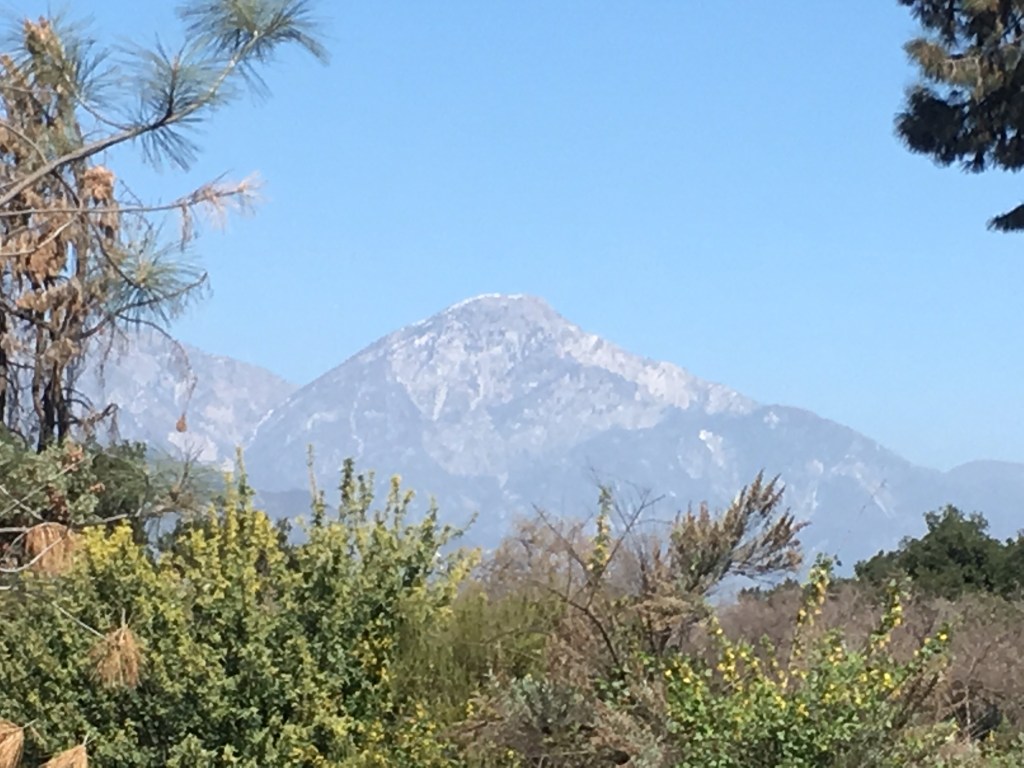
San Gabriel Mountains Batholith, R. Forest
Pluton/Batholith:
Pluton: Body of intrusive igneous rock, usually coarse-grained due to slow cooling; solidified magma chamber
An identifiable body of igneous rock crystalized beneath the surface from a single body of magma
A pluton is a relatively small intrusive igneous body (a few to tens of miles across) that forms within the Earth’s crust from slowly cooled magma. Multiple plutons in the same area may be large enough (up to hundreds of miles long and 60 miles across) to be called a batholith
Batholith: Large body of plutonic rock mainly composed of granodiorite and granite, typically occurring in the magmatic belt above subduction zones
By far the largest and most amorphous intrusion is the batholith, which is a subterranean igneous body of enormous size and perhaps of unknown depth. A large batholith may be comprised of dozens of plutons, perhaps emplaced as a series of pulses of magma over periods of millions of years. Batholiths form the core of many major mountain ranges.
(Definition references are listed at the bottom of the Geomorphology Word of the Day home page)
Where in California:
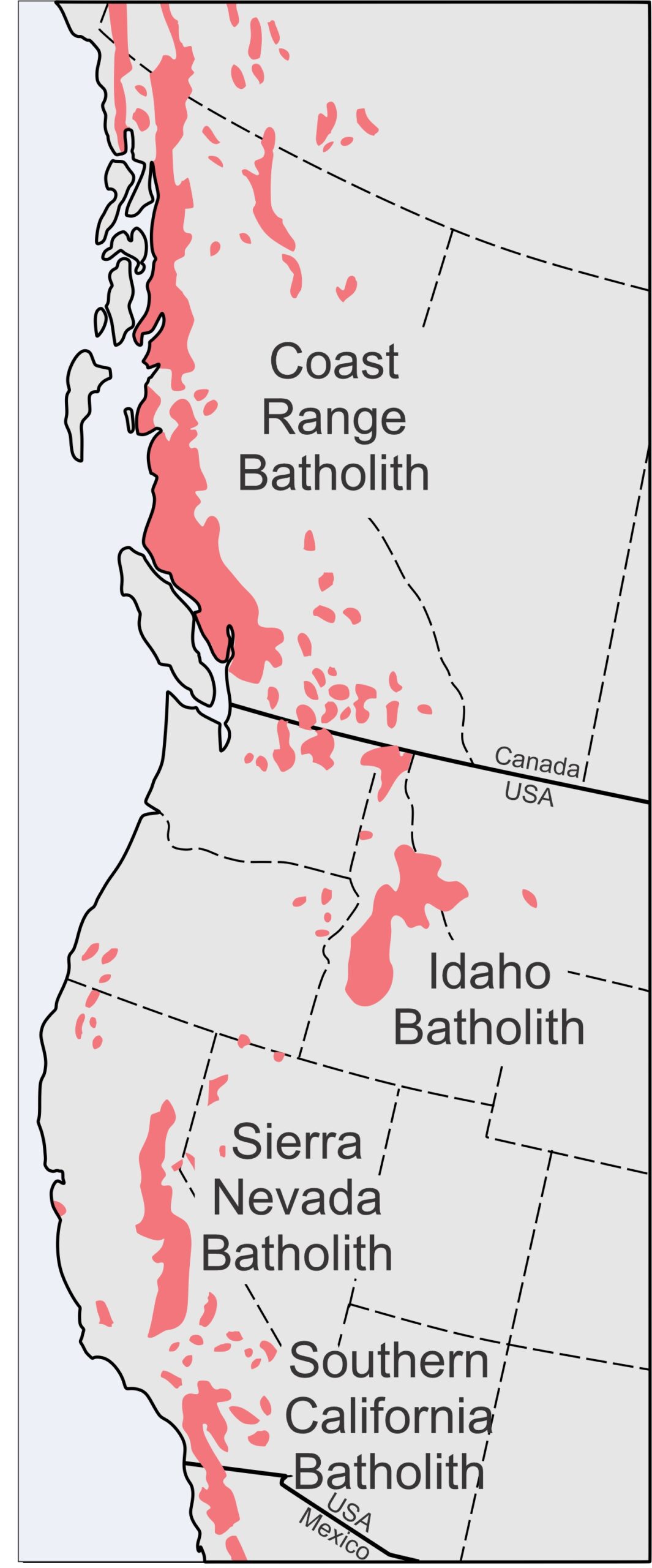
In the Mesozoic era, as the Farallon Plate subducted beneath the prehistoric North American margin, a massive batholith was formed in line with the subduction zone boundary. Throughout the Jurassic and Cretaceous periods plutonic magma chambers crystalized at varying rates and times to form the granitic rocks which today form the core of the Sierra Nevada, portions of the Transverse Range (the San Gabriel and San Bernardino Mountains), and the Peninsular Ranges.
Notably, the Salinian Block, a streaming trail of dramatic granitic outcrops originating from the Sierra Nevada Batholith, is seen today following a northwest trajectory along the California coastline. This series of granitic mountains, coastal peninsulas, and islands were formerly a southwestern portion of the Sierra-Nevada Batholith, captured by the transform mechanics of the San Andreas Fault system, and transported along the northwest-trending rift zone. The Salinian Block forms the Sierra de Salinas, Point Lobos, Montara Mountain, the Farallon Islands, the Point Reyes Peninsula and other sites offshore and along the central California coastal region.
Current geologic theory proposes that batholiths, such as the massive California ranges batholith, can grow so large due to sea water trapped in the descending oceanic plate being shed off and squeezed out coming into contact with the mantle, then lowering the melting point of the surrounding rock materials. This increases production of massive amounts of silica rich magma that slowly crystalizes to granitic rock within the batholithic chambers.