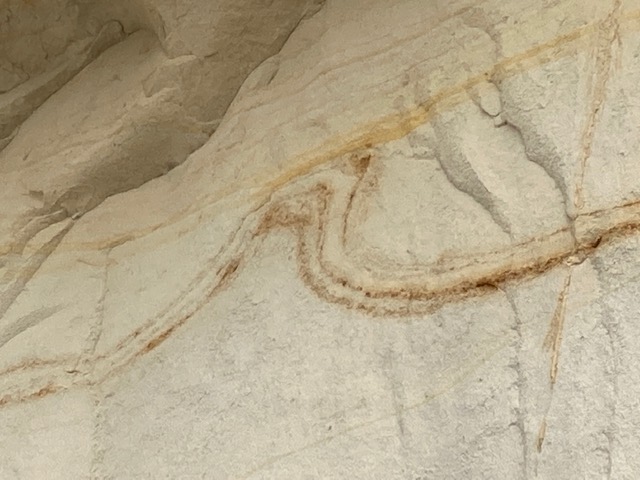
Seismite:
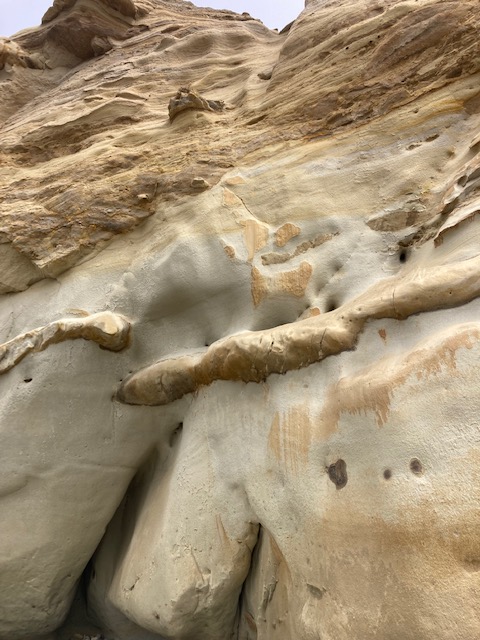
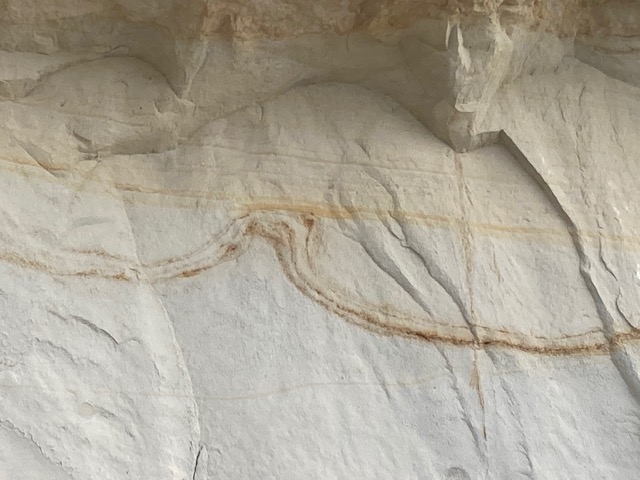
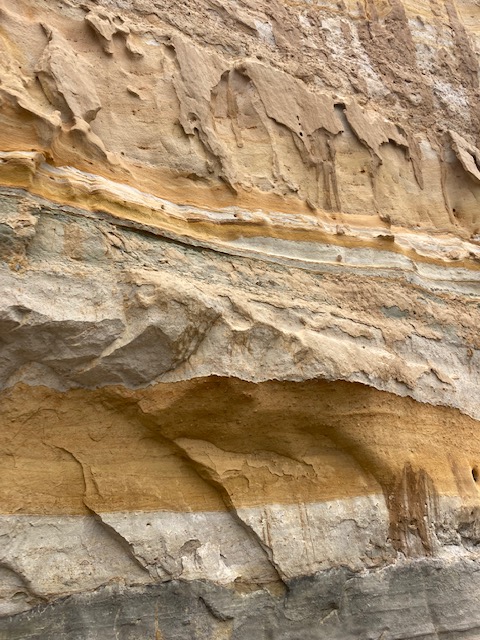
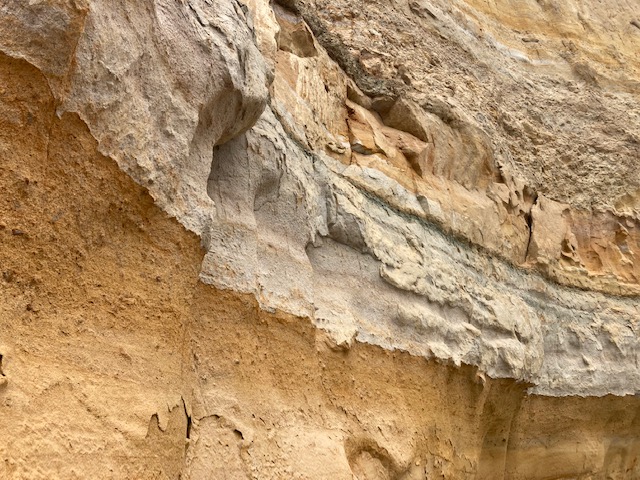
Sedimentary layers (lithified strata) deformed during the seismic shaking of paleo earthquakes, and displaying distinct convoluted and disrupted bedding with geomorphic features such as pillows, flow rolls, dikes and folds.
Seismites are soft sediment features produced by paleo earthquakes, they are formed after sediment deposition, before sediment compaction, and during sudden breakdown of a loosely packed, water saturated grain framework. Fundamental controls on seismite generation are exerted mainly by earthquake size, sediment properties, and water table depth. Hydroplastic deformation, liquefaction and fluidization are the three mechanisms related to seismic origin. The most common types of seismites are hydroplastic mixing layers, pillars, pockets, dikes, sills and folds. F. Bezerra et al.,2001. “Seismites: origin, criteria for identification and examples from the Quaternary record of Northeastern Brazil.” Pesquisas em Geociencias28(2):205·212.
Where in California:
Seismites in California have been located and studied in sedimentary strata of Pleistocene lake beds, in outcrops of the Miocene-aged Monterey Formation, and within the ancient sandstone formations of Torrey Pines State Natural Reserve
