Point Reyes Peninsula, Tectonostratigraphic Terrane, R. Forest
Tectonostratigraphic:
A terrane that is different geologicaly/stratigraphically from adjacent terranes
A terrane with spatially divergent geologic history than present neighboring terranes
A terrane that is bounded by faults which result from the tectonic processes leading to the accretion
Accreted terranes are also called tectonostratigraphic terranes
Palinspastic:
Restoration in which geomorphic, geological, and environmental features are presented in their previous locations at a specified prehistoric time frame
Demonstrating, examining, or illustrating the historic placement of landforms, landmass, and/or earth’s features, which have since changed due to diastrophic movement
Structural modeling and current technological tools are utilized to analyze historic geophysical and geological data in order to interpret palinspastic reconstruction
(Definition references are listed at the bottom of the Geomorphology Word of the Day home page)
Where in California:
The Salinian Block (Salinia), and the Point Reyes Peninsula specifically, fits the criteria of a tectonostratigraphic terrane. It a fault-bounded block in western California, laying between the San Andreas Fault to the east, and (depending on the location of the portion of the Salinian Block) various transverse and normal faults associated with the San Andreas rift system to the west.
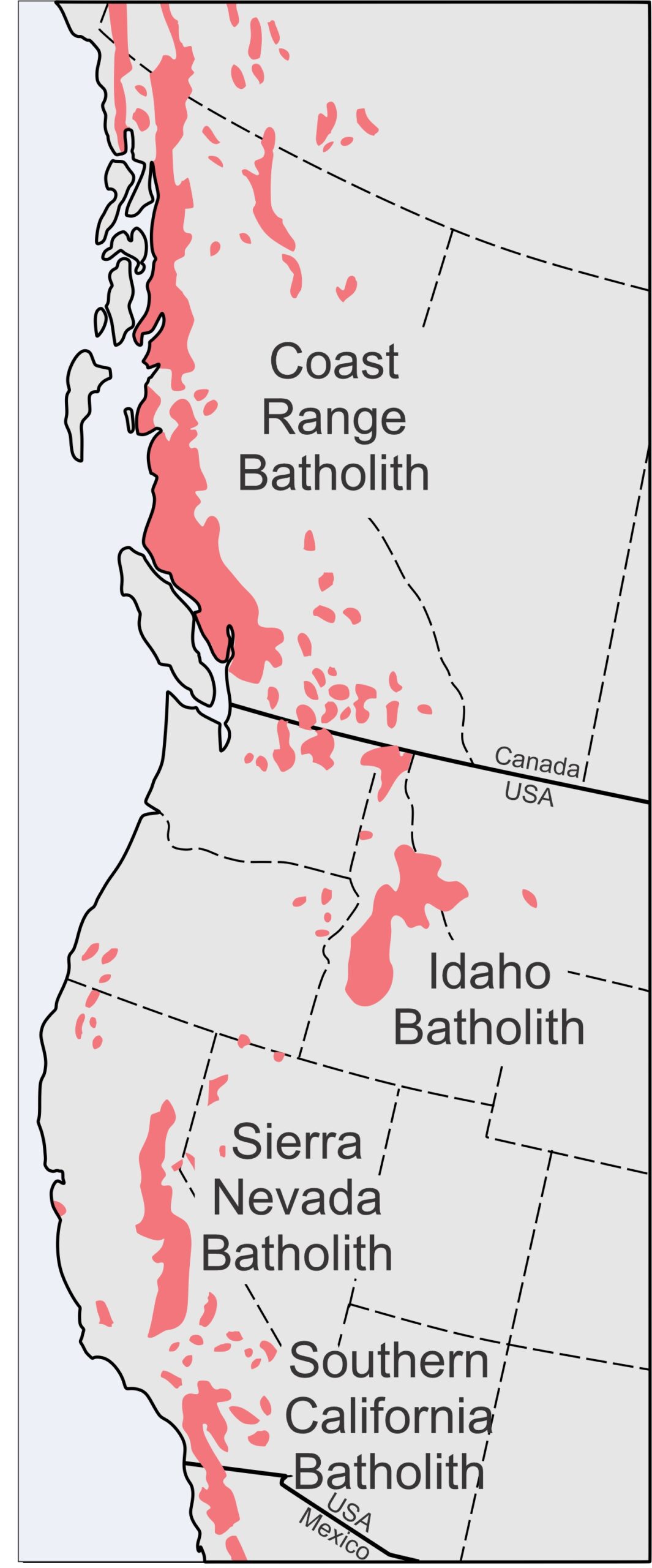
Salinia is a displaced plutonic remnant of the Sierra Nevada/California/continental arc Mesozoic-Cenozoic batholith. As with other portions of the Salinian Block, the Point Reyes Peninsula was captured by the mechanics of the San Andreas system and has been transported northwest along the transform track for over 20 million years.
The Salinian Block forms the Sierra de Salinas, Point Lobos, Montara Mountain, the Farallon Islands, the Point Reyes Peninsula and other sites offshore and along the central California coastal region.
Palinspastic reconstruction, integral to the conceptualization and understanding of California’s tectonic formation, has been utilized to determine the geologic age and origins of the Salinian Block and Point Reyes Peninsula. Barbeau et al, 2005, in which detrital-zircon geochronologic ages collected by laser-ablation multi-collector inductively coupled plasma mass spectrometry technologies were employed (!), is one example of palinspastic analysis of the Salinian Block.