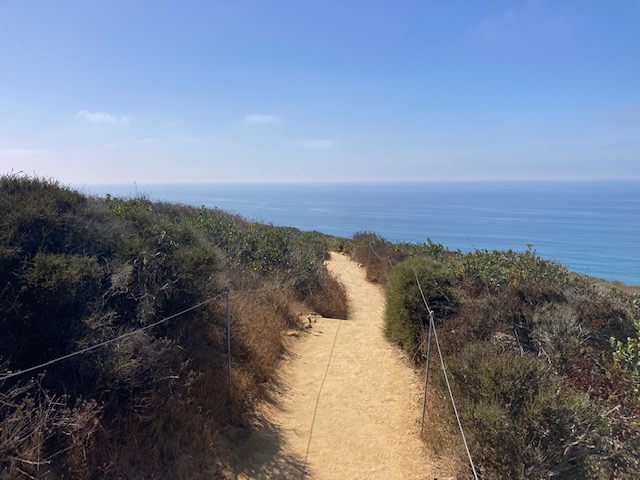
When removing political and international borders, the biogeographic and physiographic continuity of the ecosystem mosaic between southern California and Baja California is obvious. Unfortunately, political boundaries are real obstacles to biological connectivity, as well as to research and conservation. This is especially stark along the US-Mexico borderlands, but California’s historic habitats persist in fragility, and vigilant bi-national monitoring is vital to the survival of the southern native landscapes of the California Floristic Province.
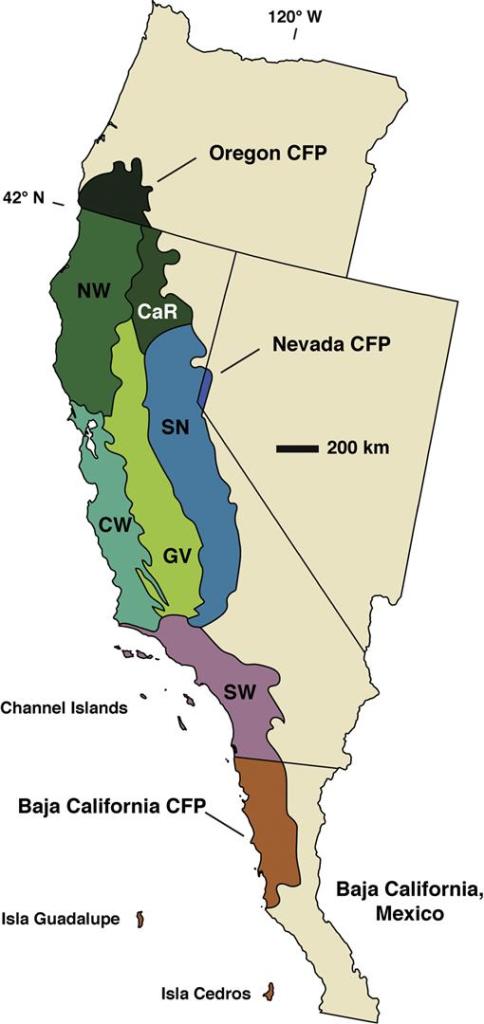
California Floristic Province
The California Floristic Province (CFP) encompasses the western coastal region of North America that is under the influence of the Mediterranean climate, and spans most of the state of California (excluding the Great Basin geomorphic and climatic province), southern Oregon, a tiny triangle of western Nevada which falls within the Sierra Nevada CFP Region, and northern Baja, Mexico. The Southwestern California and Baja-California Regions of the CFP form a contiguous South Coast Ecoregion of immense physiographic diversity, extreme biodiversity, and together with the CFP represents the highest regional endemism of plant and animal taxa in North America.
The South Coast Ecoregion of the CFP has the highest human population and is the most impacted by development, urbanization, industry, and large scale landscape clearing/elimination than any other of the CFP Regions. As stated in the 2015 Las California’s Binational Conservation Report, the central borderlands within the heart of the South Coast Ecogregion, “hosts a binational metropolis of over four million people whose well-being depends on natural landscapes and associated ecological processes.”
Physiogeographic and geomorphic diversity within the South Coast Ecoregion is unparalleled, encompassing southern and eastern portions of the Transverse Ranges, a majority of the Penisular ranges, southern California’s great coastal subsidence basins, an extensive network of prominent marine terraces and mesas, and the Channel Islands as well as Baja Mexico’s major offshore Islands.
This immense topographic diversity in collaboration with the extremities of the Mediterranean climate have produced an array of landform-ecotypes within a relatively small area of the west coast, including the confluence of immense southern watersheds and estuarine systems, a sliver of unique Pacific coastal desert, coastal montane and mesa systems, and sub regions of all of the above historically occupying the large offshore islands.
Within this landform-ecotype system of southwestern California a network of unique and precious habitats has evolved along with the Mediterranean climate over the past 20 million years. The unparalleled botanical richness of the California Floristic Province engineers and provides the structures of these habitats.
The CFP hosts the highest number of native plant species in the world (>5500) and the highest rates of botanical endemism of any floristic region of its size. These numbers are tied to the extreme physiographic complexity and topographic barriers historically isolating species within the California Floristic Province, which encourages speciation and together with the distinct and steady climate regime, lowers extinction rates.
Biogeographic Connectivity
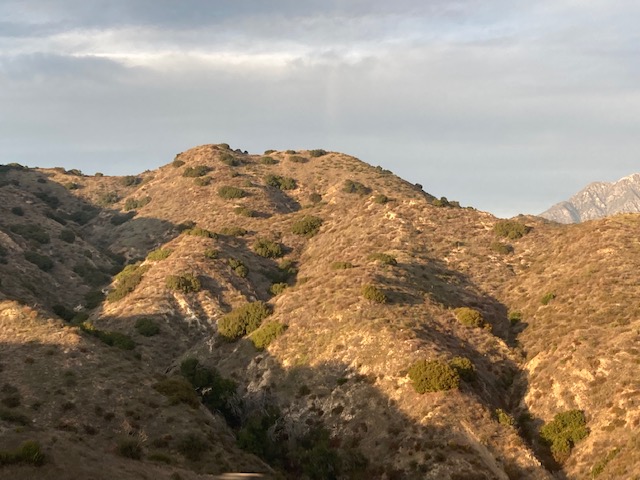
Southern Coastal Sage scrub
Southern (Diegan) coastal sage scrub may be one of the most dominant botanical communities and habitat types shared between southwestern California and northern Baja. Coastal sage scrub is part of the greater coastal scrub complex of California, which also includes Northern coastal Scrub, Maritime chaparral, and Maritime succulent scrub. Coastal sage scrub ranges from northern Baja in the south to Marin County in the north, and is subdivided into broad regional groups (Viscainin, Martirian, Diegan, Riversidian, Venturan, Diablan), which compose a biogeographic spectrum of coastal sage scrub alliances and associations longitudinally throughout much of coastal Baja and California.
Coastal sage scrub is southern and central California’s keystone endemic ecosystem, considered one of earth’s most endangered habitats, and is protected under the California Coastal Act, yet Coastal sage scrub is vanishing at unprecedented rates due to human impacts. It is a delicate and intricate ecosystem tied to the tectonic landforms and unique soil biomes of coastal California, and is vital to the survival of endemic and migratory insect, bird, reptile, amphibian, and mammal species of the South Coast Ecoregion.
Artemisia californica, Salvia mellifera, and Salvia apiana are the keystone woody sage species and ecosystem builders of these summer drought-adapted scrublands in Southern California and northern Baja. These unassuming woody sage species engineer environments teeming with rare and endemic microbes, insects, and fauna.
Dominated by flowering woody and drought deciduous shrubs, with species that are both spring and fall bloomers, a highly diverse insect and pollinator population relies on healthy, mature coastal sage scrublands to survive. These insect species and the broad arthropod communities adapted to this ecosystem serve as the nutrient cyclers, pollinators, decomposers, and assistant primary producers of the Coastal sage scrublands.
Less than 8% of southern California’s native Coastal sage scrublands remain, and while there has been scientific study and conservation focus sporadically from about the 1970’s through the early 2000’s, the status of its declining plant and animal communities as well as conservation trends have been woefully understudied or followed up on, and largely ignored for the past twenty plus years.
One study of Diegan/Southern coastal sage scrub at one location in the 1990’s inventoried 50 shrub species, over 500 herbaceous understory plants (noting 50% of which are considered rare), and numerous special-status fauna including California gnatcatcher (Polioptila californica californica), Coastal cactus wren (Campylorhynchus brunneicapillus sandiegensis), Orange-throated whiptail lizard (Cnemidophorus hyperythrus beldingi), Coast horned lizard (Phrynosoma coronatus), and Quino checkerspot butterfly (Euphydryas editha quino). This is only a tiny portion of the known and unknown species adapted to California’s Coastal sage scrub alliances.
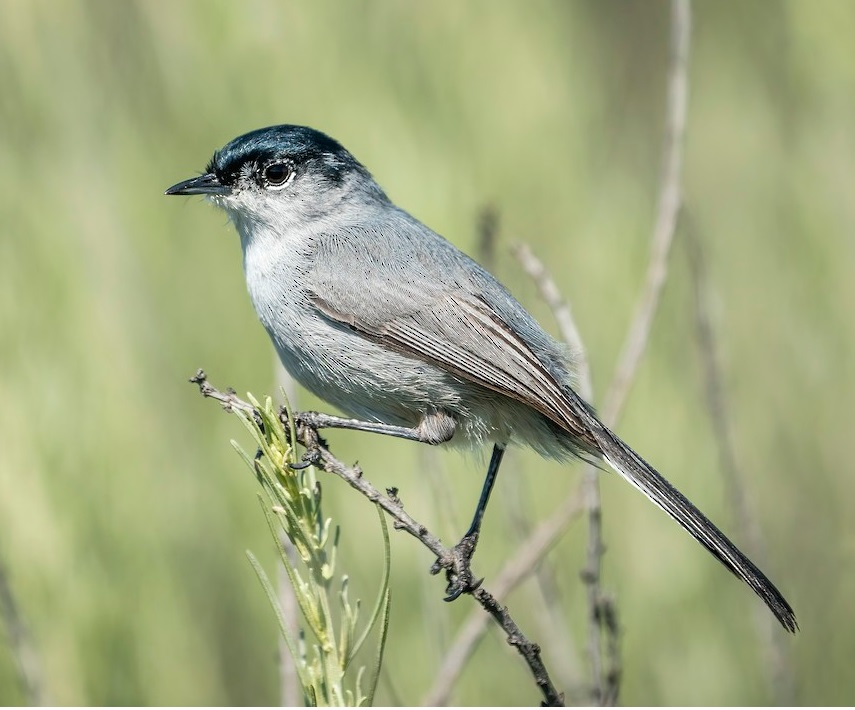
California Gnatcatcher on Coastal sage (Artemisia californica) at Newport Beach CA, Anonymous, 2022, Cornell Lab Macaulay Library ML428323161
California Gnatcatcher (Polioptila californica) and the Coastal Sage Scrub
The California gnatcatcher is a resident landbird of Southern California and Baja, biogeographically tied to the Coastal sage scrub, Maritime chaparral, and desert scrublands of the South Coast Ecoregion.
In southern California, at the tiny northern tip of its range from southern Ventura County to the Mexican border, the coastal California gnatcatchers are found almost exclusively within the remnant patchwork of Diegan Coastal sage scrub closest to the immediate coast. This is a precarious existence for this diminutive and highly sedentary, non-migratory species as its habitat dwindles due to extreme high-value development pressures, as well as persistent wildfire recurrence within the remaining Coastal sage scrublands.
Post wildfire recovery of the Coastal sage scrub habitat and post fire re-colonization to these habitats by California gnatcatchers depends on fire intensity, presence of unburned refugia nearby, what the quality of the original habitat was pre-fire, precipitation rates following a fire, and the physiography landscape. Post fire recovery of the native scrub habitats and of the California gnatcatcher populations is generally four to five years at a minimum.
Studies of California gnatcatcher populations have been proposed to monitor if there is current genetic flow between populations from southern California and Baja. It is imperative to determine if the highly sedentary California gnatcatcher can in fact travel long distance between disparate habitat patches, or if they require robust corridors of native Coastal sage scrub and other South Coast Ecoregion native scrublands to disperse and maintain genetic diversity within the greater, but limited, population. Juveniles have been monitored to infrequently and fleetingly utilize non-native and ornamental vegetation zones as dispersal corridors.
With certainty, the survival and conservation of California gnatcatchers in southern California is intrinsically tied to the survival and conservation of the endemic Coastal sage scrub ecosystem. These highly sedentary obligate resident birds have a lifetime territorial range of a mere five to ten acres on average within the Coastal sage scrub and contiguous patches of other native scrub and chaparral types.
In Baja, California the California gnatcatcher resides within varying lowland native scrub types including coastal sage scrub, dune scrub, desert scrub types, and scrubby woodlands, although these ecosystems are fragmented and continuing to decline due to agriculture, grazing pressures, and urban development, severing the fragile population connectivity between southern and northern populations. It is estimated that 99% of the total population of California gnatcatcher in Baja occurs in the southern state, south of El Rosario, and cut off from southern California’s population.
The nominate subspecies of California gnatcatcher, Polioptila californica californica, restricted to southwestern California and extreme northwestern Baja California, is listed as Federally Threatened under the U.S. Endangered Species Act , and is considered a Species of Special Concern by the California Department of Fish and Game.
DNA analysis has shown no evidence of evolutionary-based subspecies genetics for the California gnatcatcher, and diversity patterns suggest that the northern population of California gnatcatcher was rapidly colonized from late Pleistocene refugium that dispersed from south of the 30° latitude in Baja.
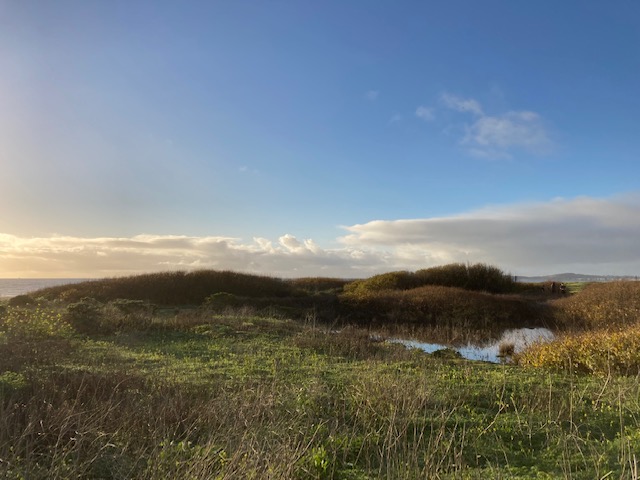
Seasonal Wetlands and Vernal Pools
Cal Geographic has reported extensively on the geography, geomorphology, biogeography, and status of California’s seasonal wetlands and vernal pools in our articles the Biogeography of California’s Seasonal Freshwater Wetlands, the Geomorphology of California’s Seasonal Freshwater Wetlands, Living Landscapes: The Western Transverse Ranges, and the Cal Geographic Report Podcast: California’s Vernal Pools and Seasonal Wetlands, which can be found on our website referenced through these linked titles.
Within the South Coast Ecogregion of the CFP, seasonal freshwater wetlands and vernal pools have been destroyed by human impacts including development, drainage, grazing, agriculture, and invasive species by at least 95% over the past two hundred years, with a continued exponential decline due to these same pressures. The ecological value of these fragile and vanishing ecosystems, integral to California’s biogeographic and geomorphic heritage cannot be overstated.
Wetland complexes have been studied and preserved in patches throughout Southern California, including Camino Corto and Del Sol Vernal Pool Preserves in Isla Vista; North Campus Open Space Preserve and restored vernal pool complex at UC Santa Barbara; Santa Rosa Plateau Ecological Reserve Vernal Pools in San Diego; Miramar Community College Vernal Pools Preserve in San Diego; on Marine Corps Base Camp Pendleton; Marine Corps Air Station Miramar; Miramar Mounds National Natural landmark on Marine Corps Air Station Miramar; and within the San Diego National Wildlife Refuge.
Most of these sites preserve the Valley hardpan vernal pool type of seasonal wetlands (Cal Geographic, 2025), with rare coastal complexes found in San Diego County. Often understudied and overlooked are California’s other seasonal freshwater wetland types including seasonal Saturation wetlands (Cal Geographic, 2025), wet meadows, swales, and intermittent streams, all as ecologically important, complex, and fragile as vernal pools.
In northwestern Baja, California, small complexes of high quality vernal pools supporting rare and hyper-local endemic plant and aquatic invertebrate populations had been monitored in 2016 to occur within the mesas and low elevation slopes around La Mision and Tijuana. Biologically unique pools were mapped along the river terraces of Valle de Las Palmas, Valle Redondo, Valle de Guadalupe, the Colonet and San Quintin regions.
These are regions that were and are under immense pressures of environmental loss due to rapid development and urbanization. In a 2015 report researchers in Baja calculated that 96% of vernal pools in northwest Baja have been lost, only surpassed by a 98% loss in San Diego County.
Rare and endemic vernal pool plant and invertebrate species, some un-described and new to science, have been documented in northwestern Baja, with populations sparsely occurring north of the international border and considered rare in the US as well. In addition, genetic divergence and endemism between inland and coastal vernal pool species has been documented for pool complexes in northwest Baja, California, also warranting further study and conservation of these extremely rare wetlands.
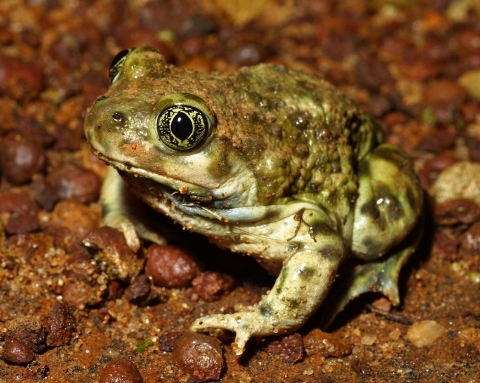
Western Spadefoot (Spea hammondii) and Vernal Pools
The Western spadefoot is a small burrowing anuran (type of frog) adapted to the Mediterranean Climate of the California Floristic Province, and ranges from central California down to central- western Baja.
Commonly referred to as spadefoot toads, Spadefoots are neither in the toad family (Bufonidae), or the family of “true frogs” (Ranidae), but are within a less common family of frogs known as Scaphiopodidae. All species and families of frogs are within the order Anura.
The Western spadefoot requires semi-open high quality native habitats such as prairie, coastal scrub, and chaparral which also feature seasonal wetlands, preferably vernal pools. The Western spadefoot spends a majority of the year as a terrestrial species within these habitat zones foraging and aestivating in burrows dug into sandy soils, and emerging with seasonal rains to breed at the adjacent vernal pools or other freshwater wetlands.
Western spadefoot populations are declining steadily in southern California and Baja due to rapid habitat loss, as well as to invasive predatory species and pesticide contamination. In 2025 the California Fish and Game Commission was petitioned to list the Western spadefoot under the California Endangered Species Act, and in 2026 a Petition Evaluation was submitted.
The southwestern clade of the Western spadefoot ranges from Orange County south to northwestern Baja. Within this geographic zone which mirrors the South Coast Ecoregion of the CFP, three unique vernal pool regions have been identified based on biogeography, geomorphology, and soil components of the pool regions that the spadefoots rely on.
In this region of the southwestern spadefoot clade, vernal pools occur on mesas and in valleys along watersheds. Vernal pool surveys conducted in northeastern Baja in 2020 found Western Spadefoots in only two pools out of 39 surveyed, and surveys for breeding populations in northwestern Baja found even lower numbers.
Rigorous field studies of Western spadefoots in southern California confirmed the importance of conserving variable terrestrial habitats based on region and clade requirements, in order to conserve ecological and population dynamics of this primarily terrestrial amphibian.
The Western spadefoot relies on specific terrestrial components suitable to foraging and burrow construction, as well as connectivity to wetland environments for breeding and population viability. Impeding, lengthening, or severing connectivity between the wet and dry habitats required for all life stages of the Western spadefoot escalates population decline.
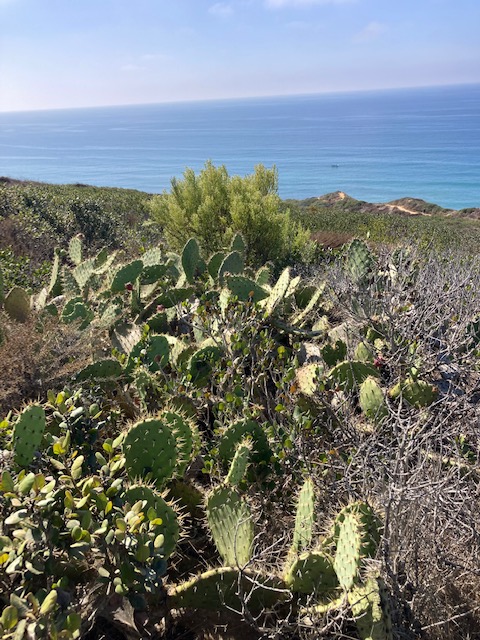
Maritime Succulent Scrub
The fluidity of the ecosystem mosaic of coastal scrub types within the South Coast Ecoregion of the CFP becomes increasingly evident as the rich spectrum of botanical communities and floristic assemblages blends and blurs across these arid coastal landscapes.
California’s coastal scrub macrogroup is dominated by the coastal sage scrub subgroups, of which Diegan Coastal sage scrub dominates the last native ecosystem stands of southwestern California, and mixes out as aridity increases to form succulent dominated subsets known as Maritime succulent scrub, which then intermingle in and out of sage landscapes in northern Baja and transform into a patchwork of coastal, desert, and xeric succulent dominated scrublands.
Within this scrubby mélange rare alliances of Maritime chaparral also mix in and out, as well as patches of rare coastal woodlands. Suffice to say, with all this blurry blending and fragmented native mosaic in southern California into Baja obscuring the habitat lines, the happy conundrum becomes how and where to place the overlapping and interspersed species of these blurred ecosystems.
This is where I am now with Maritime succulent scrub and Hesperoyucca whipleii (Chaparral yucca). Maritime succulent scrub is the succulent-dominated form of Diegan Coastal sage scrub in California, and is known as Matorral rosetofilo costero in northwestern/north coastal Baja. Continuing south along the sage scrub gradient through Baja, the Diegan Coastal sage subgroup becomes Martirian sage scrub, and south of that becomes Vizcainan sage scrub, then transitions to desert associations and ecosystems. Within the Martirian and Vizcainan Coastal sage scrub groups there are many alliances and association further defining and refining the eco-scape.
As a sibling of Coastal sage scrub, Maritime succulent scrub communities include shrubs of the southern coastal sagelands, such as Artemisia californica, Rhus integrifolia, Lotus scoparius, Eriogonum fasciculatum, and Salvia mellifera. Many cactus and succulent species intermingle within the Diegan coastal sage scrub and Maritime succulent scrub, and become more abundant heading south with increasing aridity. These include species of Agaves, Bergerocactus, Dudleyas, Ferrocactus, Opuntias, and Yuccas, some rare and endangered.
An intriguing and counterintuitive ecological hallmark of the Maritime succulent scrub, is that it is more species rich than any other coastal and interior sage scrub group. The diversity of succulents within maritime succulent scrub accounts for this richness, and the proposed driving evolutionary factor is the lack of fire regimes within these arid coastal ecosystems, also contributing to high endemism featuring paleoendemic species.
Maritime succulent scrub is an extremely rare and imperiled ecosystem. As of 2015 only 580 acres remained in southwestern California, and no conservation measures are in place for Maritime succulent scrub/Matorral rosetofilo costero in Baja. A fragmented network of about seven small habitat plots hang on between Rosarito and Ensenada, and are all that remain of this once dominant Maritime succulent scrubland of northwestern Mexico, which has been reduced by 80% since documentation in 2004.
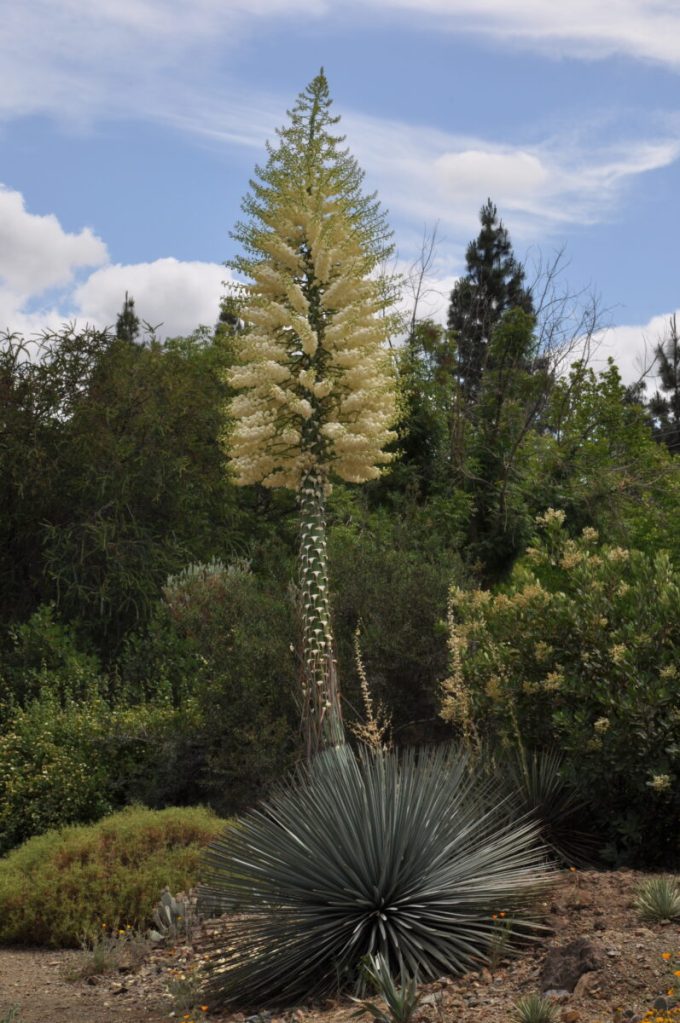
Chaparral yucca (Hesperoyucca whiplei) and Maritime Succulent Scrub
Hesperoyucca whiplei enjoys the blurred mosaic mélange of the xeric coastal habitats of the South Coast Ecoregion, jumping around between Diegan Coastal sage scrub, Maritime succulent scrub, and Maritime chaparral. All of these ecosystem sub-groups are beautifully intertwined and viewable at Torrey Pines State Natural Reserve in La Jolla.
Once thought to be a yucca, Hesperoyucca whiplei is native of southwestern California and northwestern Baja in a genus of its own, and adapted to the Mediterranean climate and rocky soils of the coastal southwest.
Hesperoyucca whipleii is found in coastal sage scrub and chaparral habitats along the central and south coast, and at mid to low elevation xeric landscapes of the Transverse, Peninsular, southern Sierra Nevada, and Coast ranges.
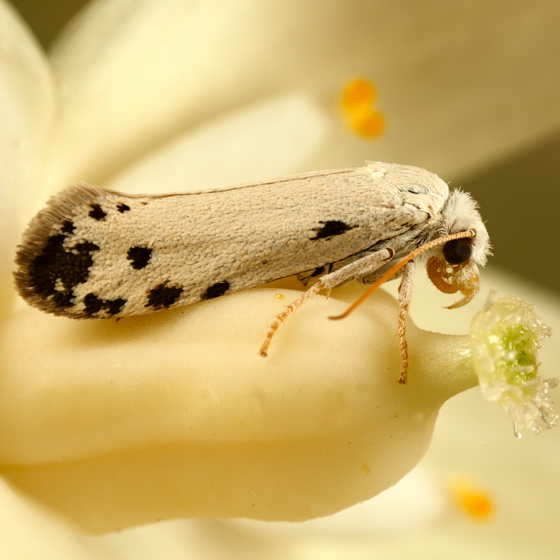
The Yucca Moth (Tegeticula maculata) and Chaparral Yucca
The life cycle of Hesperoyucca whiplei is tied to the equally elaborate life cycle of its sole pollinator, the California Yucca moth, Tegeticula maculata. The Chaparral yucca and the Yucca moth have evolved to form an exclusive mutualistic relationship with each other
The Yucca moths are triggered to emerge as adults from subterranean cocoons beneath the yuccas when they bloom, and after mating the female moth utilizes specialized elongated maxillae (mouthparts) to gather and store pollen from a yucca flower.
She then travels to another plant to deposit her fertilized eggs into the floral ovary of that flower, and then transfers the transported pollen to the stigma of that flower, pollinating it. The stigma (flower structure that receives pollen for fertilization) of the Chaparral yucca is inaccessible to any birds or insects other than the Yucca moth.
The Yucca moth larvae develop inside and along with the yucca fruit feeding on a portion of the seeds. Once matured, the larvae drill out of the yucca seeds and rappel to the ground on spun silk, and then burrow into the ground to build a cocoon and pupate, emerging as adults for the next flowering season of the Chaparral yucca.
In 1958 a young female graduate student in Claremont, California, D.R. Wimber, conducted her master’s thesis research in the field meticulously observing and recording the behavior of Yucca moths breeding and pollinating amongst the Hesperoyucca whiplei of Rancho Santa Ana Botanical Gardens. Her methods and findings were groundbreaking, and still referenced in current entomological studies.
Wimber observed previously unknown activity patterns of Tegeticula maculata, including the flexibility in pollination and oviposition strategies of the female Yucca moth, as well as in selection of preferred flowers. She observed consistent diurnal activity, but found dusk to be the peak of the adult Yucca moth’s breeding and pollination activity.
The Chaparral yucca is monocarpic and dies after flowering. The remaining seeds are dispersed into the soil to sprout the next generation of Hesperoyucca whiplei throughout the southwestern California and northwestern Baja coastal sage scrub, maritime succulent scrub, and chaparral landscapes.
Special Mention: Englemann Oak Woodlands
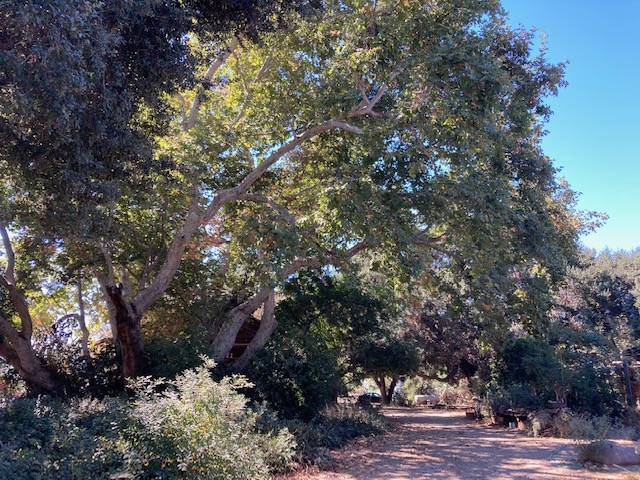
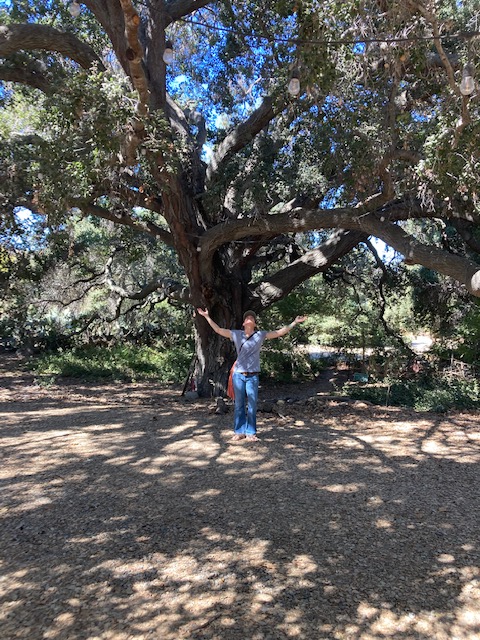
The rare Englemann oak (Quercus englemannii) occurs within the South Coast Ecoregion of the CFP ranging sparsely from southern Ventura County down through northwestern Baja. The Englemann oak is the northernmost relict population of the subtropical White oaks of Mexico, which occur hundreds of miles to the south in the Sierra Madre Occidental Mountains of central Mexico.
Adapted to the southern arid Mediterranean climate and xeric soils of the South Coast Ecoregion, Quercus englemannii is a live oak (evergreen) that also has the ability to become drought deciduous during especially hot dry summers and droughts, to conserve water and resources when needed.
Quercus englemanii prefers mesas, lowlands, valleys, and foothill environments, often 10 miles or more from the immediate coast, but not as a rule (it also occurs on the Channel Islands). As with most native habitats of lowland southern California and Baja, a majority of the historic range of Quercus englemanii has been lost to development and urban sprawl, as well as intense grazing and agricultural pressures in California and Mexico.
Similar to the other large live oaks, the Englemann oak is considered an ecological engineer and keystone species supporting an ecosystem of hundreds if not thousands of insect, bird, plant, animal, fungi, lichen, and microbe species. The native soil structure and microbiome developed among and beneath mature Englemann oak stands especially supports germination and growth of oak seedlings as well as robust ecosystem functions of the Quercus englemanii woodland.
Within the Quercus englemannii woodlands and savannahs associated species include Juglans californica, Quercus agrifolia, Quercus kelloggii, and/or Quercus wislizeni. South Coast Ecoregion chaparral and scrub species such as Adenostoma fasciculatum, Arctostaphylos spp., Artemisia californica, Ceanothus spp., Ribes spp., and Rhus spp. are also common in Englemann oak woodlands. The understory of Englemann oak savannahs is generally dominated by herbaceous plants and grasses.
Genetic studies have shown hybridization between Quercus engelmannii and scrub oak species, such as Quercus berberidifolia and Quercus durata. Hybridization of these oaks coincided with the onset of California’s Mediterranean climate regime, and could have aided Quercus englemannii’s adaptation and survival at this climatic shift through asymmetric gene flow from Quercus berberidifolia to Quercus engelmannii.
References
Atwood, J. L. et al. 2020. “California Gnatcatcher (Polioptila californica), version 1.0.” In Birds of the World (A. F. Poole and F. B. Gill, Editors). Cornell Lab of Ornithology, Ithaca, NY,
Baldwin, B. G., et al, 2017. “Species richness and endemism in the native flora of California.”American Journal of Botany 104 (3): 487 – 501
Barbour, Michael, T. Keeler-Wolf, and A Schoenherr. 2007. Terrestrial Vegetation of California. Berkeley: University of California Press
Beckman, E et al. (2019). “Quercus engelmannii Conservation Gap Analysis of Native U.S. Oaks.” The Morton Arboretum 104-109.
Burge, D.O., 2016. “Plant diversity and endemism in the California floristic province.” Madrono 63(2): 3–206
Davis, F.W., et al. 1994. “Distribution and conservation status of coastal sage scrub in Southwestern California.” Journal of Vegetation Science 5: 743-756.
Escudero-Castelán, N., et al. 2014. “Diversidad de anostracos de las pozas vernales en el Norte de Baja California.” First Annual International Symposium of Environmental Biology, CICESE. Ensenada, B.C., Mexico.
Forest, R. 2023. “Biogeography of California’s Seasonal Freshwater Wetlands.” Cal Geographic.com
Forest, R. 2023 “Geomorphology of California’s Seasonal Freshwater Wetlands.” Cal Geographic.com
Forest, R. 2024. “The Chaparral Mosaic in California.” Cal Geographic.com
Forest, R. 2024 “The Coastal Scrub Mosaic in California.” Cal Geographic.com
Gucker, Corey L. 2012. “Hesperoyucca whipplei, H. newberryi. In: Fire Effects Information System.”. U.S. Department of Agriculture, Forest Service
Guilliams, C. M., et al,. in review. “Vernal pool landscapes of Baja California, México: an ongoing project to assess vernal pool loss and protect what remains”
Halstead, B.J., 2021 “Conservation Implications of Spatiotemporal Variation in the Terrestrial Ecology of Western Spadefoots.” The Journal of Wildlife Management 1–17
Lancaster, L.T., et al. 2013. “Origin and diversification of the California flora: re-examining classic hypotheses with molecular phylogenies.” Evolution 67-4: 1041–1054
Powell, Jerry, A. 2013. “Longevity and Individual activity of the Yucca moth, Tegeticula maculate extranea (Prodoxidae), based on mark-release monitoring.” Journal of the Lepidopterists’ Society 67(3): 187–195.
Riordan, E.C., et al. 2009. “Modelling the distribution of a threatened habitat: the California sage scrub.” Journal of Biogeography 36: 2176-2188.
Scott, T.A., et al. 1996. “The Effects of Native Soils on Engelmann Oak Seedling Growth.” Proceedings of a Symposium on Oak Woodlands: Ecology, Management, and Urban Interface Issues. US Department of Agriculture.
Stallcup, J.A., et al. 2015. “Las Californias Binational Conservation Initiative 2015: a decadal review of conservation status of the California—Baja California border region.” A report by the Conservation Biology Institute, Terra Peninsular, Pronatura Noroeste, and The Nature Conservancy. 48 pp.
U.S. Fish and Wildlife Service. 2025. Species Status Assessment for the coastal California gnatcatcher (Polioptila californica californica). U.S. Fish and Wildlife Service, Pacific Southwest Region, 138 pp.
U.S. Fish and Wildlife Service. 2023. Species Status Assessment Report for the Western Spadefoot (Spea hammondii), Version 1.1.
Wimber, D.R. 1958. “Pollination of Yucca whipplei Torr.” M. S. Thesis, Claremont Graduate School, Claremont, Calif. [unpublished].
Witham, C. W., et al. 1998. Ecology, Conservation, and Management of Vernal Pool Ecosystems – Conference Proceedings California Native Plant Society, 56-70
2023-2024 Coastal sage scrub and chaparral community monitoring for western San Diego County. San Diego Association of Government Regional Habitat Conservation Taskforce. Western Ecological Research center. 140pp
Discover more from Cal Geographic
Subscribe to get the latest posts sent to your email.
